McDonald's Big Arch Prices Vary Widely, Highlighting Franchise Value Tensions
The Big Arch costs $7.46 in Columbia, SC and $12.99 in Lewiston, ME — a 74% gap that undercuts CEO Kempczinski's value push before the burger turns three weeks old.
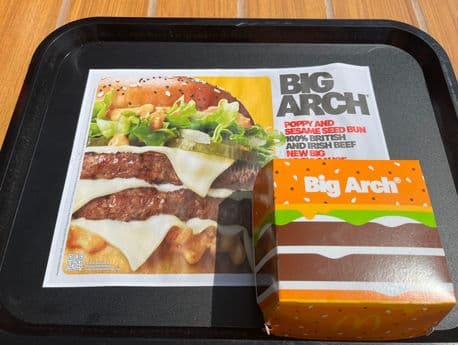
The Big Arch, McDonald's biggest burger, arrived in the U.S. on March 3 with a protein-forward pitch and a corporate promise of value. Within weeks, pricing data from more than 130 cities revealed a gap wide enough to swallow that promise whole.
Researchers at NeoMam Studios, who manually pulled prices from the Official McDonald's App across more than 130 cities, found the Big Arch can cost 74% more in one major city than another. In Columbia, South Carolina, the average price sits at $7.46. In Lewiston, Maine, it averages $12.99. At the state level, Oklahoma clocks in as the cheapest market at $8.05, while Alaska tops out at $10.32.
"Along with the variability of incomes, Americans get a distinctly different deal on their Big Arch burger depending on where they live," NeoMam's research concluded.

The spread is a direct problem for CEO Christopher J. Kempczinski, who has made value messaging a centerpiece of McDonald's recovery effort with customers. The chain has been working to repair a reputation damaged by years of price increases that drove traffic away. Launching the brand's largest burger into a franchise system where individual operators set their own prices creates exactly the kind of contradiction that erodes that effort.
The franchise pricing dynamic is not new, but the Big Arch launch sharpens it. A McDonald's at Bradley International Airport illustrates how far individual locations can stray from the company's stated positioning: a franchise operator there charged more than the typical $8 to $10 for a 10-piece Chicken McNugget Value Meal, reportedly because the airport location carries higher operating costs. The price was steep enough that a $20 bill couldn't cover it.
That operator made a rational business decision. Airport rents are not suburban strip-mall rents. But from a customer standing at the counter, the McDonald's brand is what they see, not the franchise agreement behind it.

NeoMam collected its data by sampling three restaurants near the center of the three most populated cities in each state, plus Washington, D.C. The full methodology, including whether prices reflect the sandwich alone or a combo, and whether taxes or app fees are included, has not been publicly detailed. McDonald's has not publicly commented on the pricing variability findings.
What is clear is the timing. The Big Arch is less than three weeks old, positioned as a protein-trend play for a chain trying to win back cost-conscious customers, and it already carries a price tag that means something very different depending on which side of the country you're standing on.
Know something we missed? Have a correction or additional information?
Submit a Tip