McDonald's financial page helps employees track company priorities
McDonald’s financial page is a frontline map: the same filings that track sales and restaurants also preview staffing, remodels, and franchise pressure.
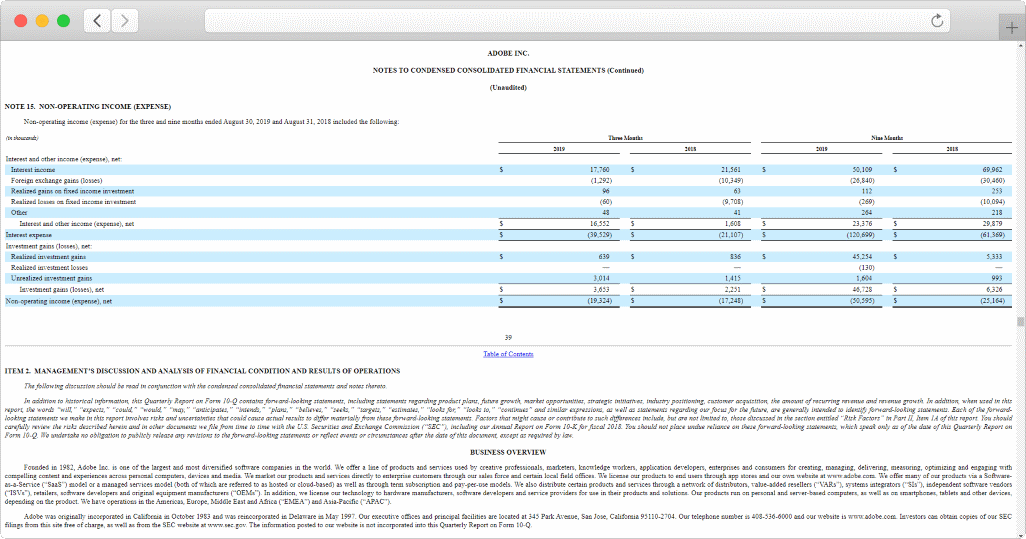
McDonald’s 2024 Form 10-K says franchised restaurants made up about 95% of the system worldwide at December 31, 2024. The company’s financial-information page pulls quarterly results, annual reports, supplemental information, and SEC filings into one place, making it easier to connect a line on a spreadsheet to a change on the grill, in the drive-thru, or at the hiring desk.
Why this page matters to the people running restaurants
Its annual materials list more than 2 million employees and crew. That means the company’s financial disclosures are not just investor theater. They are the operating language that links corporate strategy to franchise economics and, eventually, to labor decisions in individual restaurants.
McDonald’s had 43,477 restaurants worldwide at year-end 2024, up from 41,822 in 2023, and remained on track to reach 50,000 restaurants by the end of 2027. More units mean more managers, more crew hires, more training cycles, more equipment installs, and more openings and remodels that can stretch already thin labor pools.
How to read the page like a workplace intelligence sheet
The page is most useful when you stop treating it like an archive and start reading it as a forecast. Quarterly results tell you whether the company is leaning into traffic growth, price, or margin protection. Annual reports and SEC filings tell you which parts of the business McDonald’s wants to scale, where it expects friction, and how much control it gives franchisees over the levers that affect daily work.
That is especially important in a franchise-heavy system where local operators still control employment-related matters, marketing, and pricing decisions. If corporate is pushing value, technology, or a new operating standard, franchisees are the ones who have to absorb the labor cost, redesign the schedule, or explain the change to a shift manager.
The numbers that foreshadow labor pressure
The clearest signals are the ones tied to growth and digital behavior. McDonald’s global systemwide sales increased 7% in full-year 2025 to over $139 billion. Sales to loyalty members rose 20% to nearly $37 billion across 70 loyalty markets, while 90-day active loyalty users reached nearly 210 million. In full-year 2024, global systemwide sales were over $130 billion, loyalty sales were approximately $30 billion across 60 loyalty markets, and 90-day active loyalty users topped 175 million.
Loyalty and digital ordering shape how many transactions move through the app, how often workers deal with customized orders, how much communication has to happen between kitchen and front counter, and how much labor is spent on speed, accuracy, and recovery when something goes wrong.
The same goes for menu and value strategy. McDonald’s 2024 annual materials show the company and franchisees prioritized everyday-affordable-price menus and meal bundles, including the U.S. $5 Meal Deal. That kind of push usually shows up in tighter margins, heavier traffic expectations, and more pressure on managers to keep labor aligned with sales. When customers come in for a value bundle, the restaurant has to process volume without letting service times slip.
What the Restaurant Experience Team signals
The 2024 materials introduced the Restaurant Experience Team, led by Jill McDonald. The team brings together operations, supply chain, franchising, development, restaurant design, delivery, and Speedee Labs, plus new category-management teams for beef, chicken, and beverages. McDonald’s is trying to manage the whole restaurant experience as one system, from product flow to layout to how food reaches the customer.
For workers, that structure hints at where change is likely to land. Operations and supply chain affect what arrives on time. Franchising and development affect remodels, openings, and standardization. Restaurant design changes the work flow of the kitchen and lobby. Delivery and Speedee Labs point to experimentation that can alter the pace of work, the tools crew members use, and the amount of judgment managers need on a busy shift. Category-management teams can also influence which products create the most prep and assembly work in the back of house.
Why franchise tension is part of the labor story
The financial page also helps explain why McDonald’s often sounds different when it talks to Wall Street than when it talks to franchisees. The company describes its business model as heavily franchised and designed to generate stable and predictable revenue from franchisee sales and resulting cash flows. That model makes investors comfortable, but it also means the pressure for growth often lands on operators who have to balance payroll, repairs, food costs, and local wage rules.
In February 2026, McDonald’s renewed value push was creating friction with some franchisees over pricing autonomy. When franchisees feel squeezed on pricing, they are often looking harder at labor hours, manager workload, and the feasibility of adding training time, overtime, or coverage for slower shifts.
How to use the page as a worker or manager
The best way to use McDonald’s financial page is to treat each new filing as a clue about what the company wants more of. If systemwide sales are rising faster than traffic, that can mean pricing power or mix shifts. If loyalty sales and active users are rising, expect more digital dependence and more operational complexity. If the company keeps emphasizing restaurant counts, development, or remodel-related language, crews should expect openings, closures, or construction-related disruptions that change schedules and staffing.
McDonald’s reported first-quarter 2025 results on May 1, 2025, and first-quarter 2026 results on May 7, 2026. The page groups those releases with annual reports, supplemental information, and SEC filings by year, which makes it easier to spot when leadership changes its tone or shifts its emphasis from growth to efficiency, from menu investment to margin discipline, or from corporate targets to franchise execution.
This article was produced by Prism’s automated news system from verified source data, official records, and press releases, then run through automated quality and moderation checks before publishing. The system is built and supervised by the people who set the standards it runs under. Read our full AI policy.
Did this article answer your question?