McDonald's Hamburger University trains managers for global consistency
Hamburger University is McDonald’s lever for making managers teach the same playbook everywhere, with real consequences for crew training, promotions, and floor discipline.
Hamburger University as McDonald’s operating system
McDonald’s built Hamburger University to do more than teach managers how to run a store. It is the company’s center of training excellence, a global training center where franchisees and managers get a crash course in restaurant operations so the brand can deliver a more consistent experience across tens of thousands of locations. That matters on the floor because the gap between a smooth shift and a chaotic one usually comes down to whether managers can coach the same standards, the same way, every time.
For crew members, that means Hamburger University is not some distant corporate vanity project. It is part of the machinery that decides whether the expectations in one restaurant look like the expectations in another. For managers, it is McDonald’s way of saying that leadership is a skill to be learned, measured, and repeated, not improvised.
Why standardization matters to workers
McDonald’s says it has 44,000 locations and serves 68 million people a day. At that scale, a manager’s habits can affect everything from order accuracy to speed of service to whether a new hire gets useful coaching or just gets thrown onto the line. The company also says Hamburger University training is offered in 28 languages, which tells you how seriously McDonald’s takes the problem of consistency in a system that spans countries, franchise models, and different labor markets.
That global scale also explains why the company leans so hard on a common training model. If a shift leader in one market is learning the same operational playbook as a franchise manager somewhere else, McDonald’s can push a more uniform standard for service, cleanliness, and staffing discipline. Workers may not see the headquarters logic day to day, but they feel it when a manager gives clearer instructions, corrects mistakes faster, or expects a process to be done the McDonald’s way rather than a local variation.
What Hamburger University is supposed to produce
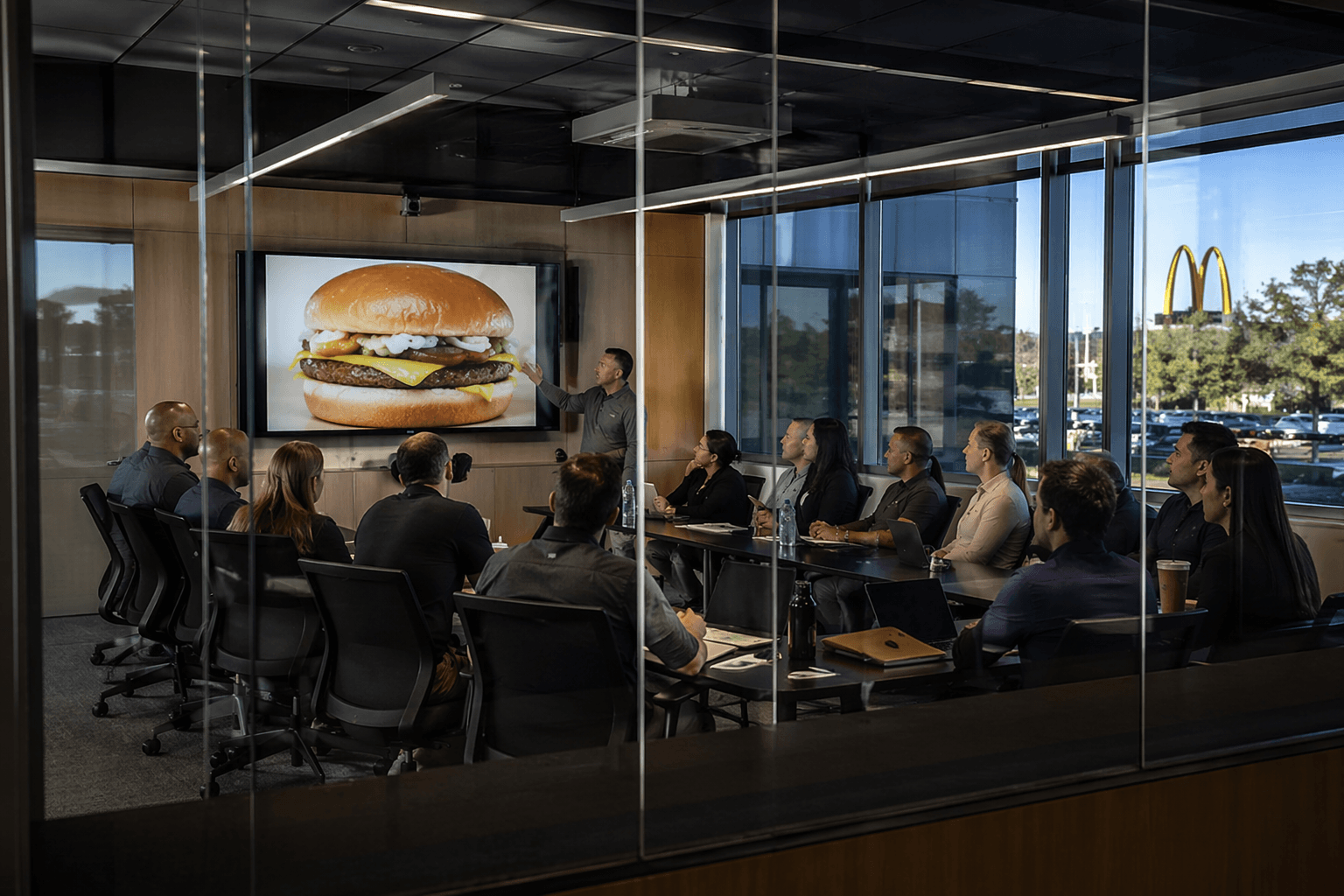
McDonald’s frames Hamburger University as a place to upskill and reskill employees globally and build a culture of continuous learning. In plain workplace terms, that means the company wants managers who can do more than fill a schedule. It wants people who understand operations, can teach others, and can carry the same expectations from one restaurant to the next.
That is an important distinction for employees moving up. In a workplace where turnover is high and training quality can vary sharply by store, a centralized system signals that management is supposed to be a repeatable craft. If you are a crew member trying to become a shift leader or a future general manager, the message is clear: learn the standards, master the routines, and prove you can transfer them to other people. McDonald’s says its training system includes Hamburger University and management courses, which reinforces that the path up is built around operating discipline rather than personality alone.
The career ladder behind the brand
This is where Hamburger University becomes more than a brand asset. It is one of the clearest signs of how McDonald’s career ladder is supposed to work. The company says the training system supports restaurant workers, managers, franchisees, and corporate staff across the global system, and its franchise materials say the goal is to develop leadership, financial acumen, and strategic thinking for people who want to run restaurants successfully.

That matters in a labor market shaped by Fight for $15 campaigns, minimum wage legislation, and ongoing debate over whether fast food jobs are dead-end jobs or entry points into management. McDonald’s training model is designed to argue for the latter. If the company can show a structured route from crew to manager, it can also argue that workers are learning skills that travel with them: coaching, scheduling, problem-solving, and basic business management. The promise is not just a paycheck. It is a pathway, even if the quality of that pathway still depends heavily on the franchisee and the store.
From a basement restaurant to a global training network
Hamburger University has deep roots in McDonald’s history. The company says it opened in 1961 in the basement of a restaurant in Elk Grove Village, Illinois, and early graduates received Bachelor of Hamburgerology degrees. McDonald’s also says it acquired the rights to the McDonald brothers’ business that same year for $2.7 million, a reminder that the company’s push to professionalize the system dates back to the Ray Kroc era.
The scale has changed dramatically since then. McDonald’s says it now operates more than 36,000 restaurants in more than 100 nations. The old basement setup has become a global training network, but the underlying goal is the same: make sure the company’s restaurants run on a shared operating logic, no matter who owns the store or which country the crew is in.
Chicago headquarters and the next layer of control
McDonald’s says the flagship Hamburger University is housed at its Chicago headquarters, and when the company opened its new global headquarters in the West Loop in 2018, it said the building would house about 2,000 people and the flagship HU campus. That matters because the training program is not isolated from corporate decision-making. It sits next to the people shaping menu changes, operations strategy, and the broader system that franchisees and workers have to live with.
McDonald’s also said its Speedee Labs innovation hub would bring together headquarters, the Innovation Center, Hamburger University, franchisees, suppliers, and restaurant teams under one roof. That combination is telling. The company is not just trying to invent products. It is trying to align the people who make the system run, from corporate offices to restaurant operations, so changes can move faster and with less drift.
What this means on the floor
The real test of Hamburger University is not whether it sounds impressive. It is whether it produces clearer coaching, more standardized expectations, and better day-to-day operations for the people taking orders, assembling food, running the drive-thru, and managing the rush. In a business that is also facing automation pressure, AI experiments, and constant cost scrutiny, McDonald’s has a strong incentive to make managers more consistent and more trainable, not less.
That is why Hamburger University should be read as a culture story, not a campus story. It is McDonald’s trying to turn management into a shared discipline across thousands of restaurants. If it works, workers get a steadier shift and a more visible path upward. If it does not, the company still gets the language of consistency while the burden of uneven training stays where it always lands: on the crew trying to keep the line moving.
Know something we missed? Have a correction or additional information?
Submit a Tip