McDonald’s highlights HR careers behind hiring and employee support
McDonald’s HR now sits at the center of hiring, hotline complaints and workplace standards, with training that starts within 14 days of a first shift.
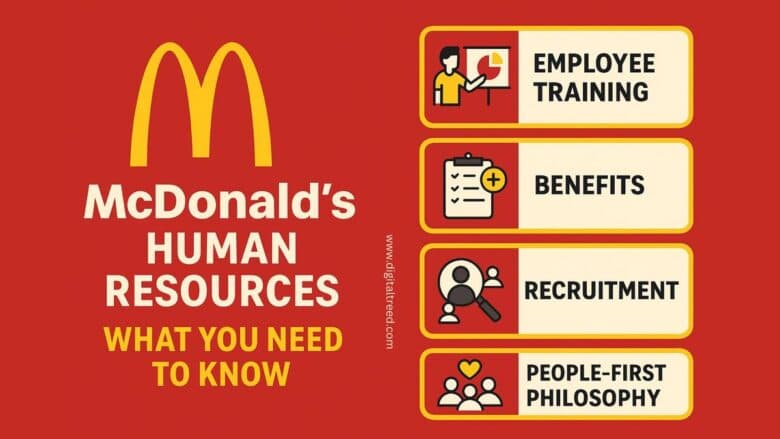
McDonald’s careers page lists 288 jobs, from consultant and field operations to HR business partner, project management and other support roles. The company is looking for people “passionate about people” to help craft the future McDonald’s team. Hiring, training, complaints and store-to-corporate escalation often decide how a shift feels long before anyone talks about culture.
What McDonald’s HR actually covers
McDonald’s is hiring HR people who can work across systems, not just process forms. The careers page describes the work as using state-of-the-art technology, with a job centered on people operations, documentation, and problem solving as much as policy. For managers, that means the people side of the business is built to handle field-facing issues as well as corporate processes, while for crew members it explains why a scheduling dispute, a performance issue, or a policy question can quickly become an HR matter.
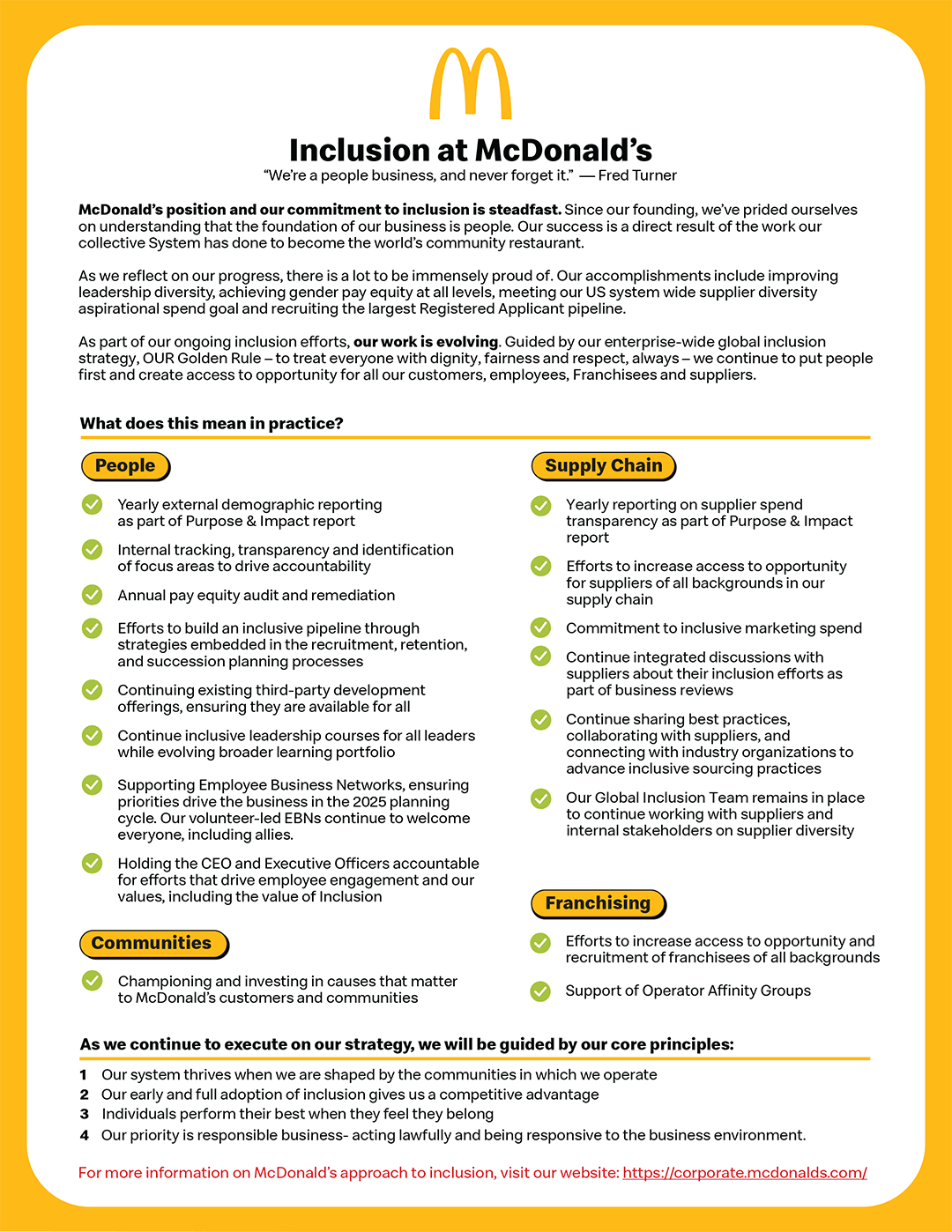
Restaurant labor is split between corporate and franchise structures. McDonald’s People Brand Standards apply across all restaurants, whether company-owned or franchised, so the HR function is not confined to one ownership model. In practice, that means the same basic rules have to travel across very different workplaces, from company-operated stores to franchise locations with their own managers and staffing pressures.
People Brand Standards turn policy into store-level process
McDonald’s People Brand Standards cover four workplace basics: employee health and safety, workplace violence prevention, harassment, discrimination and retaliation prevention, and restaurant employee feedback. Employees must complete People Brand Standards training within 14 days of their first shift, and the rollout began in 2021.
Restaurants are assessed on those standards through local evaluation processes. For franchisees, the system provides optional tools, resources, policies and training, but corporate expectations still have to pass through a franchise network that controls most of the restaurants. McDonald’s said more than 95 percent of its restaurants were franchised at year-end 2024, so any people policy has to work at scale across operators who may have very different day-to-day management styles.
The standards were informed by a cross-functional global team and market practices across the McDonald’s system.
Scale makes every people decision harder
McDonald’s said more than 2 million people work in its franchised restaurants, and more than 150,000 company employees work in corporate offices and company-owned and operated restaurants. At year-end 2025, McDonald’s reported 45,356 systemwide restaurants, including 13,706 in the United States. HR has a job that is far bigger than recruitment, because every hiring decision, training delay and employee complaint can ripple through a system with thousands of managers and franchise operators.
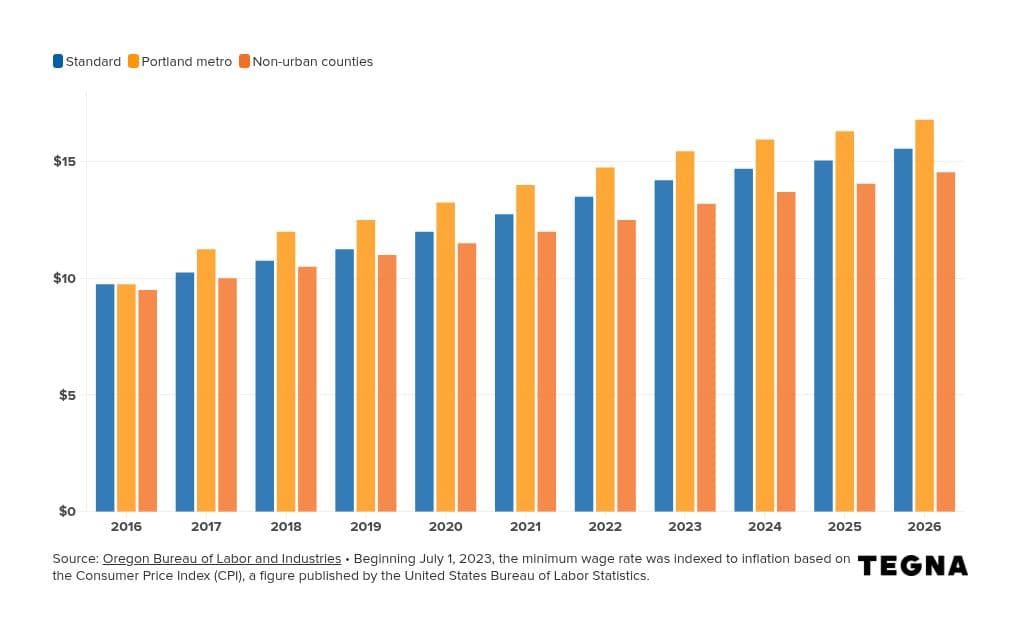
McDonald’s 2025 Annual Report put systemwide sales above $139 billion and said the growth strategy is now in its sixth year. The report also pointed to tight labor markets as part of the operating environment, making hiring pipelines and retention central issues. In a business still shaped by minimum wage fights, Fight for $15 campaigns and repeated debates over fast-food labor costs, HR ends up absorbing the pressure from both wage stress and staffing shortages.
A strong HR system can speed up onboarding, give restaurant leaders a clear line for handling conflict, and keep the workforce from churning as soon as it trains up. A weak one leaves store managers carrying unresolved staffing and conduct problems that should have been handled higher up the chain.
When policy and worker experience do not match
A 2025 investigation by Type Investigations and The Nation raised hard questions about how McDonald’s anti-harassment system works in practice. The investigation described worker complaints that were routed to a corporate human resources hotline but, in the workers’ view, did not end in a satisfactory fix. It focused on Rosalia Manuel, a longtime shift manager in Saratoga, California, who said she reported harassment and later called the corporate HR hotline after being fired, and Sindy Pamela Mejia in San Jose, who said she experienced harassment and retaliation after reporting it.
McDonald’s public standards promise reporting mechanisms and training, while worker accounts suggest the gap can open after the complaint is filed. In a large franchise system, even a well-written policy is only as strong as the local manager response, the corporate follow-through and the willingness of the company to treat retaliation and harassment as operational failures rather than isolated disputes.
McDonald’s said it completed a Civil Rights Audit over about 18 months and that the process included more than a hundred employee interviews, plus feedback from employees, franchisees, suppliers and outside organizations.
This article was produced by Prism’s automated news system from verified source data, official records, and press releases, then run through automated quality and moderation checks before publishing. The system is built and supervised by the people who set the standards it runs under. Read our full AI policy.
Did this article answer your question?