McDonald's labor costs rise as private industry compensation climbs 3.4%
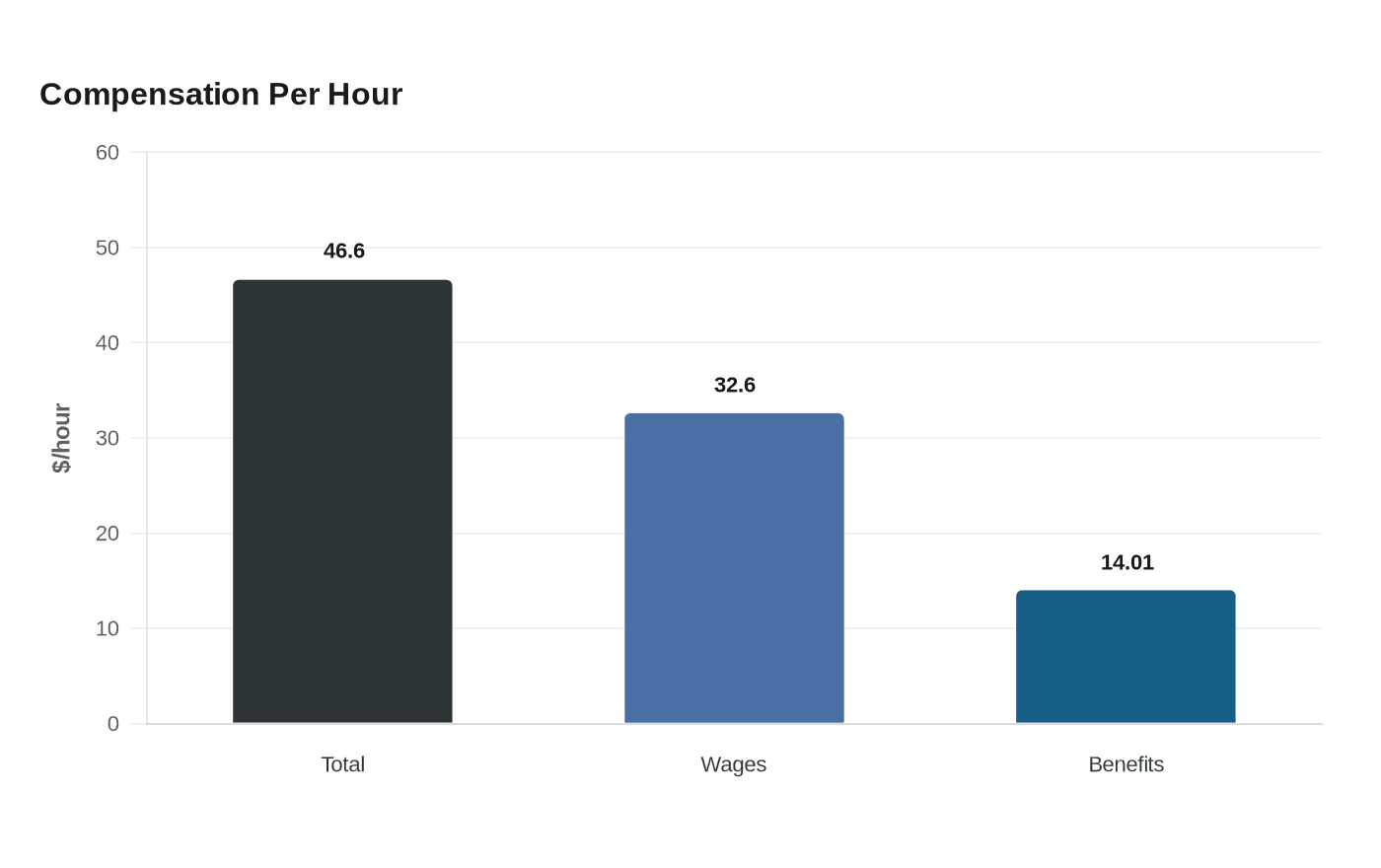
Private-industry compensation hit $46.60 an hour in March, with benefits making up $14.01 of that cost. For McDonald’s crews, that points to tighter staffing and closer hour counts.

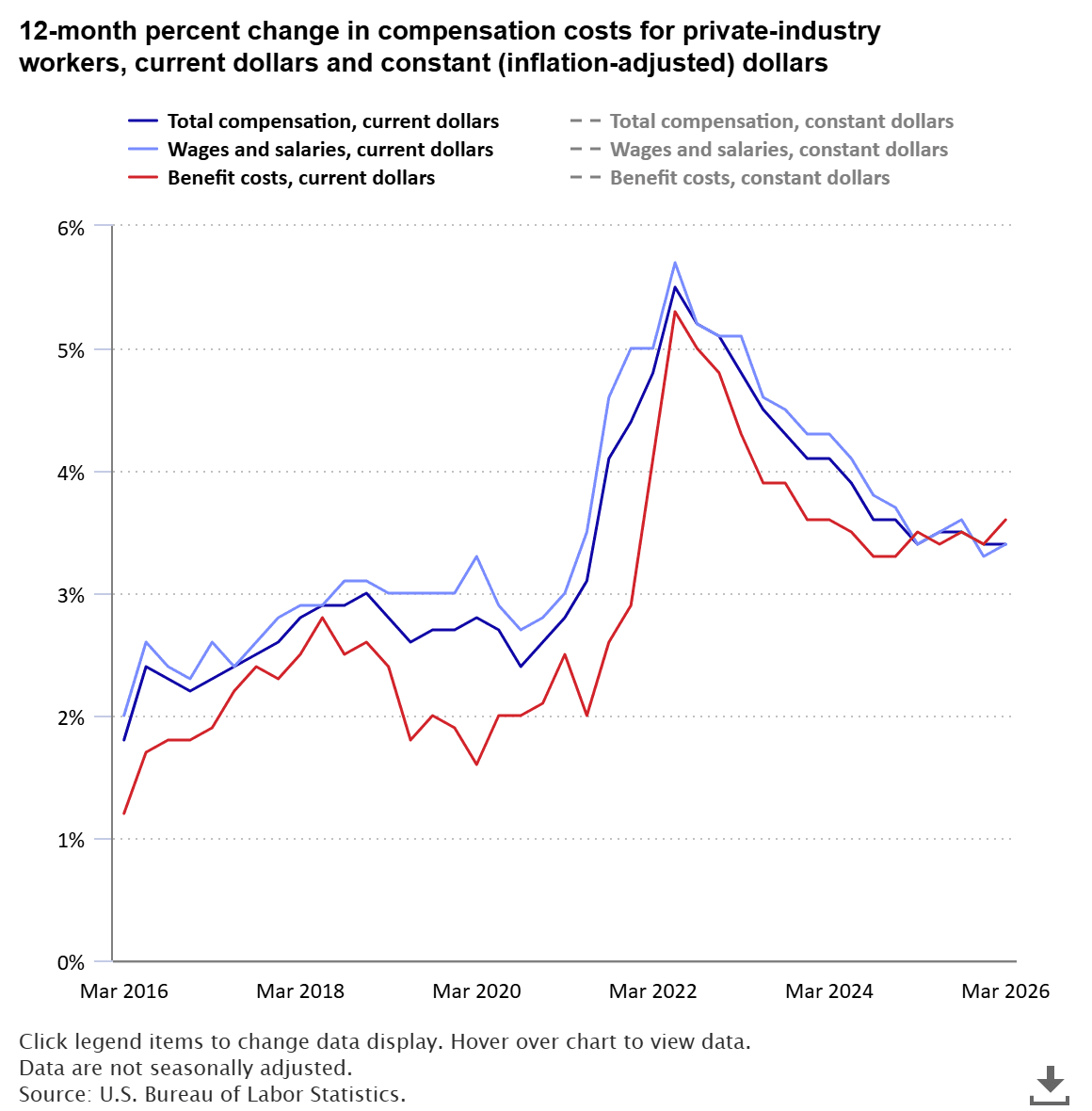
McDonald’s workers usually feel labor pressure as a cut in hours, a tighter schedule, or a manager asking one person to cover two jobs. That is the practical read-through of a new U.S. Bureau of Labor Statistics measure showing private-industry compensation costs averaged $46.60 an hour worked in March 2026, with $32.60 going to wages and salaries and $14.01 to benefits. The BLS said those costs rose 3.4% over the previous 12 months, while benefits climbed 3.6%.
For restaurant operators, that kind of increase matters because the labor bill is not just the posted wage. Benefits alone made up 30.1% of employer compensation costs in private industry, a reminder that health coverage, paid time off and other perks can materially change what a shift costs. At McDonald’s, where the system spans roughly 44,000 locations and serves 68 million people a day, even a small change in staffing strategy can ripple across company-owned stores and franchisees alike.
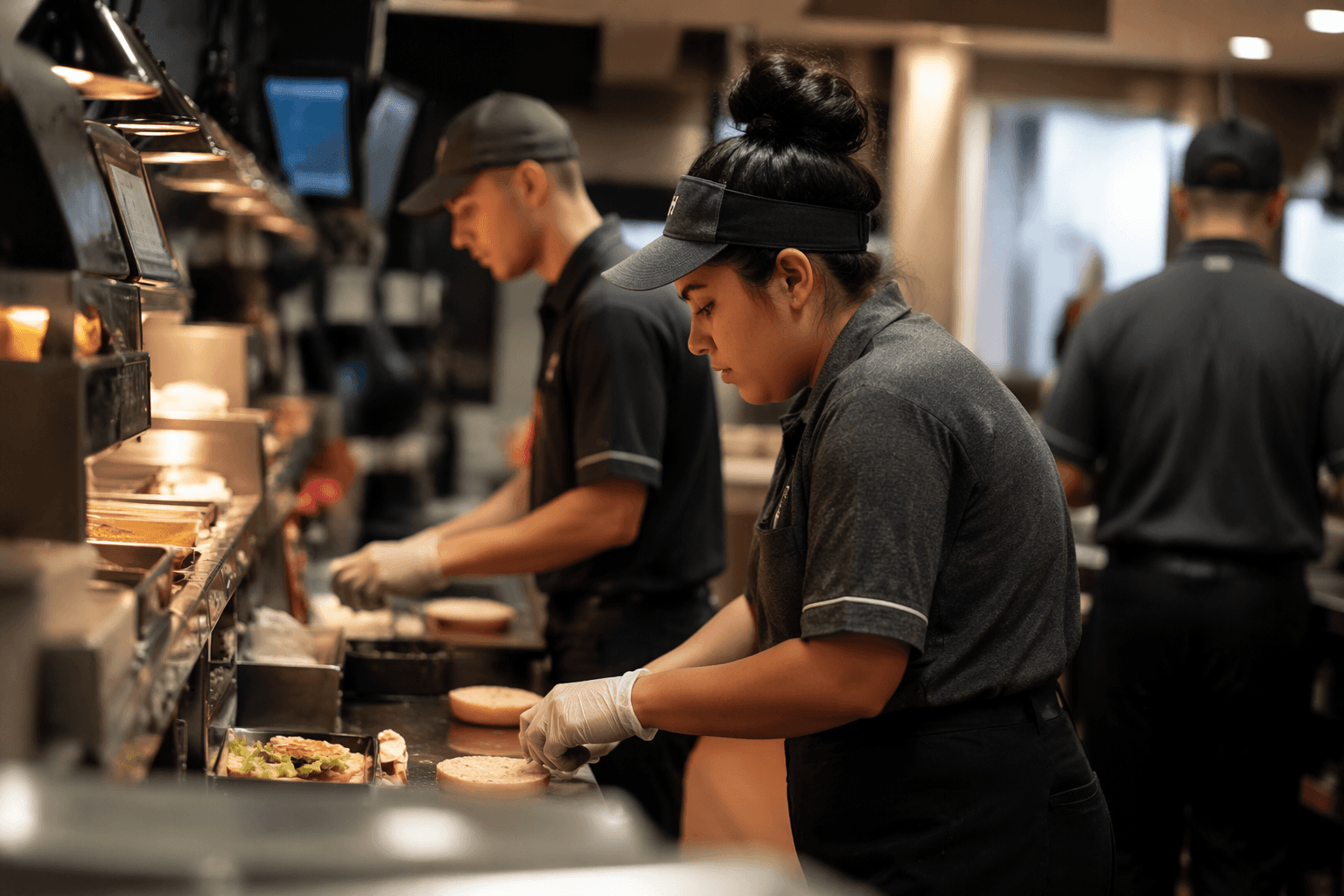
McDonald’s says its People Brand Standards apply across all restaurants, whether company-owned or franchised. The company also says its U.S. restaurant jobs and benefits vary by ownership structure, which means the package a crew member sees can depend on where they work. On the company side, McDonald’s says healthcare, paid time off and parental leave are available to corporate staff and company-owned restaurant staff working more than a certain number of hours.
That distinction is why rising compensation costs can shape what people actually experience on the floor. When total labor costs go up, managers tend to look harder at staffing mix, overtime, cross-training and whether a shift really needs every position filled the same way every day. For crew members, that can show up as tighter labor budgets, more pressure to keep labor within target, slower wage growth, or more scrutiny around scheduling and hours. In a business built on speed and consistency, labor savings are often pursued one shift at a time.
McDonald’s has also said its operating environment has been shaped by persistent inflationary pressures and tighter labor markets, which helps explain why the company keeps leaning on retention and training as well as pay. It promotes Archways to Opportunity, including tuition assistance, education advising, high school diploma support and English-language learning. The broader message is clear: when labor costs rise, McDonald’s is not just managing payroll. It is deciding how much stability, training and upside it can afford to keep workers in the system and stores running on time.
This article was produced by Prism’s automated news system from verified source data, official records, and press releases, then run through automated quality and moderation checks before publishing. The system is built and supervised by the people who set the standards it runs under. Read our full AI policy.
Did this article answer your question?