McDonald’s managers face costly turnover beyond pay alone
Turnover at McDonald’s drains crews and managers long before pay alone can fix it. The real retention test is scheduling, training, and frontline management.

Turnover is an operating problem, not just an HR headache
A restaurant that loses roughly three-quarters of its workers in a year is not just dealing with hiring. It is forcing the people who stay to train newcomers, cover open shifts, and keep service moving while the floor keeps changing underneath them. In quick-service concepts where turnover can top 100%, every quit becomes a small operational shock, and at McDonald’s scale that shock lands on millions of daily transactions, not a handful of stores.

That is why the cost of turnover goes far beyond a wage debate. Replacing one restaurant employee can run into the thousands once recruiting, separation, and training are counted. For McDonald’s, which said its system had more than two million employees and crew worldwide in 2024 and reported more than $130 billion in global systemwide sales that year, even modest churn becomes expensive fast. The company’s own 2025 annual report points to persistent inflationary pressures, tighter labor markets, geopolitical tensions, and broader economic uncertainty, all of which make it harder to treat staffing as a simple payroll line.
Pay matters, but it rarely solves the whole problem
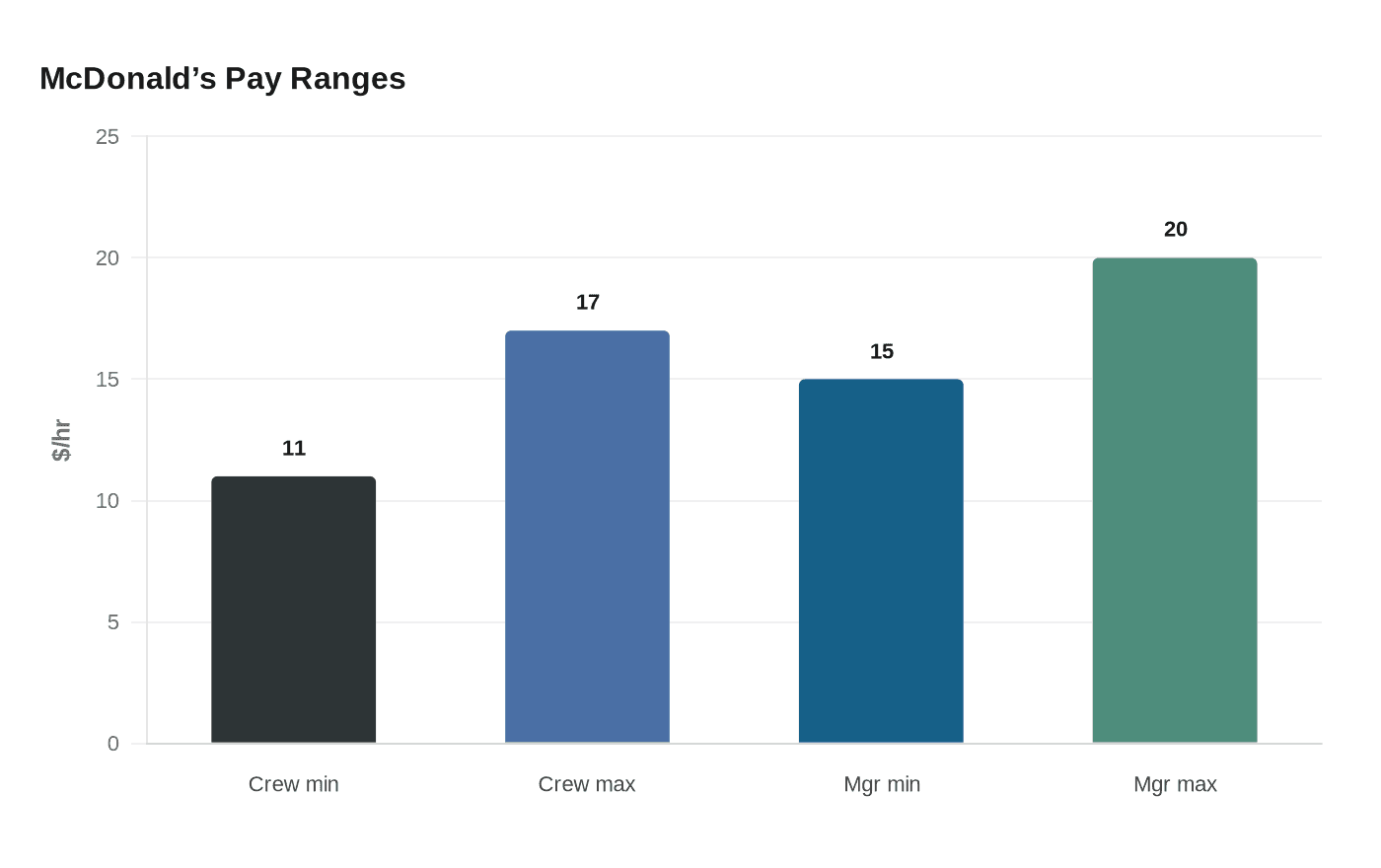
McDonald’s and its franchisees have spent years trying to stay competitive on wages, and that history matters. In 2021, McDonald’s said company-owned U.S. restaurants would raise entry-level crew pay to at least $11 to $17 an hour and shift manager pay to at least $15 to $20, with average hourly wages expected to reach $15 by 2024. The company also said it expected to hire 10,000 new employees over the next three months, a reminder that even the biggest brand in fast food can feel intense labor pressure.
But wage increases alone do not guarantee people stay. The deeper lesson from restaurant labor reporting is that workers often leave for reasons sitting beside pay, not above it. Benefits, recognition, feedback, and work-life balance shape whether a job feels worth doing day after day. In a McDonald’s system where franchisees control most of the local experience, that means the quality of the shift often matters as much as the hourly rate.
What keeps crews longer is the shape of the job
The most durable retention moves are the ones that make a restaurant easier to work in. Predictable scheduling, real onboarding, and managers who give clear feedback can do more for retention than another small wage bump. McDonald’s has said its hourly-paid employees can request their own working patterns and that schedules are based on availability, which only works if managers actually honor the system on the floor.
That is where the everyday reality of the job shows up. Crew members do not just want to know what they make; they want to know whether their hours will be respected, whether they will be trained well enough to keep up during rushes, and whether the restaurant feels organized when orders stack up. A store with stable scheduling and decent coaching can hold onto people even when another location down the street offers similar pay. For managers, that means retention is a service issue, because churn slows lines, raises mistakes, and burns out the reliable workers who keep coming back.
McDonald’s already has pieces of a retention strategy
The company has long pointed to benefits as part of its employee pitch. Eligible employees in company-owned restaurants can receive paid time off and tuition assistance through Archways to Opportunity, and McDonald’s says it regularly adds benefits and resources for staff. Those tools matter because they widen the reasons someone might stay beyond the next paycheck. They also signal that the job can be a stepping stone, not just a dead end.
McDonald’s UK offered another glimpse into how the company thinks about tenure. In a 2018 FAQ, it said average crew service was over two years and average restaurant manager service was 15 years. That gap is telling. It suggests that when McDonald’s keeps people, advancement and management quality are part of the story, not just labor market luck.
Franchise control makes retention uneven across the system
The real challenge is that most McDonald’s workers do not answer to a single corporate playbook on the daily shift. McDonald’s franchisees were reported to control roughly 95% of U.S. stores, which means local ownership decisions shape staffing, training, and scheduling for most of the brand’s footprint. That is why one restaurant can feel organized and manageable while another feels like constant catch-up.
A 2021 report also noted that some franchisees were adding child care, educational, and other benefits to attract workers during the labor shortage. That move shows how broad the retention challenge became. Operators were no longer competing only on hourly pay; they were competing on whether the job fit into a worker’s life at all. In that context, managers who treat turnover as unavoidable are really choosing to absorb higher costs, weaker service, and more stress for the crew that remains.
What crew members and managers should watch on the floor
For crew, the warning signs are often visible before the first resignation. If schedules change without warning, training is rushed, and feedback only shows up when something goes wrong, turnover will keep climbing. If a store respects availability, explains expectations, and makes the first weeks manageable, people are more likely to stay long enough to become useful fast.
For managers and franchise operators, the takeaway is sharper: retention is not a side project. It is a daily operating discipline that includes onboarding, scheduling, recognition, and managerial skill. McDonald’s can keep talking about pay, and pay will always matter, especially in a tight labor market. But the stores that hold onto people are the ones that make the job work, shift after shift, for the crew standing behind the counter.
This article was produced by Prism’s automated news system from verified source data, official records, and press releases, then run through automated quality and moderation checks before publishing. The system is built and supervised by the people who set the standards it runs under. Read our full AI policy.
Did this article answer your question?