McDonald’s managers urged to review overtime exemption rules
Salaried does not mean exempt at McDonald’s. If a manager’s real duties are mostly hourly work, overtime may still be due under the DOL test.
A McDonald’s assistant manager can be on salary and still qualify for overtime. The U.S. Department of Labor says job titles do not decide exemption status, and that simple rule can trip up restaurant operators who assume a salaried badge means the job is automatically exempt.
For McDonald’s stores, the stakes are immediate: pay expectations, scheduling, and how much real authority a manager has on the floor. In a system that mixes crew, shift leads, assistant managers, and general managers across thousands of restaurants, the difference between exempt and nonexempt is not a paperwork detail. It changes whether hours over 40 in a workweek trigger time-and-one-half, and whether a salary is actually covering a legally exempt role.
Why salary alone is not enough
The Department of Labor’s restaurant guidance is built for restaurant owners, general managers, and human resource staff who need to sort through managers and assistant managers the right way. The agency says most employees in the United States must receive at least the federal minimum wage for all hours worked, plus overtime pay for hours over 40 in a workweek. It also says plainly that the title on the door does not control the answer.
That matters inside McDonald’s because a store can have a manager title on the schedule while the person is still doing work that looks a lot like hourly labor. If someone is mostly running the fry station, covering drive-thru gaps, handling prep, or filling in because the store is short-staffed, the exempt label should not be treated as automatic. The real question is whether the job meets the Fair Labor Standards Act criteria, not whether the restaurant has always called the role salaried.
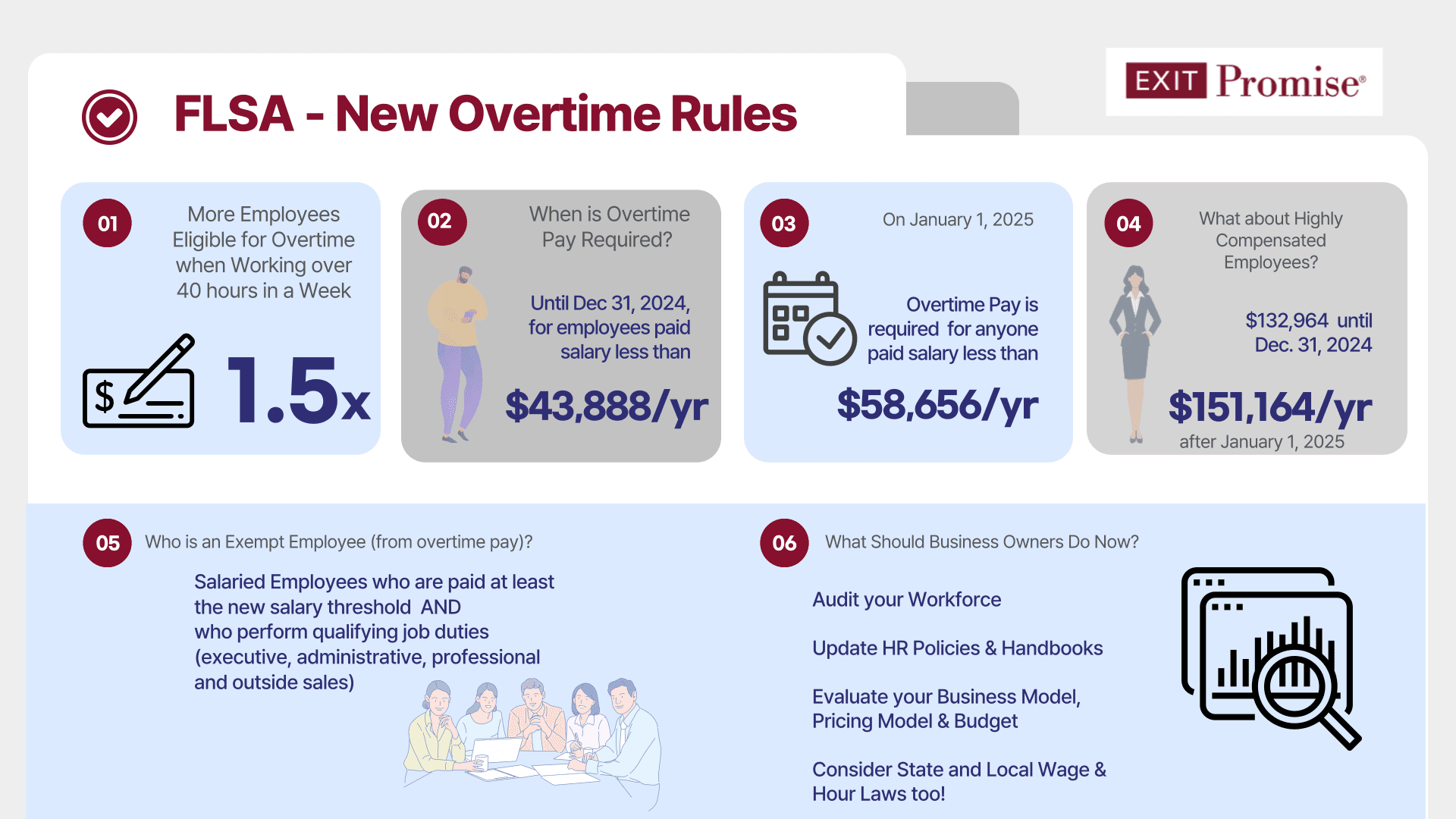
The Department of Labor’s current salary-level page lists a standard salary level of $684 per week, or $35,568 a year, and a highly compensated employee threshold of $107,432 a year. In April 2024, the department announced a final overtime rule that would have raised the threshold to $43,888 on July 1, 2024 and to $58,656 on Jan. 1, 2025, with updates every three years beginning July 1, 2027, after the agency said it considered more than 33,000 comments. For restaurant operators, the lesson is obvious: the salary number itself can move, so classification should never rest on a stale assumption.
What the executive exemption actually requires
In a McDonald’s restaurant, the executive exemption is not just about pay. The Department of Labor says the exemption can apply only if the employee is paid on a salary basis at or above the salary level, has a primary duty of managing the enterprise or a recognized department, customarily and regularly directs at least two full-time employees or their equivalent, and has authority over hiring and firing, or makes recommendations that carry particular weight.
That is a much tighter test than many store-level managers assume. A person may be called an assistant manager, may be paid a salary, and still fail the exemption if their day is spent mostly on routine production work and their authority is limited. The legal test looks at how the job is structured in the restaurant, how much discretion the person really has, and whether they are truly managing people rather than simply covering shifts.
The Department of Labor’s own examples make the difference easier to see. A kitchen manager supervising 25 employees and earning $1,800 per week is described as likely exempt. A beverage manager supervising no one and earning $750 per week is described as not exempt. Those examples are useful for McDonald’s because they reflect the kind of role confusion that can happen when stores use titles and salary bands as shorthand instead of checking the actual duties.
Why this hits harder in a franchise system
McDonald’s is not a single-operator chain in practice. More than 90 percent of McDonald’s restaurants in the United States are franchises, according to a Harvard Law Review summary of Salazar v. McDonald’s Corp. That structure matters because wage-and-hour mistakes can happen at the restaurant level without being obvious across the whole system.

The Salazar case, filed in 2014, involved allegations at McDonald’s franchises in Oakland, California, including denied overtime pay, missed meal and rest breaks, and off-the-clock work. The Ninth Circuit held that McDonald’s was not liable under the theories raised because it lacked day-to-day operational control over the franchisees. For workers, that is a reminder that the brand name on the building does not always tell you who is making the classification calls or who is responsible for the payroll decisions that affect your checks.
That tension between corporate identity and franchise control is one reason restaurant exemption questions keep resurfacing. When minimum wage laws rise and the pressure that fueled Fight for $15 continues to shape pay expectations, restaurants often lean harder on salaried managers to absorb labor gaps. Add automation and self-service tools that can shift some crew tasks around, and the line between management and hourly coverage can blur even more. That is exactly when the exemption test needs a close look.
What managers should review on the floor
The Department of Labor’s restaurant toolkit is meant to help employers avoid misclassification mistakes, and the Wage and Hour Division also offers opinion letters that can support a good-faith defense in some cases. In a McDonald’s store, that means managers should check the real job, not just the payroll label.
- Is the manager’s primary duty actually managing a department or the restaurant?
- Does the manager regularly direct at least two full-time employees or their equivalent?
- Does the manager have meaningful hiring, firing, or disciplinary influence?
- Is the person spending most of the week on exempt work, or mostly covering hourly tasks?
- Does the current salary level still match the legal threshold being used?
If the answer to those questions is shaky, the safer move is to review the classification before a pay dispute becomes a wage-and-hour claim. In a chain as large and franchise-heavy as McDonald’s, a bad assumption can sit unnoticed for months, then show up as back pay, penalties, and a broken trust problem on the floor.
The practical takeaway is simple: a salary is not a shield. For McDonald’s managers and assistant managers, overtime eligibility turns on what the job really requires, who is being supervised, and whether the restaurant can prove the exemption test is met. That is the line store leaders need to know before they build schedules around it.
This article was produced by Prism’s automated news system from verified source data, official records, and press releases, then run through automated quality and moderation checks before publishing. The system is built and supervised by the people who set the standards it runs under. Read our full AI policy.
Know something we missed? Have a correction or additional information?
Submit a Tip