McDonald’s outlines human rights responsibilities across franchise system, suppliers
McDonald’s says human rights rules reach every corner of its 43,477-store system, from franchise crews to suppliers, but accountability still splinters at the store level.
McDonald’s draws its responsibility map across a giant franchise system
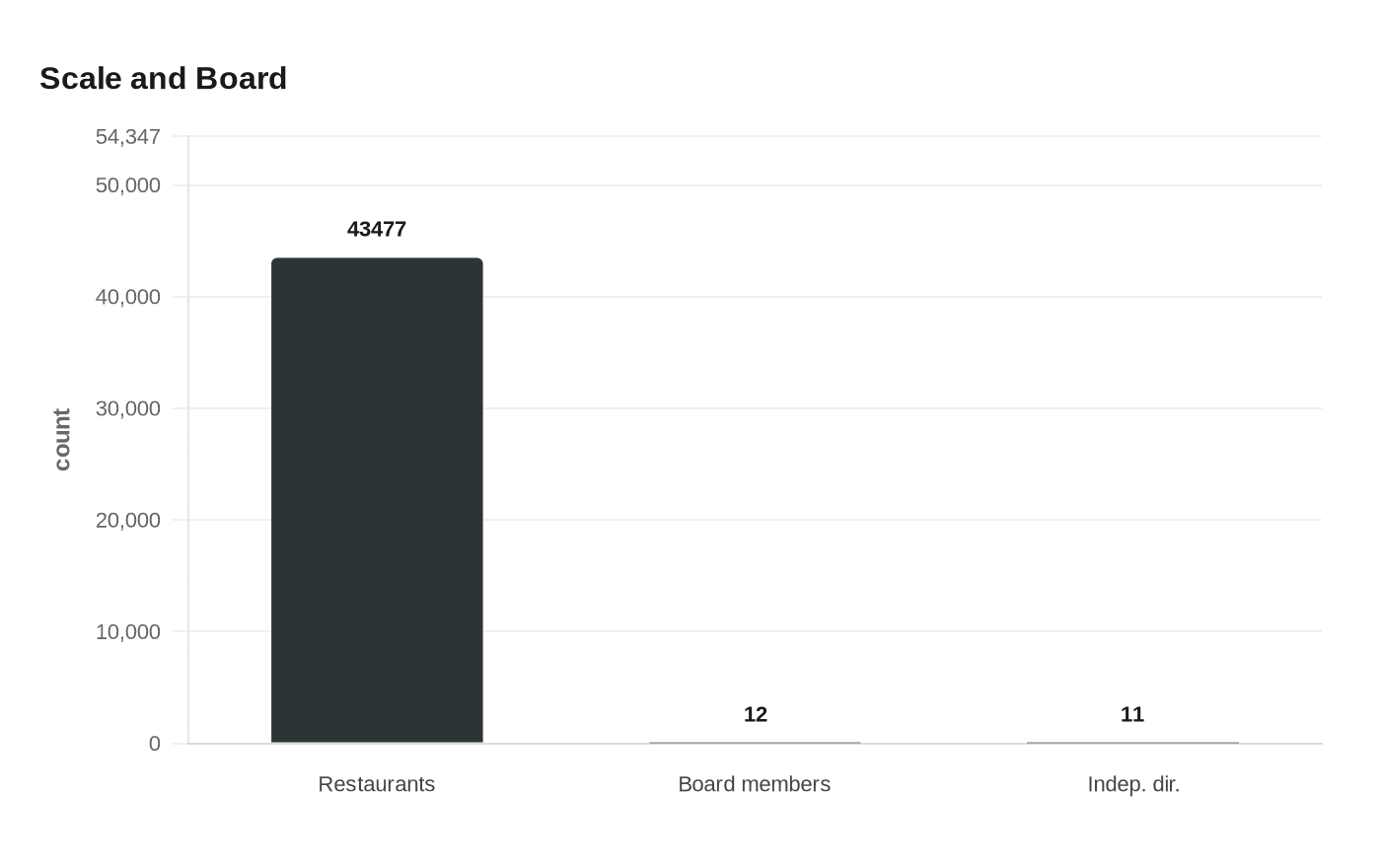
McDonald’s is using its human rights and governance materials to spell out something workers have long understood on the ground: the brand’s influence does not stop at the front counter. With 43,477 systemwide restaurants at the end of 2024, more than 2 million people working in franchised restaurants, and more than 150,000 company employees in corporate offices and company-owned restaurants, the company’s scale makes labor standards, supplier rules, and governance more than paperwork.
That matters because the company’s own materials frame human rights as part of how the system is supposed to function. McDonald’s says its vision is that human rights are woven into day-to-day business, and it pairs that language with internal rules that are meant to apply across the brand, not just inside one corporate office.
What McDonald’s says applies to every restaurant
The clearest line in McDonald’s system comes from its Global Brand Standards. The company says those standards apply to all McDonald’s restaurants, whether company-owned and operated or franchised. That is a crucial point in a chain where the public often sees one brand, but workers live under a mix of local owners, managers, and corporate expectations.
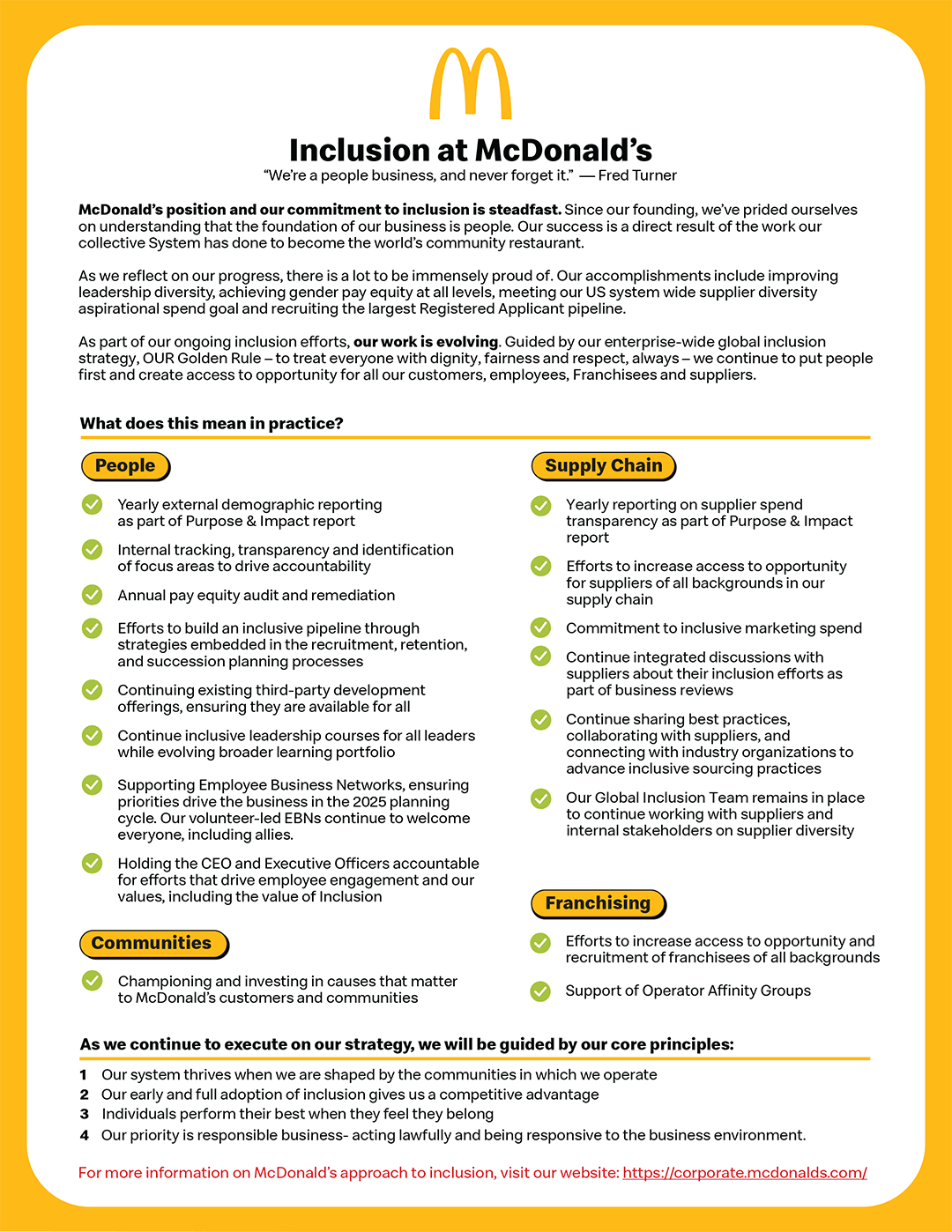
For crews and shift managers, the standards highlight the issues that most often turn into daily workplace problems: employee health and safety, prevention of workplace violence, prevention of harassment, discrimination and retaliation, and restaurant employee feedback. In practice, that means McDonald’s is telling franchisees that basic conditions in the store are not purely local matters when they affect the brand.
The company also says its system depends on strong supplier relationships and partners that respect fundamental rights for all people. That pushes the accountability conversation beyond the restaurant floor and into sourcing, compliance, and the broader chain of vendors that keep the Golden Arches running.
The policy framework behind the language
McDonald’s governance resources page points workers and stakeholders to a set of internal documents that include the code of conduct, standards of business conduct, human rights policy, certificate of incorporation, by-laws, and other guidelines. The company says its board has 12 members, 11 of them independent directors, along with an independent Corporate Responsibility Committee.
That structure is part of the story because McDonald’s draws a line between ethical business conduct and legal compliance. Its Standards of Business Conduct says the company is committed to conducting business ethically and in compliance with the letter and spirit of the law, a phrase that matters in a franchise-heavy business where a policy problem can sit with the operator, the franchisor, or both.
McDonald’s introduced its Human Rights Policy in 2018. The policy says it is guided by the United Nations Guiding Principles on Business and Human Rights, the International Bill of Human Rights, and the International Labour Organization Declaration on Fundamental Principles and Rights at Work. It identifies focus areas that hit restaurant workers directly: child labor, forced labor, freedom of association and collective bargaining, discrimination and harassment, wages, hours and overtime, and workplace safety.
Why the franchise model keeps testing those promises
The tension in McDonald’s system is that the brand sets standards, but local execution often decides what workers actually experience. In a chain with more than 43,000 restaurants, a policy can look strong on paper while the reality varies sharply from store to store, especially when local franchise owners control staffing, scheduling, discipline, and day-to-day supervision.
That is why the company’s governance language keeps circling back to responsibility. For crew members and managers, the practical takeaway is that a complaint about pay, harassment, safety, or recordkeeping may not fit neatly into one box. The franchisor may set the rule, the franchisee may run the shift, and corporate may still face the reputational and legal fallout if the system fails.
The company’s own disclosures also show how the brand thinks about scale. In its 2024 annual report materials, McDonald’s said the system includes “over two million employees and crew, the industry’s best franchisees, and our strong network of global suppliers united under the Golden Arches.” Its fourth-quarter and full-year results said global systemwide sales topped $130 billion for the year, a reminder that even a local labor dispute sits inside a vast commercial machine.
Outside pressure has pushed the company to widen the lens
McDonald’s did not arrive at this framework in a vacuum. In 2022, shareholders approved a proposal for a third-party civil-rights audit, and WilmerHale conducted the review over roughly 18 months. The audit included more than 100 interviews and sought feedback from corporate and restaurant employees, franchisees, suppliers, and outside organizations.
The resulting report pushed McDonald’s to keep working on franchisees and suppliers, strengthen managerial skills and accountability, and engage more with civil-rights and community-based organizations. That recommendation matters because it suggests the company’s own review saw the biggest risk not as a lack of policy language, but as the gap between policy and daily management.
That gap has shown up in past labor and civil-rights fights. In 2014, the National Labor Relations Board issued complaints against McDonald’s franchisees and McDonald’s USA, LLC, alleging violations of workers’ rights in connection with fast-food protests. In 2023, California labor authorities said four workers at a McDonald’s franchise won more than $113,000 after alleging retaliation for a workplace safety complaint. The same year, a McDonald’s franchise owner agreed to pay nearly $2 million to settle a sexual-harassment lawsuit brought by the Equal Employment Opportunity Commission.
What this means for workers inside the system
For crew members, the most useful reading of McDonald’s human rights and governance pages is simple: the company is acknowledging that conditions inside restaurants are not just a local issue, and not just a corporate issue either. The brand says it has standards for harassment, safety, retaliation, wages, hours, and supplier conduct, but the franchise model means those promises depend heavily on how local managers and owners enforce them.
That is the real tension inside McDonald’s system. The company has written a broad blueprint for rights and responsibility, with board oversight, policy documents, and supplier expectations to match. The harder question, and the one workers keep running into, is whether those rules are strong enough to hold when a complaint starts on a shift, in a kitchen, or in a franchise where the brand name on the sign is the same but the power structure behind the counter is not.
This article was produced by Prism’s automated news system from verified source data, official records, and press releases, then run through automated quality and moderation checks before publishing. The system is built and supervised by the people who set the standards it runs under. Read our full AI policy.
Did this article answer your question?