McDonald’s sets systemwide safe, respectful workplace standards for all restaurants
McDonald’s is making safe and respectful conduct a systemwide standard, but the real test is whether franchise restaurants enforce it day to day.
McDonald’s is trying to turn workplace respect into a systemwide rule, not a slogan
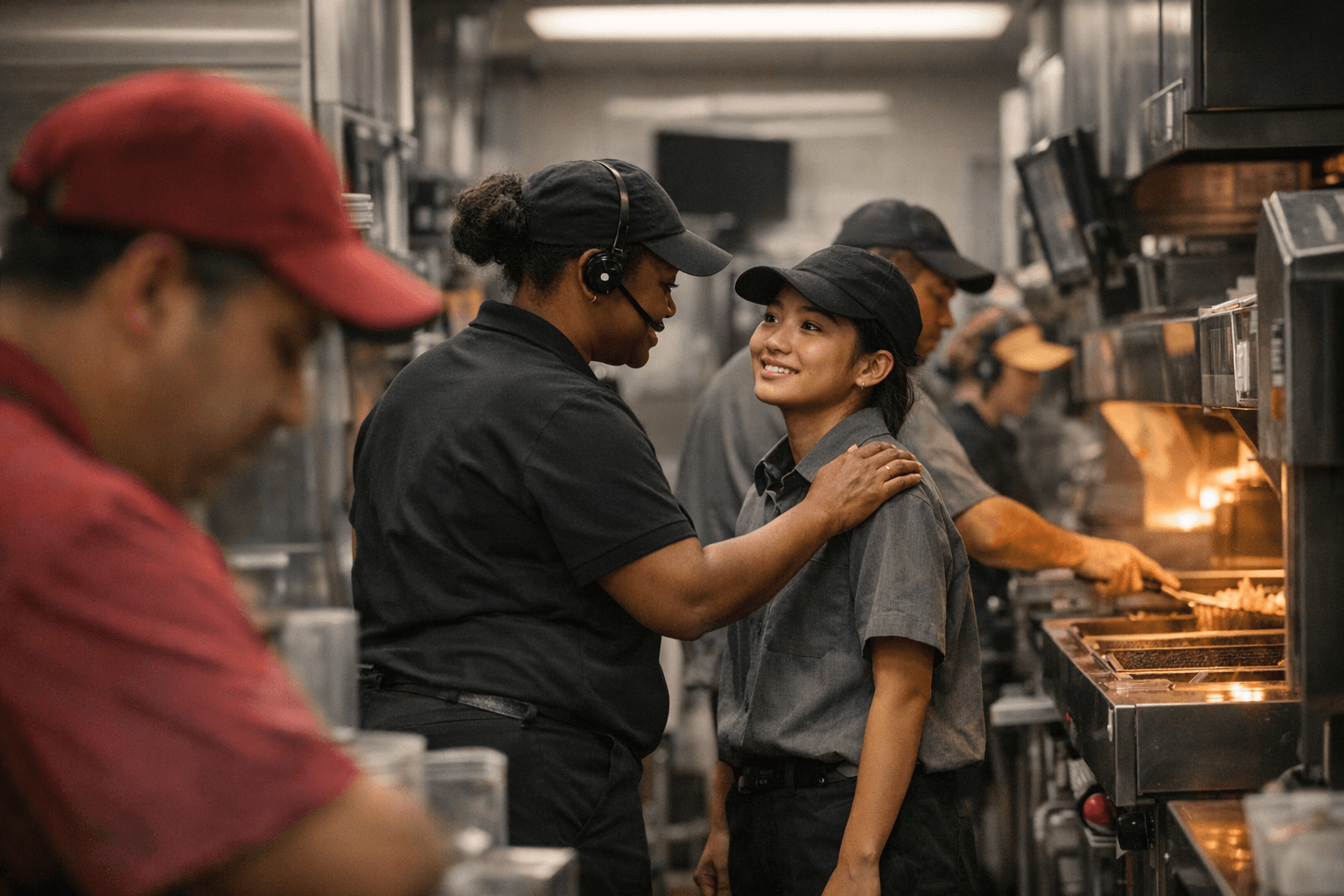
McDonald’s says every restaurant in its system, whether company-operated or franchised, is supposed to meet the same baseline for safety, respect, and accountability. That matters because most crew members do not experience the brand through corporate statements, they experience it through a manager’s response to a complaint, a shift schedule, a walk-in cooler, or whether a policy gets enforced after a bad interaction.
The company’s Safe & Respectful Workplaces standards are built around a simple idea: if you work at McDonald’s or even just enter a McDonald’s restaurant, the company says it has a responsibility to help protect your health and safety. For workers, that shifts the conversation from “nice workplace culture” to a measurable obligation. For franchise employees, it also raises a familiar question: when corporate sets the rule, who makes sure it actually happens on the floor?
What the standards cover
McDonald’s says its People Brand Standards focus on four areas: employee health and safety, workplace violence prevention, harassment, discrimination and retaliation prevention, and employee feedback. That is a broader framework than a generic anti-harassment promise. It ties conduct to training, reporting, and follow-up, which is exactly where many workplace policies succeed or fail.
The company says restaurants must implement the standards and are assessed on each criterion through local evaluation processes. That is the key detail workers should watch. A policy is one thing; a local evaluation process is where a manager, owner, or operator either proves the policy is real or exposes it as paperwork. If a store does not train crew, does not communicate rules clearly, or leaves workers unsure how to report concerns, then the gap is not theoretical. It is the difference between a standard and an empty poster on the wall.
Why franchised restaurants are the real test
McDonald’s says more than 2 million people work in franchised restaurants, alongside over 150,000 company employees in corporate offices and company-owned and operated restaurants. That means most of the brand’s workforce sits outside the corporate office, where day-to-day enforcement depends on franchise leadership, local managers, and the systems the company requires them to use.
That franchise structure is where the tension lives. Corporate can set the baseline, but crew members know the reality is often different from store to store, especially when labor is tight, managers are stretched, or a franchisee treats compliance as a cost rather than a priority. McDonald’s says it supports franchisees with optional tools, resources, policies and training, which suggests the company wants a common standard without taking over day-to-day operations. For workers, the important question is whether “support” also means accountability when a store falls short.
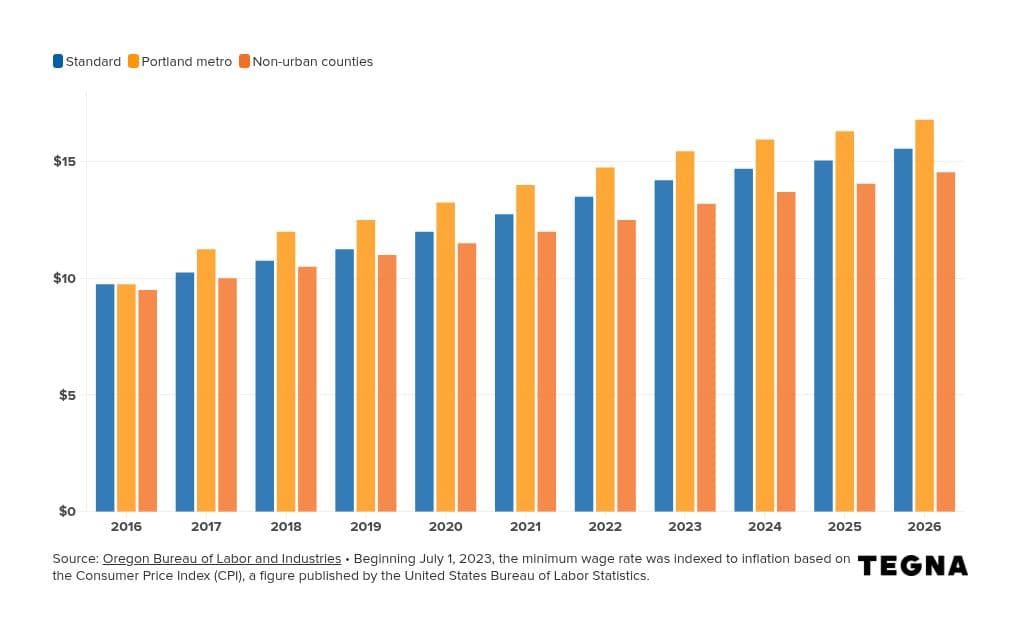
That question is especially relevant in a labor market shaped by Fight for $15 campaigns, minimum wage fights, and growing automation pressure. If a company is changing how restaurants are staffed, how much crew are paid, and how work is distributed between people and machines, then safe and respectful standards cannot be treated as a side issue. They become part of whether the job is sustainable at all.
How McDonald’s says the system is supposed to work
McDonald’s first announced its Global Brand Standards in April 2021, saying they would apply to all 39,000 restaurants worldwide and be backed by policies, tools, training and reporting mechanisms. The company now says it has more than 43,000 restaurants globally, which shows how large that promise has become.
The enforcement model is supposed to work in layers. First comes the policy itself. Then comes training and communication. After that come reporting channels, manager follow-through, and employee feedback loops. McDonald’s says the standards also include listening to employee feedback through surveys and action plans, which is important because a workplace can look compliant on paper while workers still feel unsafe or unheard. Surveys and action plans only matter if they lead to visible changes in scheduling, supervision, discipline, and staffing.
For managers, the message is blunt: compliance is not just about avoiding complaints. It is about documenting training, using violence-prevention procedures, and showing that the restaurant actually responds when concerns are raised. That is where a brand-wide standard becomes meaningful. It gives workers a basis to compare what they are experiencing against what the company says should be happening.
The civil rights audit adds pressure to prove the system works
McDonald’s has more evidence that this is not just a one-off announcement. In May 2022, a shareholder proposal asking for a third-party audit received majority support at the company’s annual stockholder meeting. The resulting civil rights audit ran for about 18 months and included more than 100 interviews with employees, franchisees, suppliers, and external organizations.
That audit matters because it examined how the company handles safe, respectful, and inclusive workplaces inside franchised restaurants, where most workers are. It also recommended that McDonald’s keep emphasizing manager accountability and broader external engagement. In plain terms, the audit reinforced the idea that policy alone is not enough. The company has to prove that managers, owners, and corporate leaders are all part of the same compliance chain.
The presence of WilmerHale in the audit process also signals how seriously McDonald’s wanted the review to be taken. For workers, though, the real question is not who wrote the report. It is whether the report changes what happens after a complaint, a conflict, or a safety problem.
What counts as proof
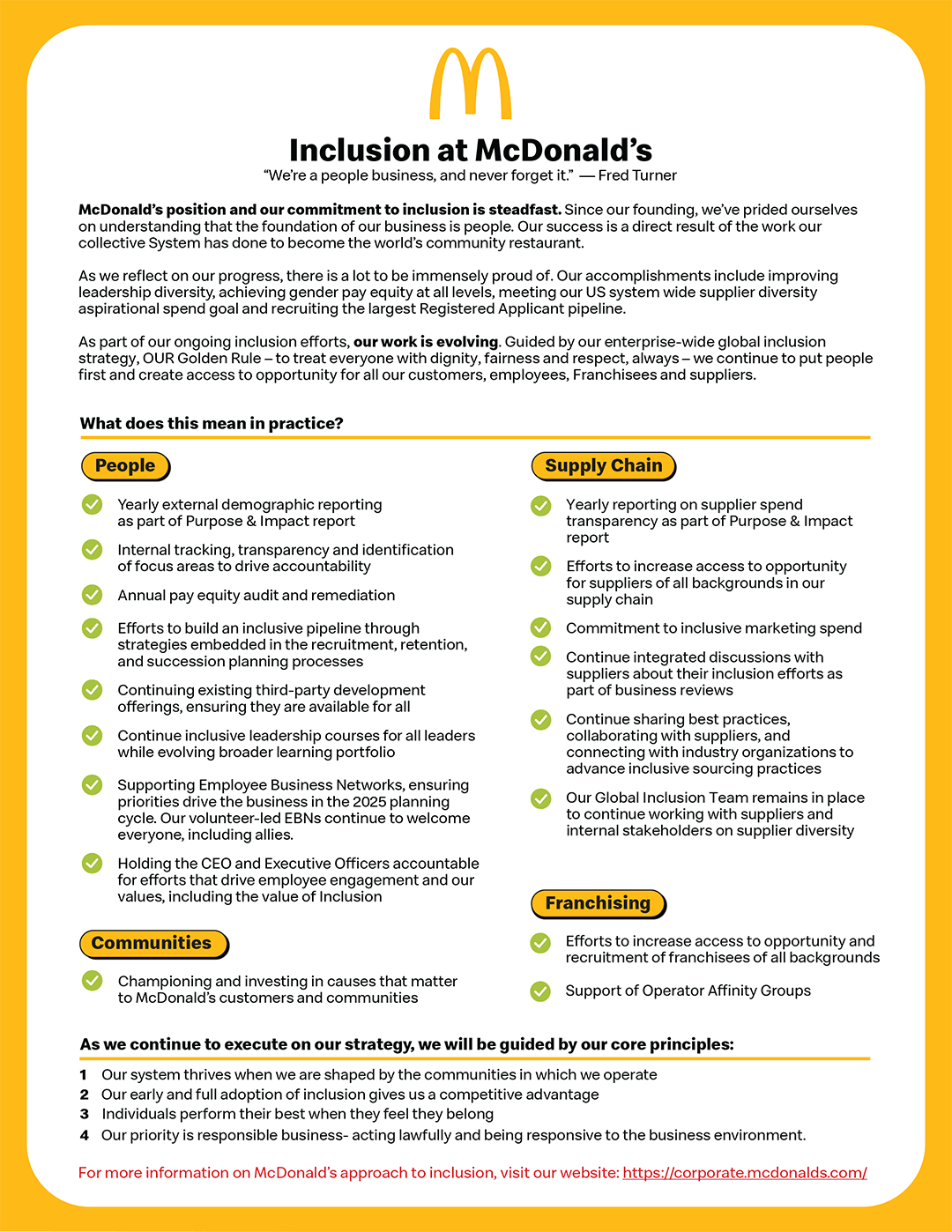
McDonald’s latest inclusion update gives workers a few numbers to judge the company by. The company says 84% of employees felt McDonald’s is an environment that allows them to be themselves, and 78% scored McDonald’s positively on its Inclusion Index overall. It also says it achieved gender pay equity at all levels and in every market in that update.
Those figures are useful, but they are only benchmarks. They do not tell a crew member whether their store is safer this month than last month, or whether a manager handled harassment the right way after a complaint. What they do show is that McDonald’s is trying to measure culture, not just declare it. That is a meaningful shift, because culture claims are easy to repeat and hard to verify.
For workers, the most practical standard is straightforward:
- Is the policy posted and explained in plain language?
- Do crew know how to report harassment, discrimination, violence, or retaliation?
- Are complaints tracked and resolved, not just acknowledged?
- Are managers held accountable when a store ignores the rules?
- Do surveys and action plans lead to visible changes on shift?
The larger business model is now part of the workplace story
McDonald’s says its human rights policy commits the company to safe, inclusive and respectful workplaces wherever it does business, and it includes freedom from discrimination and harassment, a safe and healthy workplace, and the freedom to associate or not associate and collectively bargain. The company also says its internal Human Rights Working Group spans supply chain, compliance, franchising, legal, marketing, operations, people, public policy, safety, security, sustainability and social impact.
That cross-functional structure tells you how McDonald’s sees the issue: not as an HR side project, but as part of the whole business. With more than 43,000 restaurants and millions of workers tied to the system, the company is under pressure to show that its standards travel from corporate policy into the actual workday.
The real measure of success will not be the wording of the standards. It will be whether the next worker who reports a problem sees a response that is fast, fair, and visible enough to change the culture of the store.
This article was produced by Prism’s automated news system from verified source data, official records, and press releases, then run through automated quality and moderation checks before publishing. The system is built and supervised by the people who set the standards it runs under. Read our full AI policy.
Did this article answer your question?