McDonald's slips below key technical level after strong sales growth
McDonald’s sales are still rising, but the share-price slide does not point to any clear change in crew schedules, pay, or staffing. The real story for workers is the gap between Wall Street weakness and store-level operations.
McDonald’s sales are still growing, but the recent weakness in its shares does not point to any obvious change on the floor for crew members, shift managers, or franchise employees. The company’s latest numbers still show an operating business that is expanding, while the stock has slipped below a technical level that traders have watched closely.
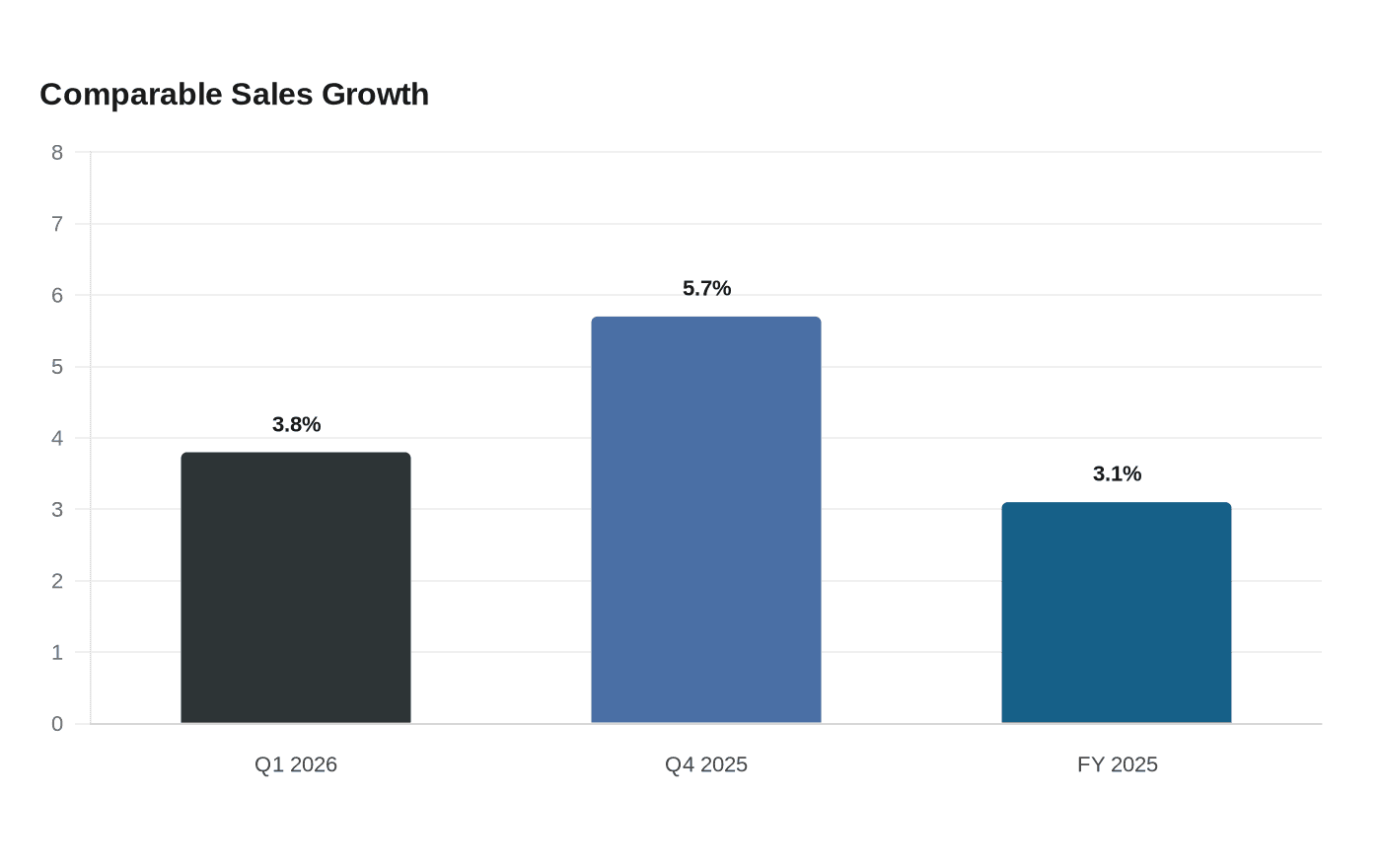
In first-quarter 2026, global comparable sales rose 3.8%, consolidated revenue increased 9%, and diluted earnings per share reached $2.78, with adjusted diluted EPS at $2.83. In the fourth quarter of 2025, global comparable sales rose 5.7%, and for the full year they increased 3.1%. McDonald’s said full-year 2025 global systemwide sales topped $139 billion.

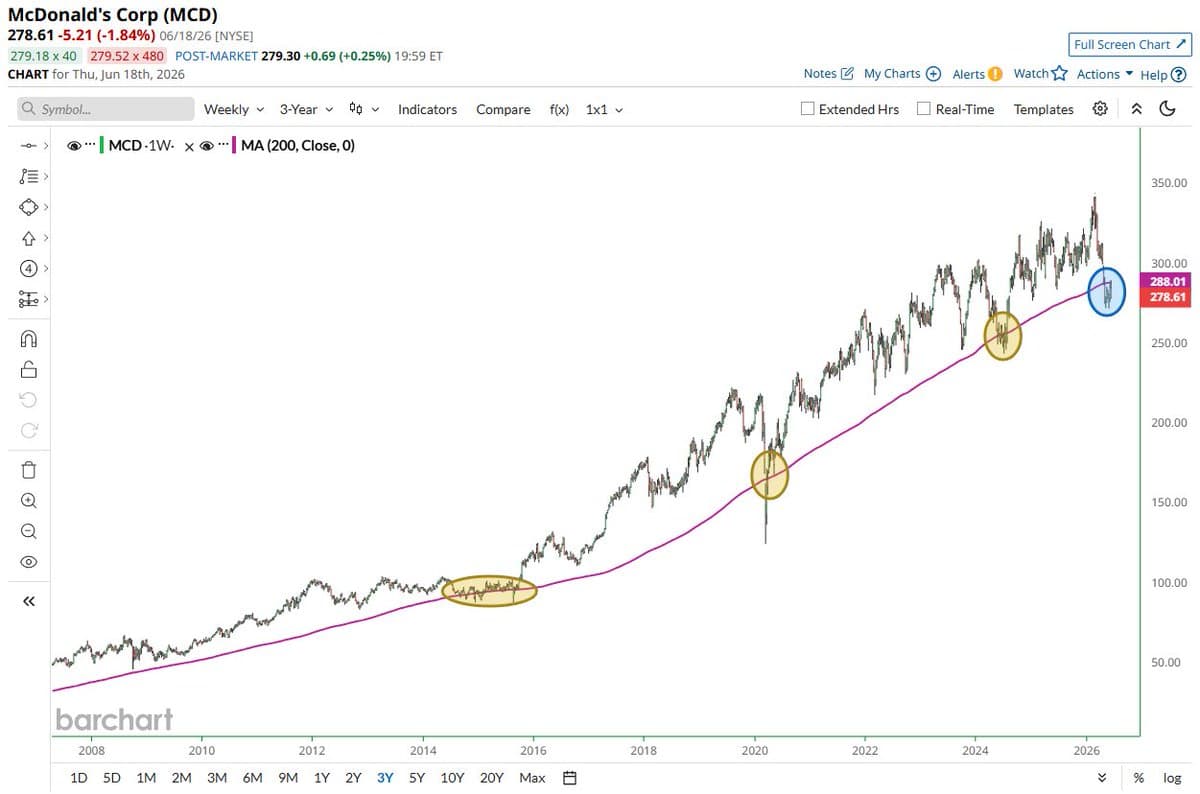
That is the backdrop to the stock’s recent slide. On June 18, Barchart showed McDonald’s trading at $278.61, near the bottom of its 52-week range of $271.85 to $341.75. Its technical summary put the stock below both its 50-day and 200-day moving averages, and about 11.77% below the 200-day line. Forbes had flagged a prior breakdown on Dec. 1, 2025, when MCD fell below its 200-day moving average at $305.87.
For workers, though, the more important question is whether the market’s unease changes anything in the restaurant. So far, McDonald’s own reporting points the other way. The company’s 2025 annual report leaned on value, familiarity, and trust, saying persistent inflation, tighter labor markets, trade dynamics, and geopolitical tensions continued to weigh on consumer sentiment, especially for lower-income households. That helps explain why management has kept talking up value rather than signaling a pullback in labor or restaurant investment.
Chris Kempczinski has said the company’s value strategy has helped traffic and improved its value-and-affordability scores. The company also raised its quarterly cash dividend by 5% to $1.86 per share in February 2026, extending a streak of 49 consecutive years of dividend increases. That is a message aimed at investors, not crew rooms, and there is no clear sign in the latest results that weaker shares are translating into shorter shifts, frozen promotions, or a pause in remodels.
For McDonald’s workers, the disconnect matters. Wall Street can punish the stock even when stores are selling more burgers, fries, and coffee. What matters inside the restaurants is whether those sales turn into steadier schedules, better hours, and a real path to advancement.
This article was produced by Prism’s automated news system from verified source data, official records, and press releases, then run through automated quality and moderation checks before publishing. The system is built and supervised by the people who set the standards it runs under. Read our full AI policy.
Did this article answer your question?