McDonald’s teams should prepare for World Cup traffic surges, NRN says
World Cup traffic could turn McDonald’s near fan zones into high-pressure service kitchens. The stores that win will be the ones that staff, stock, and secure for a surge before it hits.

World Cup traffic will not look like normal lunch rush
The 2026 FIFA World Cup is shaping up to be the kind of event that changes how a McDonald’s runs by the hour, not just by the season. With 48 teams, 104 matches, and 16 host cities across Canada, Mexico, and the United States, the tournament runs from June 11 to July 19, 2026, and FIFA says it is expected to draw more than 6.5 million fans to stadiums. Nation’s Restaurant News goes further, pointing to projections of up to 10 million visitors across host-city markets, with many staying about 12 days. That is not just a sports calendar story. For store teams, it is a traffic-planning story.
The operational lesson is simple: event-based demand behaves differently from ordinary meal traffic. Fans do not just show up hungry. They arrive in groups, they move around matches, they linger after games, and they often cluster around the same windows, especially in fan zones, transit hubs, airport corridors, and late-night corridors where post-match crowds look for a fast meal. That means a store can go from manageable to overwhelmed fast, especially if the team is still staffing and prepping for a standard daypart instead of a tournament-sized surge.
Where the pressure lands first
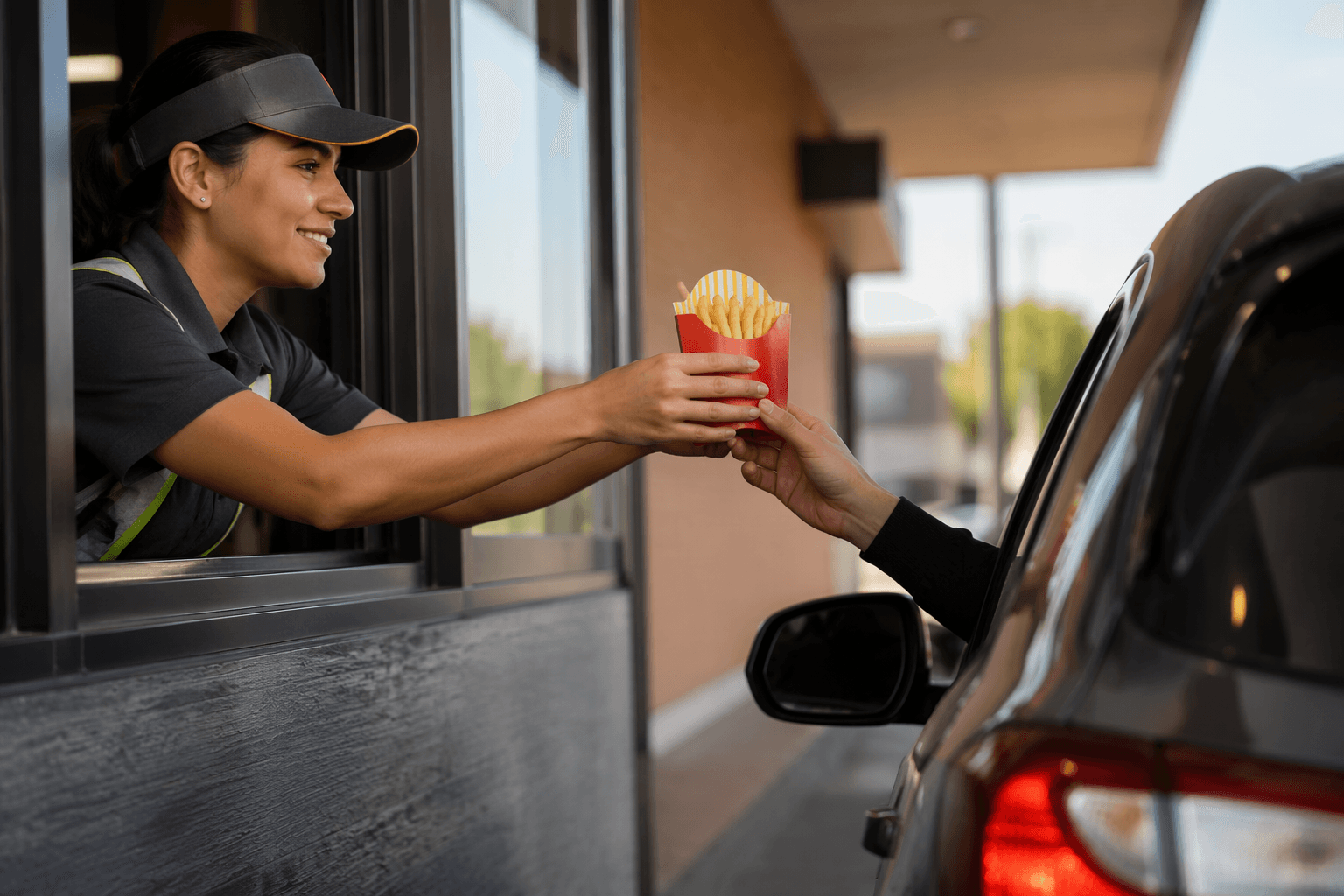
For McDonald’s crews, the most immediate changes will likely show up in order mix and speed of service. NRN says World Cup traffic tends to mean more carryout, more mobile orders, more bundles, and a stronger need to keep the front counter, drive-thru, and kitchen synchronized. That matters because a quick-service restaurant can only benefit from a crowd if the line moves and the product holds. If the lobby, drive-thru, and kitchen drift out of sync, the event turns into a service breakdown instead of a revenue opportunity.
Managers near host-city markets should expect the rush pattern to be less predictable than a standard weekday lunch or dinner. A match can create a pre-game spike, a halftime wave, and a sharp post-game surge, sometimes all in the same store. Late-night locations may also see fans looking for food after watch parties or public gatherings, while stores near transit systems could absorb waves of customers passing through between events and hotels. The practical risk is not just volume. It is volatility.
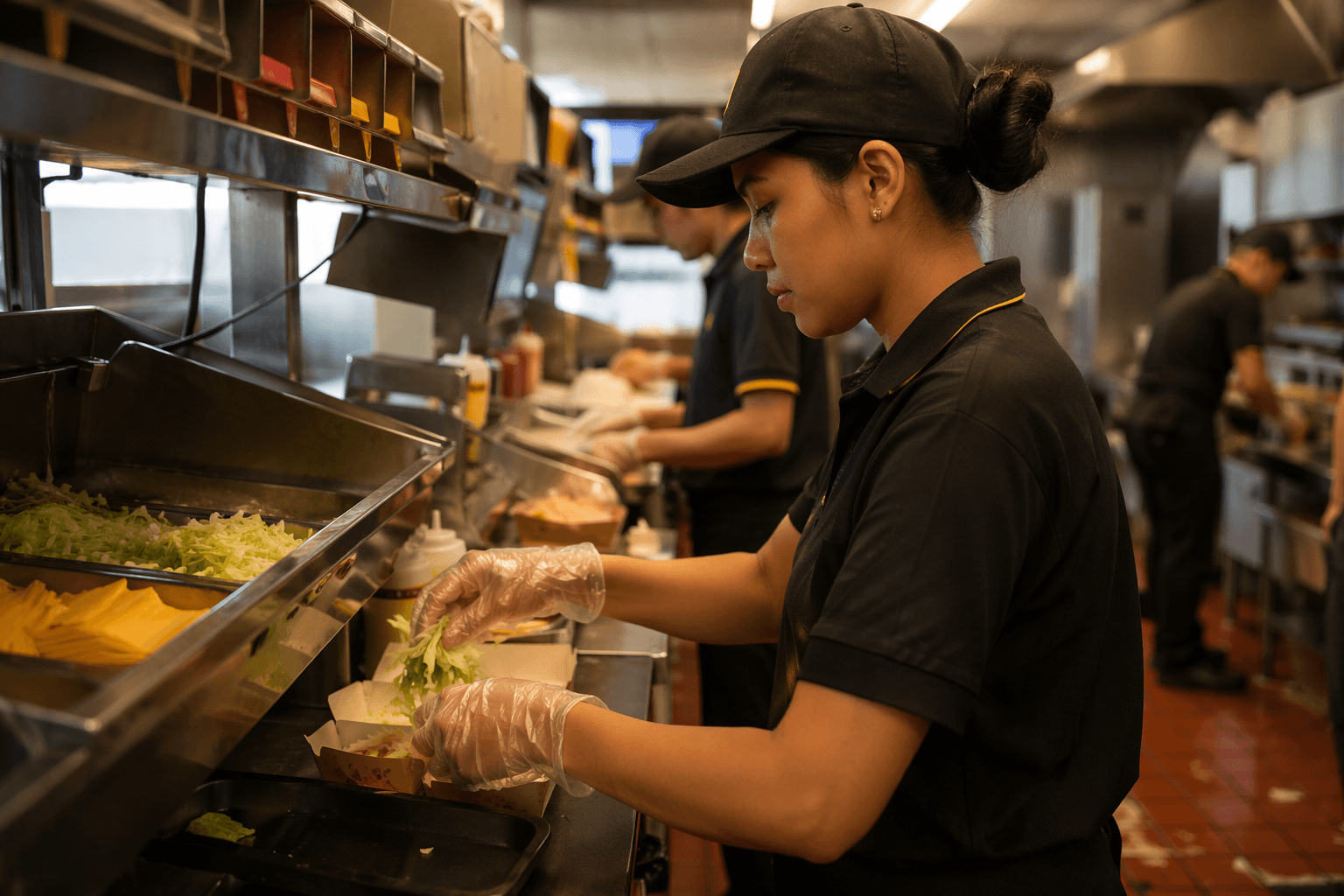
That is why the story is really about crew operations. Stores with strong line discipline, clear role assignment, and a kitchen that can absorb sudden spikes will have an edge. Stores that rely on the same staffing plan they use on an ordinary summer week may find themselves short on registers, short on runners, or short on product when the crowd hits.
What managers should be doing now
NRN’s core warning is that operators who benefit most from the World Cup will be the ones that prepare deliberately rather than react at the last minute. For McDonald’s managers, that means building the plan before the matches begin, not after the first crowded night. The most obvious areas are labor, prep, and communication across shifts, but the details matter just as much.
Start with scheduling. Managers should look hard at match times, likely watch-party windows, and local gathering points, then staff for peaks instead of averages. Cross-training matters too, because a store that can move a crew member from counter to packaging to expo without slowing down is better equipped to handle a sudden rush. Inventory planning should also move up the calendar, especially for items tied to the promotion and for the products most likely to move in bundles.
- Extra coverage for front counter, drive-thru, and packing stations during match-adjacent hours.
- Cross-trained crews who can shift quickly when one channel gets slammed.
- Tighter inventory control so a burst of demand does not empty a key item mid-rush.
- Clear shift handoffs, so the next crew knows which products are moving fastest.
- Security and crowd-control planning for stores likely to see large groups or lingering late-night traffic.
- Communication with franchise leadership about local event calendars and neighborhood watch points.
A practical World Cup checklist for store leaders would include:
That last piece matters because the promotional side and the operations side are joined at the hip. A big campaign only works if the store can actually deliver the food fast enough. If demand spikes because of the World Cup, the winning locations will be the ones that make the menu, labor, and product mix match the crowd instead of hoping the crowd behaves like a normal Tuesday.
McDonald’s is already leaning into the tournament
This is not a hypothetical for the company. McDonald’s announced a FIFA World Cup 26 meal and Happy Meal rollout on June 2, 2026, with the promotion beginning June 4 across participating restaurants worldwide. The meal can include a Big Mac or 10-piece Chicken McNuggets, plus fries and a drink, and the promotion features collectible cups tied to soccer figures including Christian Pulisic, David Beckham, Ronaldinho Gaucho, Thierry Henry, Son Heung-Min, Lamine Yamal, Alphonso Davies, Santiago Gimenez, and Grimace. NRN reported that the World Cup meal will roll out across 100-plus global markets.
That kind of promotion is designed to create traffic, but it also raises the stakes on execution. Limited-time marketing can lift attention and check averages, but only if the crew can keep orders moving and the product mix aligned with what customers actually want. McDonald’s has seen this before. NRN reported that the Grimace Shake challenge generated more than 1.4 billion impressions and produced double-digit traffic increases, a reminder that a cultural moment can spill directly onto the front counter when the brand gets the timing right.
Why this tournament matters for workers, not just executives
The World Cup also sits inside a bigger McDonald’s labor story. The company’s biggest promotions often depend on the same crews who already carry the strain of tight labor budgets, high turnover, and constant pressure to move faster. That is where managers need to think beyond marketing. If the tournament drives heavier shifts and longer peaks, workers need schedules that reflect the reality on the floor, not just the excitement of the campaign. Cross-training, enough prep, and enough people on the floor are not extras. They are what keep the store from burning out the crew.
The broader corporate backdrop explains why McDonald’s is moving early. FIFA renewed its long-standing partnership with McDonald’s in 2023 for the 2026 men’s World Cup, and McDonald’s is the official restaurant sponsor of the tournament. That gives the chain a built-in reason to push hard on matchday marketing, but it also puts more pressure on franchise operators and store managers to translate that partnership into smooth service.
For crew members, the likely outcome is familiar: more work when the event is hot, more pressure to be fast and flexible, and more opportunity if the store is staffed well enough to absorb the surge. For managers, the message is sharper. The World Cup is not just a logo on a cup or a meal box. It is a real test of whether a restaurant can handle a global event without letting the floor fall apart. The stores that prepare now will be the ones that keep serving when the crowd arrives.
This article was produced by Prism’s automated news system from verified source data, official records, and press releases, then run through automated quality and moderation checks before publishing. The system is built and supervised by the people who set the standards it runs under. Read our full AI policy.
Did this article answer your question?