McDonald's tells employees to bring workplace concerns to store managers
McDonald’s tells workers to take complaints to the store manager first, putting scheduling, termination and dating disputes in the hands of the person running the shift.
McDonald’s is telling employees that the first stop for workplace problems is the store manager. Its employee-concern FAQ says employment-related questions or concerns, including termination, scheduling and dating complaints, should be taken up with the McDonald’s store manager, a direct instruction that puts local restaurant leadership at the center of day-to-day disputes.
That matters because the issues crews face usually move faster than corporate processes. A bad schedule can hit a paycheck this week. A termination dispute can cut off the next shift. A relationship conflict can change the tone of a kitchen or service line immediately. McDonald’s published the FAQ on March 3, 2021, and the message was clear: for the problems most likely to flare inside a restaurant, the manager is the front door.

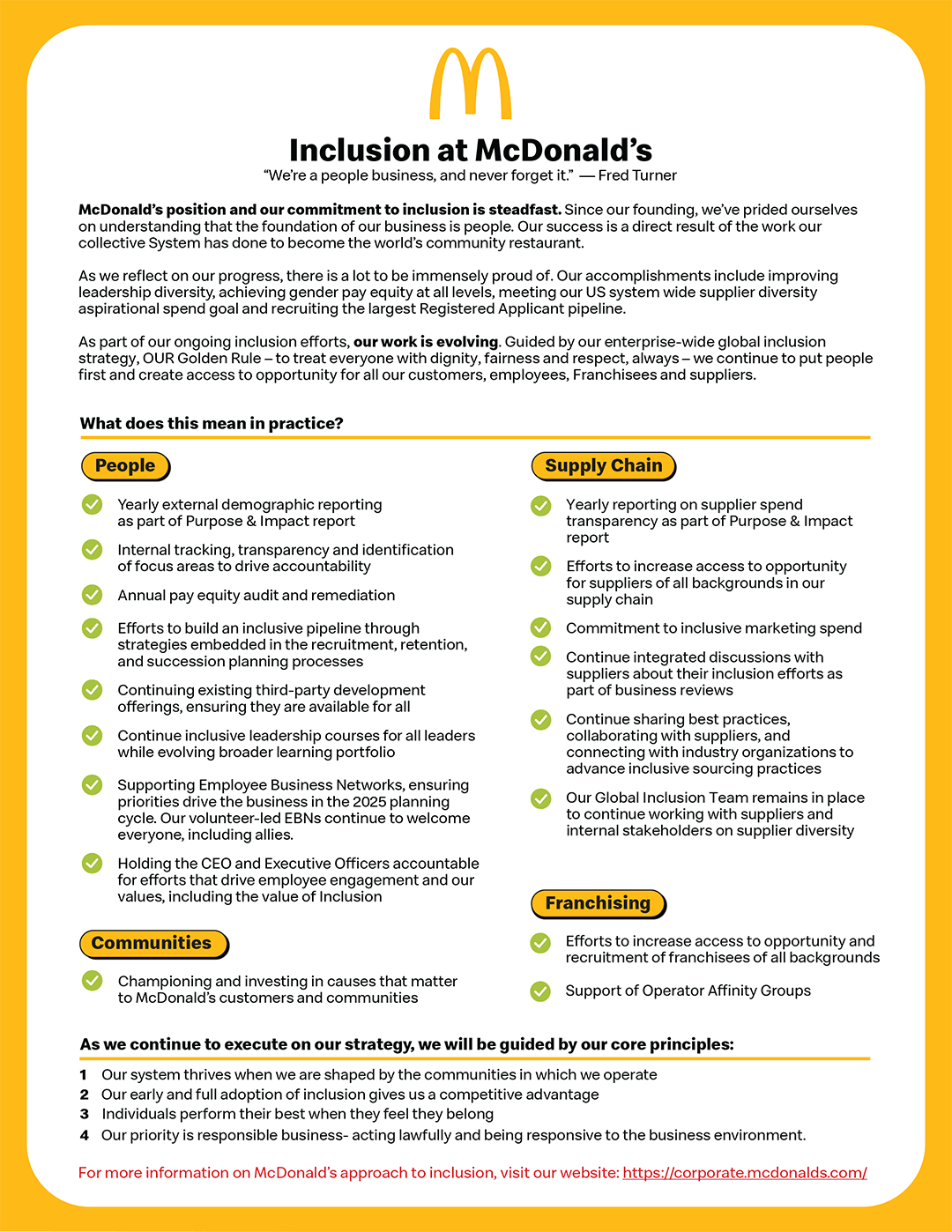
The company’s franchise structure helps explain why. McDonald’s says about 95% of its more than 44,000 restaurants worldwide are owned and operated by independent local business owners, which means the person hearing the complaint is often a franchisee-level manager rather than a corporate HR representative. McDonald’s says its People Brand Standards apply across company-owned and franchised restaurants and focus on harassment, discrimination and retaliation prevention, workplace violence prevention, restaurant employee feedback, and health and safety. The company also says restaurants are assessed on those standards through local evaluation processes.
For workers, that makes documentation critical. If a shift change, discipline issue or relationship complaint starts to snowball, the best record is usually the simplest one: date, time, who was involved and what happened. McDonald’s has said its global standards include annual crew and manager surveys, an action plan shared with employees, and an avenue for reporting complaints and concerns, which suggests the company expects problems to be raised locally first and tracked inside the restaurant. But in a fast-food workplace, escalation can stall if the manager is the one tied to the decision, or if the franchisee controls the day-to-day response.
The broader labor backdrop makes that tension harder to ignore. A McDonald’s joint-employer case was filed with the National Labor Relations Board on February 26, 2015, in Oak Brook, Illinois, part of a long fight over how much control the corporate brand has over franchise workplaces. In October 2021, McDonald’s workers in 12 U.S. cities walked off the job to protest alleged sexual harassment and violence in stores, and labor organizers said it was the fifth McDonald’s strike since 2018 over sexual harassment concerns. That history is why a short FAQ carries real weight: at McDonald’s, the store manager is not just an operator, but often the first and most important gatekeeper for whether a complaint gets handled at all.
This article was produced by Prism’s automated news system from verified source data, official records, and press releases, then run through automated quality and moderation checks before publishing. The system is built and supervised by the people who set the standards it runs under. Read our full AI policy.
Did this article answer your question?