McDonald’s touts first jobs as a path to long-term growth
McDonald’s says its first jobs should teach skills that last, and the real test is whether crew training, promotion paths and school support turn that claim into daily practice.
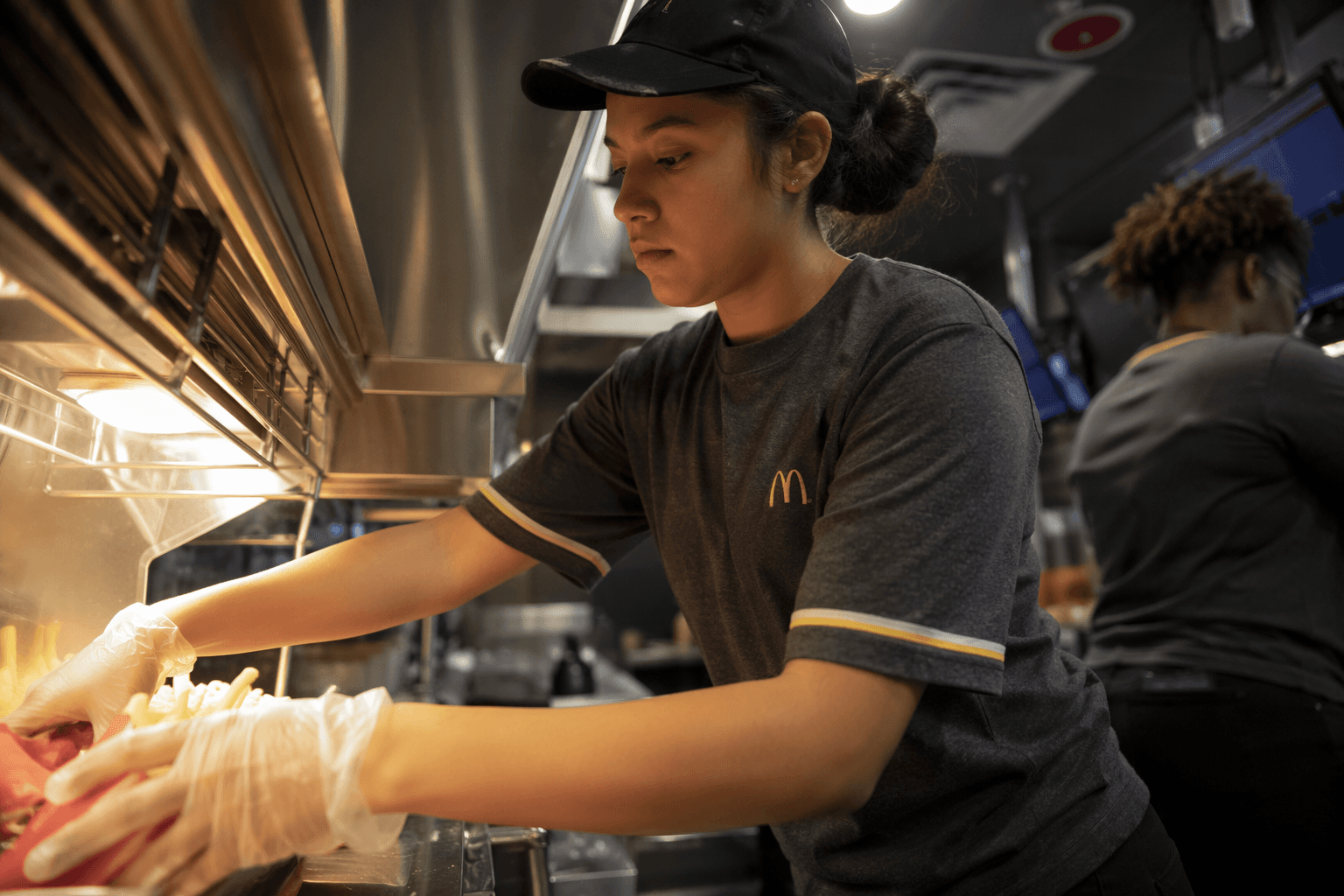
McDonald’s wants its first job to be more than a stopover. The company is framing crew work as a place to build habits that matter later, from confidence and communication to teamwork and responsibility. That promise sounds simple, but in a restaurant built on speed, repetition and tight margins, it only holds up if the floor experience gives workers a real path forward.
What McDonald’s means by “best first job”
When McDonald’s says it wants to be America’s best first job, it is making a claim about value, not just branding. The company says the work behind the counter helps crew members learn soft skills that transfer beyond a single shift, including confidence, responsibility, communication and teamwork. For employees, that matters because a first job can either lock someone into routine labor or introduce the kind of discipline that opens doors later.
That framing is especially important in fast food, where many workers are young, new to the labor market, or using the job to bridge school, family obligations or another career. McDonald’s is telling them that even if they do not stay long, the job should still leave them with something durable. The strongest version of that promise is not just learning how to make a sandwich quickly. It is learning how to show up on time, handle pressure, recover from a customer complaint and work smoothly with a team.
For managers, the message cuts the other way too. If the company is serious about a first-job mission, then stores need structure. New hires do not arrive with those habits built in. They need coaching, repetition and enough consistency that the job becomes a place where work skills are taught, not merely demanded.
Where the promise becomes concrete
McDonald’s tries to give the slogan substance through Archways to Opportunity, its education program. The company says the program supports English-language learning, high school completion and college pathways. It also says Archways has increased access to education for more than 82,500 restaurant employees and awarded over $185 million in tuition assistance.
Those numbers matter because they move the conversation from abstract branding to something workers can measure. A company can say it cares about growth, but tuition assistance and education access are the places where that claim becomes visible in payroll records, school plans and career decisions. For a crew member trying to balance shifts with classes, that support can be the difference between sticking with school and dropping it.
Archways also reinforces a broader workplace message: McDonald’s is not just selling an hourly job, it is selling a platform for mobility. That is significant in an industry where many workers assume fast food is dead-end labor. By linking restaurant work to education, the company is trying to show that a job in a local store can connect to a diploma, a degree or a stronger résumé elsewhere.
What a real first-job path should look like on the floor
The best test of McDonald’s promise is what happens after orientation. A first job only becomes a bridge if the store gives workers a chance to learn, practice and move. The company says the skills from restaurant work are transferable, and that is true only when the restaurant teaches more than task execution.
Crew members should be able to see a path from entry-level work to a shift lead role, a supervisor role or even a different career outside fast food. That path does not happen by accident. It takes predictable coaching, clear promotion standards and enough feedback that workers know what good performance looks like. If the job is reduced to endless repetition, then the promise of long-term growth stays on paper.
That is where McDonald’s workplace story becomes relevant to both sides of the counter. Employees need to ask whether the store is helping them build habits that matter next year, not just this week. Managers need to ask whether they are creating workers who can grow or just filling slots in the schedule. The gap between those two approaches is often where retention lives or dies.
Why this matters in a changing fast-food industry
The long-term value of a first job looks different now than it did a decade ago. Fast food is under pressure from labor shortages, higher minimum wage laws and the continuing fallout from Fight for $15, which pushed pay and working conditions into the center of the national conversation. At the same time, automation and AI are changing which tasks need human labor and which can be handed to machines.
That makes McDonald’s first-job pitch more than a feel-good message. If more routine work gets automated, the skills that remain valuable are the ones the company says it is teaching: communication, teamwork, responsibility and the ability to adapt. In that sense, a restaurant job has to do more than teach a single station. It has to prepare people for a workplace that is already changing around them.
For franchise owners, the stakes are practical. A store that can train workers well, support school goals and create visible advancement is more likely to hold onto staff long enough to avoid constant churn. For corporate leaders, the challenge is consistency, because a brand promise only works if it shows up in the store where the shift starts and ends. The chain can talk about opportunity at the national level, but workers experience it one crew meeting, one trainer and one promotion at a time.
The real measure of the promise
McDonald’s is right that a first job can shape a career. The real question is whether every store makes that possible, or whether the slogan outpaces the experience. The company’s education aid and the scale of Archways to Opportunity give the pitch real weight, especially with more than 82,500 employees touched and over $185 million in tuition assistance behind it. But the everyday test is simpler and stricter: does the restaurant teach workers how to grow, or only how to keep up?
If McDonald’s wants to own the “best first job” claim, it has to prove that a crew job is not just the first paycheck. It has to be the first place workers learn skills that still matter long after the apron comes off.
This article was produced by Prism’s automated news system from verified source data, official records, and press releases, then run through automated quality and moderation checks before publishing. The system is built and supervised by the people who set the standards it runs under. Read our full AI policy.
Know something we missed? Have a correction or additional information?
Submit a Tip