McDonald's warns of softer second quarter as low-income pressure persists
Higher gas prices are pushing low-income guests to visit less and trade down, even as McDonald’s posted a strong first quarter. Management now sees a softer second quarter ahead.

Higher gas prices are starting to show up at the counter, not just in the macro numbers. McDonald’s executives said lower-income consumers are feeling the squeeze, a shift that can mean fewer visits, smaller orders and more uneven rushes for crew members as the chain heads into a softer second quarter.
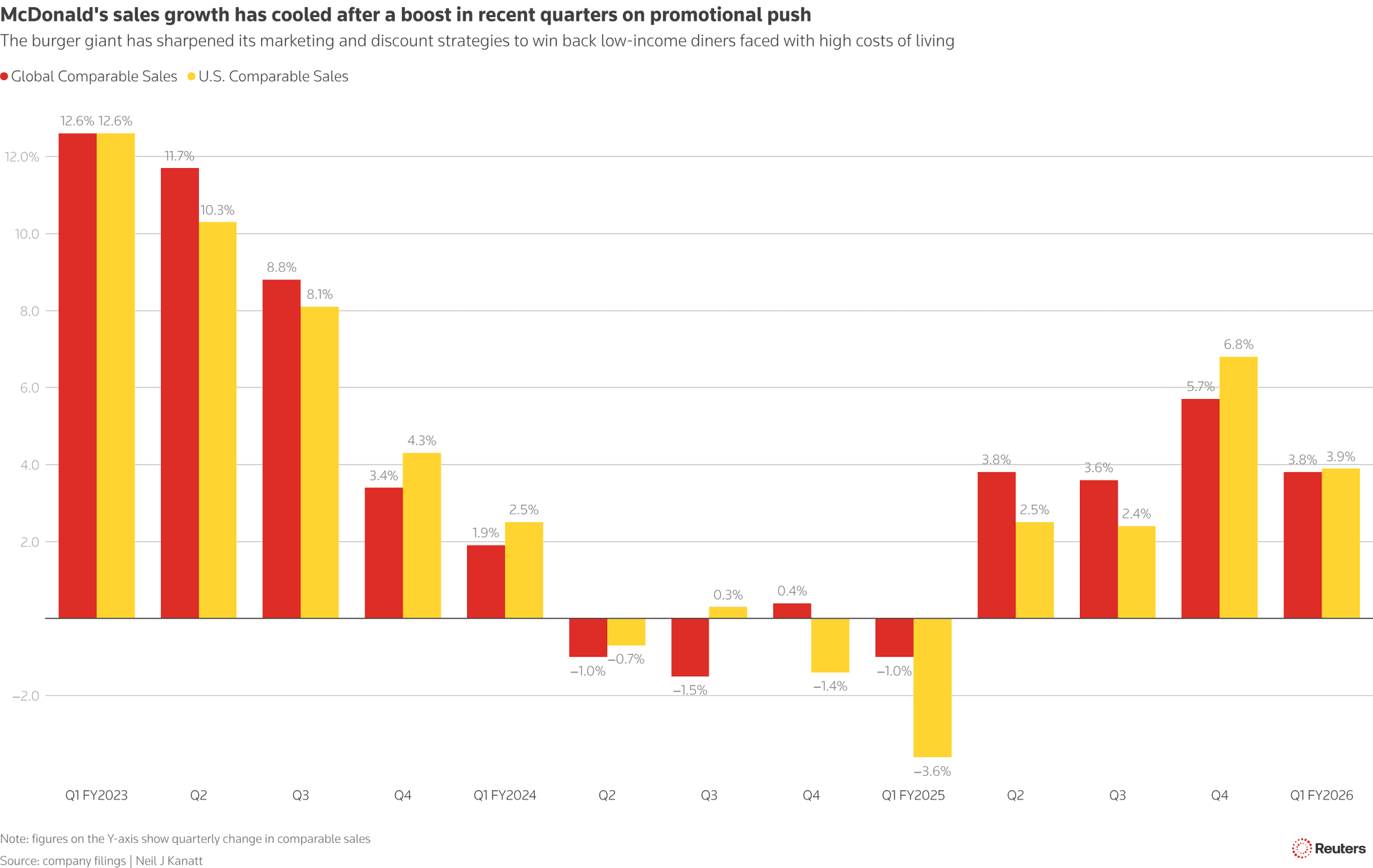
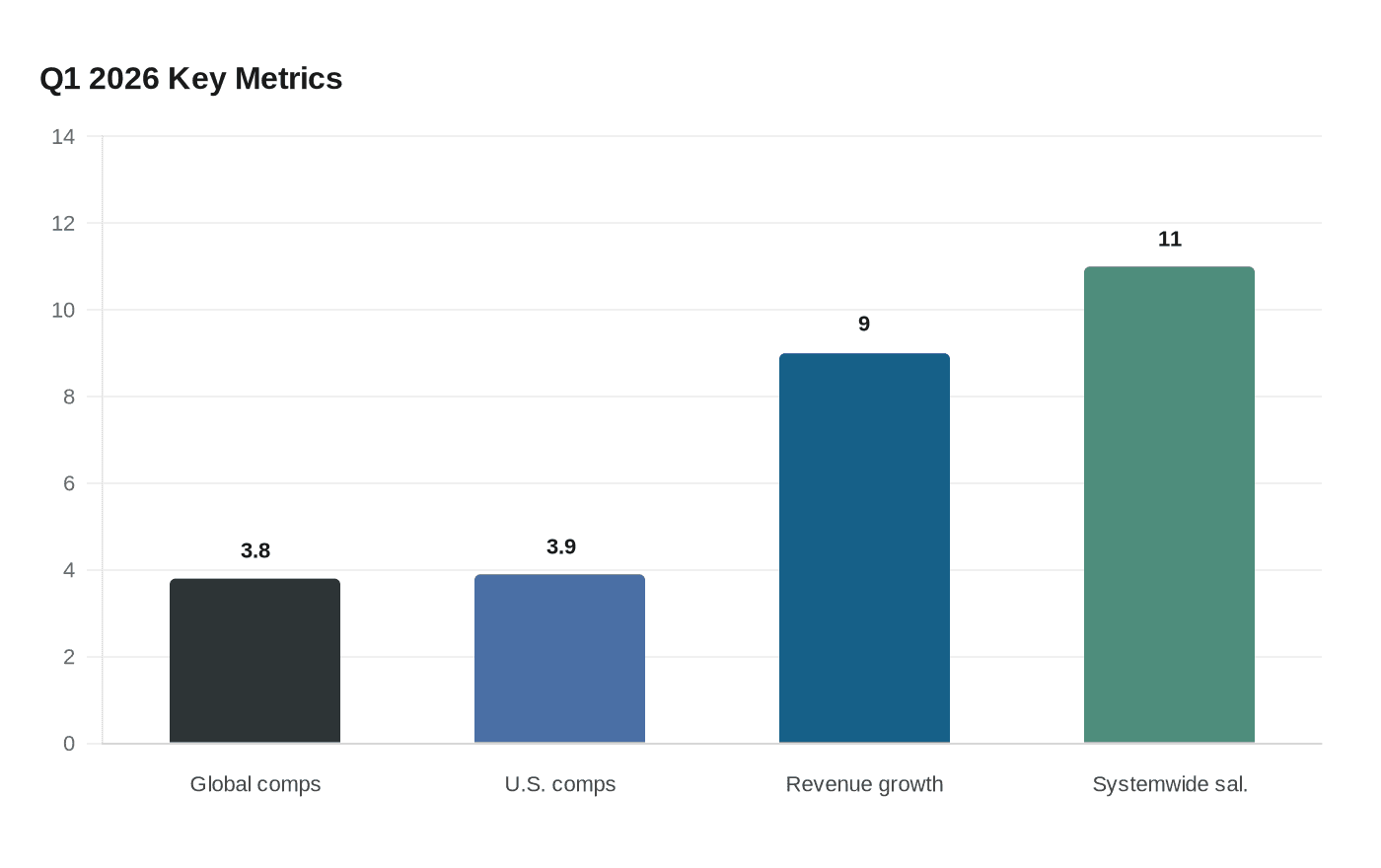
The warning landed after a first quarter that still looked strong on paper. McDonald’s said global comparable sales rose 3.8% and U.S. comparable sales increased 3.9% in the first quarter of 2026. Consolidated revenue climbed 9% to $6.52 billion, ahead of analysts’ estimate of $6.47 billion, and adjusted diluted earnings per share came in at $2.83 versus expectations of $2.74. Diluted EPS was $2.78, with the adjusted figure reflecting restructuring charges, including $47 million in pre-tax charges. Systemwide sales rose 11% to more than $34 billion, and systemwide sales to loyalty members topped $9 billion across 70 markets.
Still, the company’s tone was cautious. CEO Chris Kempczinski said consumer spending is “not improving” and may be “getting a little bit worse,” while also saying elevated gas prices hit low-income diners disproportionately and that the pressure is expected to continue. CFO Ian Borden said McDonald’s expects a “meaningful deceleration” in second-quarter growth compared with the first quarter. Reuters also reported that comparable sales in both the U.S. and international markets turned slightly negative in April, a sign that the early-year momentum may already be fading.
McDonald’s has responded by leaning harder on value. In mid-April, the company expanded its McValue platform with items priced under $3 and a $4 breakfast meal deal, a move aimed at guests who are increasingly trading down and picking simpler orders instead of full meals. That kind of shift matters inside the restaurant, where value traffic can change the mix of tickets, concentrate demand around breakfast and lunch, and put more pressure on labor planning when managers are trying to match staffing to a more unpredictable flow of customers.
The company is not facing that squeeze alone. Shake Shack, Papa John’s, Wingstop and Domino’s Pizza have also reported weaker sales growth, a reminder that households under pressure are looking harder at every purchase. For McDonald’s franchisees and managers, the message is clear: strong headline numbers do not erase the operational challenge of serving customers who are still spending, but doing so more carefully.
McDonald’s framed the quarter as one shaped by a “challenging environment,” even as Kempczinski said value leadership, marketing and menu innovation continued to support demand. For workers, that usually means the same thing in practice: value, speed and tighter execution stay at the center of the shift.
This article was produced by Prism’s automated news system from verified source data, official records, and press releases, then run through automated quality and moderation checks before publishing. The system is built and supervised by the people who set the standards it runs under. Read our full AI policy.
Did this article answer your question?