McDonald's workers' comp claims depend on state-specific injury systems
A kitchen injury at McDonald's can turn into a state-by-state claim fast. The first 24 hours decide whether treatment and lost wages move smoothly or stall.
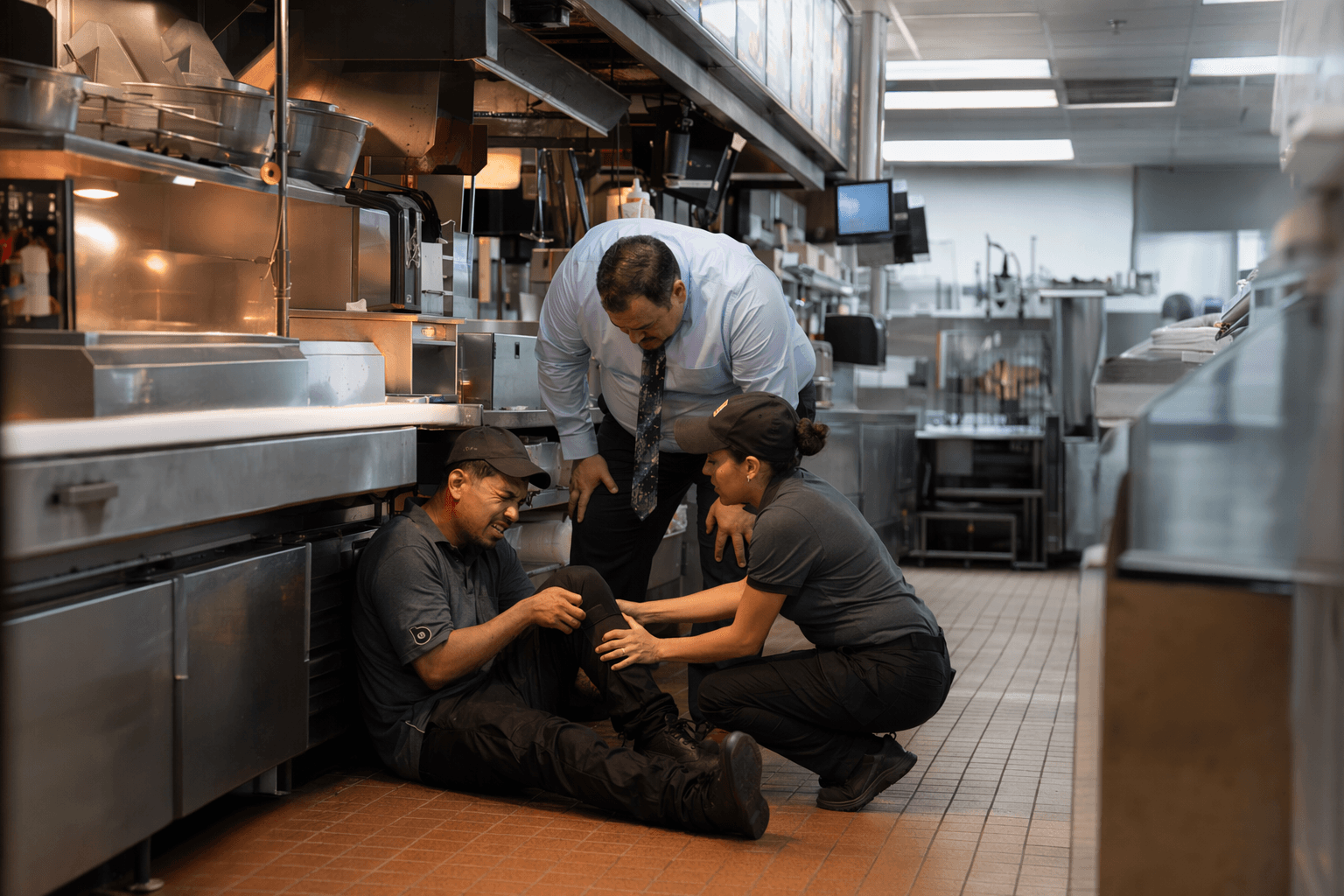
The first 24 hours decide a lot
A fryer burn, a wet-floor fall or a strained shoulder can turn a normal shift into a state-by-state paperwork test. For McDonald's crew members, the most important fact is simple: workers' compensation is not one national system for private-company restaurant workers. The U.S. Department of Labor says people injured on the job while working for private companies should contact their state workers' compensation board or official, because the real claim process lives in state systems.
That matters in a McDonald's kitchen because injuries do not wait for a convenient moment. Burns, slips and repetitive strain can all send a worker into a claims process that pays for medical treatment, wage replacement and, in some cases, vocational rehabilitation. The first day after the injury is where workers either preserve that path or accidentally slow it down.
Step one: report the injury immediately
The first move is to tell the manager on duty as soon as the injury happens. Waiting too long is one of the biggest mistakes workers make, especially when the injury seems minor at first. A burn that stings for ten minutes can worsen later, and a shoulder strain from lifting supplies can become the kind of injury that keeps a crew member off the schedule.
Fast reporting helps for another reason: it creates a clean record that the injury happened at work, during that shift, in that location. In a restaurant where company-owned stores and franchised stores operate under the same brand, clear reporting matters even more because the claim should move through the correct local system, not through guesswork or chain-of-command confusion. McDonald's says its People Brand Standards apply across all McDonald's restaurants, whether company-owned or franchised, which makes immediate reporting a workplace expectation, not a favor.
Step two: get treatment and do not downplay a burn or fall
The Department of Labor says workers' compensation exists to cover the cost burden of work-related injuries and disease, and that starts with medical treatment. If a burn from fryer oil, a fall on a wet floor or a slip that sends a hot pan into a worker's arm needs medical attention, the worker should get it right away and tell the provider that the injury happened at work.
Restaurant injuries can escalate fast. CDC and NIOSH materials say slips, trips and falls are common events that can lead to restaurant worker burns, because a stumble can knock hot liquids onto the body. OSHA says deep-fat fryers are the number one cause of burns for teen restaurant workers, which is a blunt reminder of how quickly a routine kitchen task can go wrong. Inexperience and pressure to keep up during a rush can add to the risk.
Step three: document everything while the details are fresh
The claim is easier when the worker records the basics before the shift blurs together. Write down the time, the exact place in the restaurant, what caused the injury and who saw it. If a wet floor caused a fall, note whether there was a warning sign or whether the spill was still being cleaned. If hot oil splashed during fryer work, note what task was being done and who was nearby.
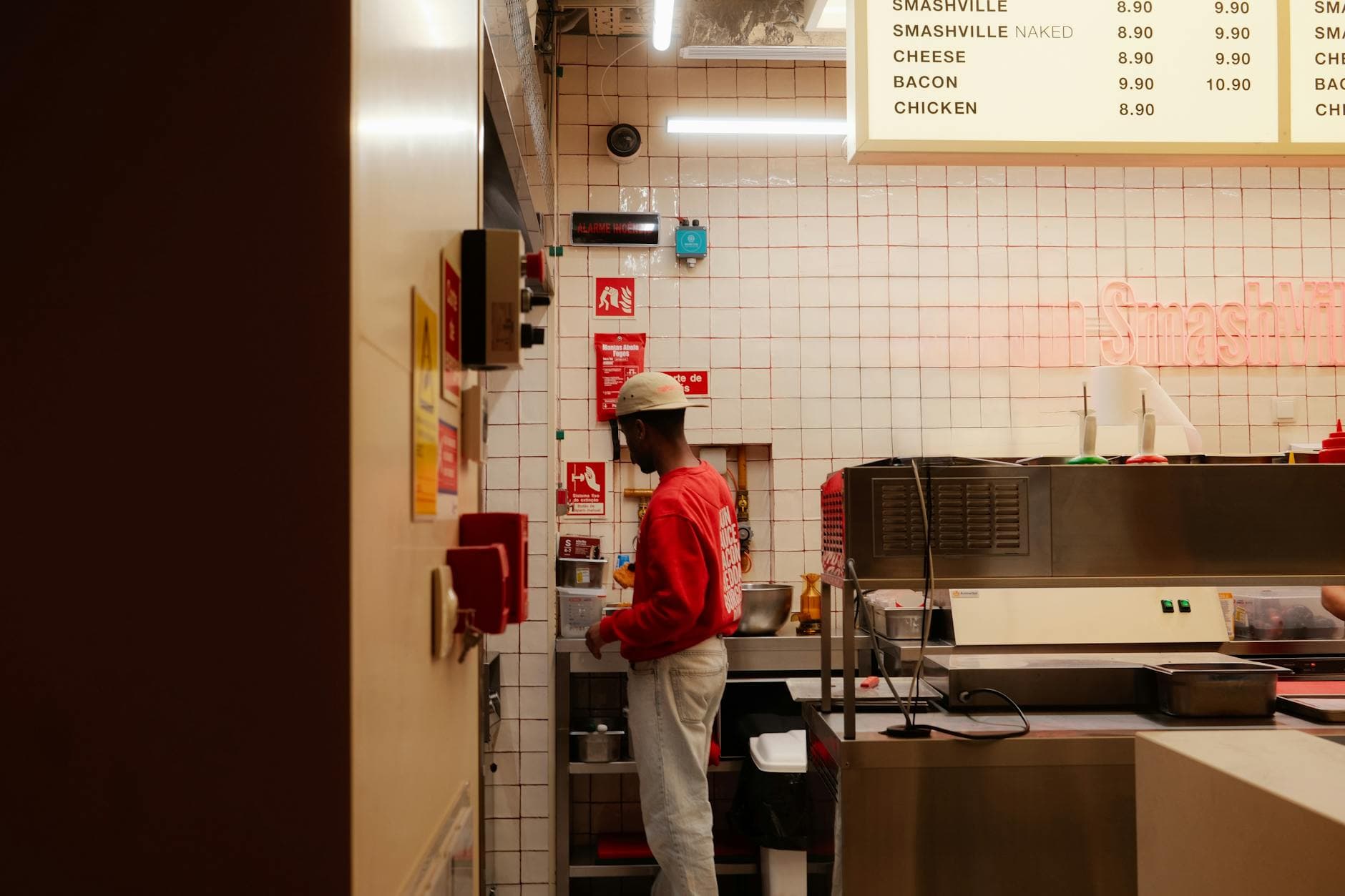
Witnesses matter. So do medical visits, first aid given at the store and any follow-up treatment. The Department of Labor points workers to their state workers' compensation officials for the correct contact information, and the agency says all states and territories have their own workers' compensation webpages. That means the paperwork path can vary, but the value of a clean incident record does not. A worker who documents the event early is usually in a much better position than one trying to reconstruct it days later from memory and a manager's half-finished notes.
What managers need to do before the claim turns messy
For managers, the immediate job is not to debate fault. It is to keep the injury from becoming a payroll problem, a legal dispute or both. That means making sure the worker knows where to get help, documenting the incident accurately and getting the correct forms into motion quickly. In a franchise system, the store manager may answer to a local operator, but the injured worker still needs a clear path to the right state process.
McDonald's says it uses a global claims system called GAIL, with Crawford & Co. and local partners handling claims under McDonald's-specific claim-handling guidelines. For workers, that signals that claims are not supposed to disappear into a black box. For managers, it means the store's response should be coordinated, not improvised. A delayed report or a missing form can slow treatment authorization and wage benefits, especially when the injury crosses between store-level management and the outside claims structure.
Why first aid training belongs on the same checklist as fryer cleaning
The safety side of this story is not abstract. CDC guidance says restaurant supervisors and employees should be trained in basic first aid for burns, and first-aid materials should be easily accessible. OSHA says employees should use proper hand protection when hands are exposed to hazards such as cuts, lacerations and thermal burns. Those are not decorative workplace-safety points. They are the difference between a controlled response and a burn that spreads because nobody had the right supplies within reach.
NIOSH also notes that a work-related injury can spark a useful conversation between employers and employees about how to reduce hazards and prevent repeats. In a fast-food kitchen, that conversation should not wait for a serious injury to force it. A burn kit by the line, a clear path to report an injury and a manager who knows the state claim route can save a worker from losing wages while a paperwork error gets sorted out.
The bigger lesson for McDonald's workers
McDonald's runs on speed, but workers' compensation does not reward speed alone. It rewards fast reporting, solid documentation and the right state filing. That is especially true for crew members who assume a minor burn or slip is not worth reporting, or for managers who hope an injury can be handled quietly and later.
The real lesson is that a kitchen injury is both a health issue and an employment issue from the first minute. Get treatment, tell the manager, write down what happened, identify witnesses and move the claim into the state system without delay. In a chain as large as McDonald's, where the same fryer, floor and rush-hour pressure can exist in a corporate store or a franchise, the worker who knows the process early is the worker least likely to get stuck waiting for benefits that were supposed to help in the first place.
This article was produced by Prism’s automated news system from verified source data, official records, and press releases, then run through automated quality and moderation checks before publishing. The system is built and supervised by the people who set the standards it runs under. Read our full AI policy.
Did this article answer your question?