McDonald's workers should know federal rights on breaks, overtime, safety
Federal law does not guarantee a meal break, but it does protect paid short breaks, overtime after 40 hours, and the right to speak up together.
Breaks are not automatic, but they are not free labor either
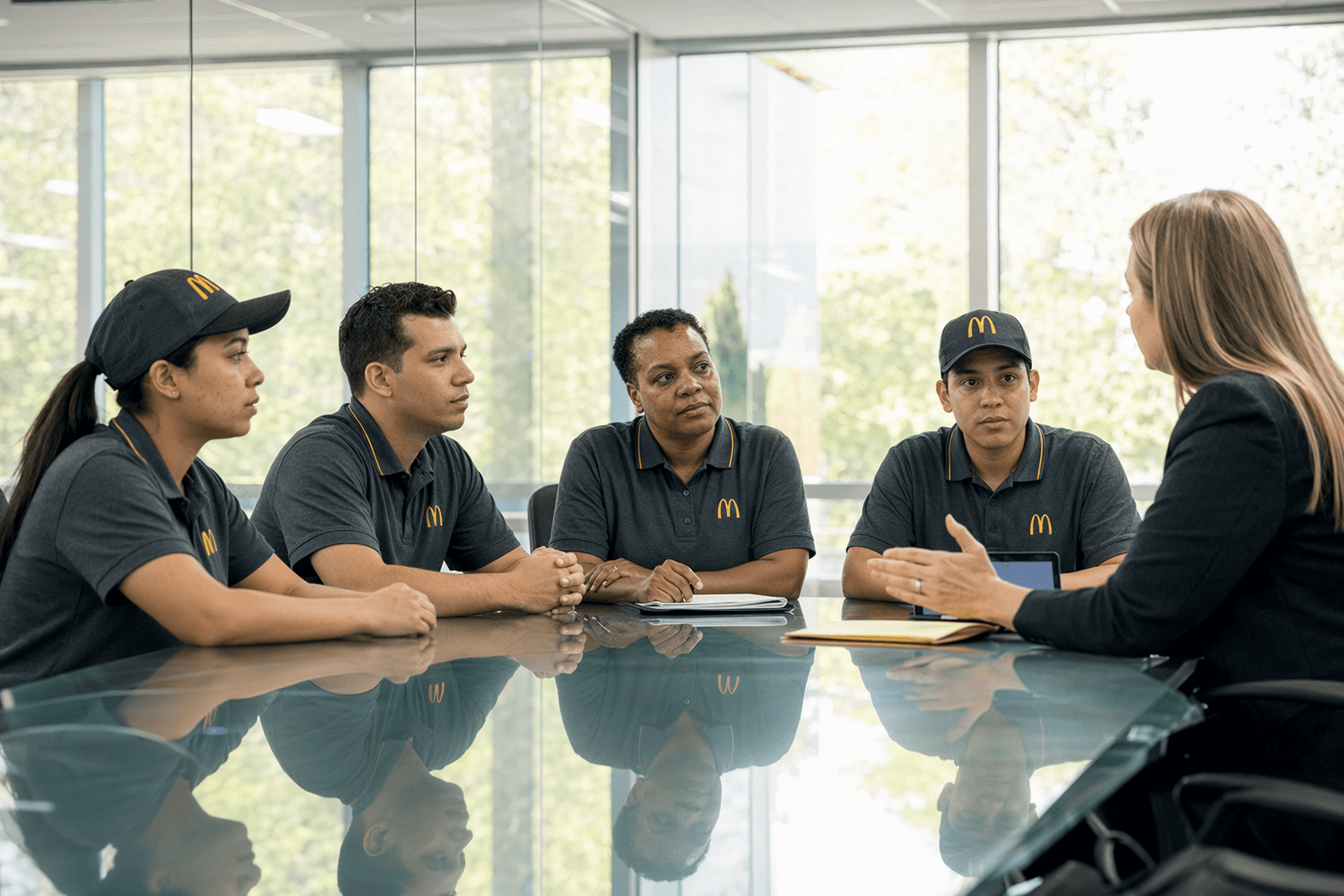
The biggest surprise for a lot of McDonald’s crew members is simple: federal law does not guarantee a lunch break or a coffee break. That does not mean a manager can treat every pause as charity. When an employer offers a short break of about 5 to 20 minutes, the Department of Labor says that time is usually compensable work time.
That distinction matters in the middle of a rush. If you are pulled off the fryer for a 10-minute reset, sent to grab ice, or told to step away from the window for a quick breather, that time generally belongs on the clock. A meal period is different, so the practical move is to ask whether a break is paid or unpaid before you assume your time has been handled correctly. Federal law sets the floor, but your state may give you more generous break rules, and that is the rulebook that can matter most on a busy shift.
For managers, the lesson is just as practical: make the break policy clear before the dispute starts. Confusion about timekeeping is what turns a normal lunch rush into a complaint.
Overtime starts to matter as soon as the hours run long
The other federal rule McDonald’s workers should know is overtime. The Department of Labor says overtime is generally owed after 40 hours in a workweek for covered nonexempt workers. In restaurant life, that can happen fast. A late close, a call-in for a no-show, or one extra hour of cleanup after the dinner rush can push a crew member over the line.
That is why “just stay and finish up” is not a throwaway request. If you are asked to keep stocking, mopping, bagging, or helping close after your scheduled shift has ended, that is work time, not free time. The clock does not stop because the lobby is empty or because the manager wants one more task done before the keys go back in the drawer.
For workers, the safest habit is to track your own hours closely, especially when schedules change midweek. For managers, the safest habit is to treat every minute worked as a minute that needs to be recorded correctly. Overtime disputes often begin as small scheduling shortcuts, then become pay claims.
You can talk with coworkers about pay, hours, and unsafe conditions
McDonald’s workers also have rights that go beyond pay and breaks. The National Labor Relations Board says employees covered by the National Labor Relations Act can act together with coworkers to address work-related issues, even without a union. That includes talking about wages and benefits, petitioning for better hours, and refusing unsafe work.
That protection matters in the exact situations restaurant crews know too well. If the schedule keeps getting cut, if closing duties are piling up on one person, or if equipment is unsafe, workers do not have to stay silent just because they are not in a formal organizing campaign. A group text about hours, a shared complaint about understaffing, or a joint request for safer conditions can fall inside protected concerted activity.
McDonald’s is not a theoretical example here. In 2014, the NLRB general counsel issued complaints alleging McDonald’s USA, LLC and certain franchisees were joint employers in cases involving workers at McDonald’s restaurants around the country. In January 2022, the NLRB said an administrative law judge found a McDonald’s franchisee failed to recall four employees in retaliation for protected concerted activity. Those four workers had more than seven decades of combined experience. The takeaway is blunt: franchise structure does not erase federal labor rights.
Safety is not optional, especially for young workers
OSHA’s restaurant guidance makes the safety point in plain language: young workers in restaurants have the right to working conditions that do not pose a risk of serious harm. OSHA also says young workers face common hazards and that training and hazard-specific safety solutions are important.
That warning is not abstract. OSHA says young workers suffer a disproportionate share of injuries and fatalities, and in 2017, 22 youths under 18 died from work-related injuries and another 27,070 were sickened or injured. OSHA also says the service industry ranks highest among U.S. industries for injury in workers ages 16 to 19.
For a McDonald’s crew member, that can mean more than one kind of hazard on one shift: hot surfaces, sharp tools, slippery floors, cleaning chemicals, lifting heavy boxes, and the pressure to move fast when the line is backed up. If a manager wants a new or young worker to handle a task without training, that is a problem. If someone is told to ignore a spill, skip a safety step, or keep working around a danger that could cause serious harm, that is exactly the kind of situation OSHA warnings are meant to prevent.
Harassment is not limited to what a supervisor does
The U.S. Equal Employment Opportunity Commission says harassment can be unlawful when it is based on a protected characteristic, and it can come from a supervisor, a coworker, or even a non-employee. The person targeted does not have to be the only one affected for the conduct to matter.
The protected characteristics the EEOC lists include race, color, national origin, sex, pregnancy, transgender status, sexual orientation, religion, disability, age 40 or older, and genetic information. In a restaurant, that can show up as slurs from a coworker, repeated comments about pregnancy, jokes about gender identity, pressure tied to religion, or abuse from a customer that a manager lets slide.
That is where the rule becomes practical for a crew member. If the behavior is tied to one of those protected traits, it can cross the line even if it comes from someone outside management. If the workplace starts normalizing it, the problem is bigger than one bad shift.
Why this matters at McDonald’s in particular
These rights matter more at McDonald’s because the company’s stores have repeatedly appeared in labor disputes and enforcement actions. In 2020, the Department of Labor said a McDonald’s franchisee paid $20,015 in wages to eight employees for minimum wage and overtime violations. Investigators also found child labor violations involving 14- and 15-year-old workers.
That kind of case explains why these rules are not just paperwork. Small violations around timekeeping, scheduling, or age restrictions can grow into real federal cases. The pattern also shows why workers should not assume that a franchise address or a corporate logo changes the basic rules of the job.
What to do on your next shift
- Ask whether a break is paid or unpaid before you leave the floor.
- Keep your own record of hours, especially if you stay past 40 in a workweek.
- Report injuries, spills, broken equipment, and other hazards as soon as they happen.
- If coworkers are dealing with the same wage, hour, or safety issue, raise it together.
- Ask for your state’s break rules, because federal law is only the floor.
The practical lesson is plain: at McDonald’s, breaks, overtime, safety, and anti-harassment rules are not favors from a manager. They are the baseline protections workers can use when the shift gets messy, the schedule runs long, or the workplace starts cutting corners.
This article was produced by Prism’s automated news system from verified source data, official records, and press releases, then run through automated quality and moderation checks before publishing. The system is built and supervised by the people who set the standards it runs under. Read our full AI policy.
Did this article answer your question?