OSHA map reveals hidden hazards across a McDonald's shift
A McDonald’s shift hides different dangers at every station, from carbon monoxide in the drive-thru to wet-floor falls at close. OSHA’s zone-by-zone map turns those risks into a crew checklist.

Why the map matters
A McDonald’s shift can turn dangerous in more than one place at once: the drive-thru lane, the fryer line, the stockroom, and the mop bucket all carry different risks. OSHA’s restaurant safety map makes that visible by breaking the job into zones, not treating the store like one generic workspace.
That distinction matters because the injury numbers are not small. OSHA says that in 2017, 22 workers under 18 died from work-related injuries and another 27,070 were sickened or injured. It also says the service industry ranks highest among U.S. industries for injury among workers ages 16 to 19, which is why restaurant safety is not a side topic for McDonald’s crews. It is the job.
Drive-thru: the lane is a hazard zone
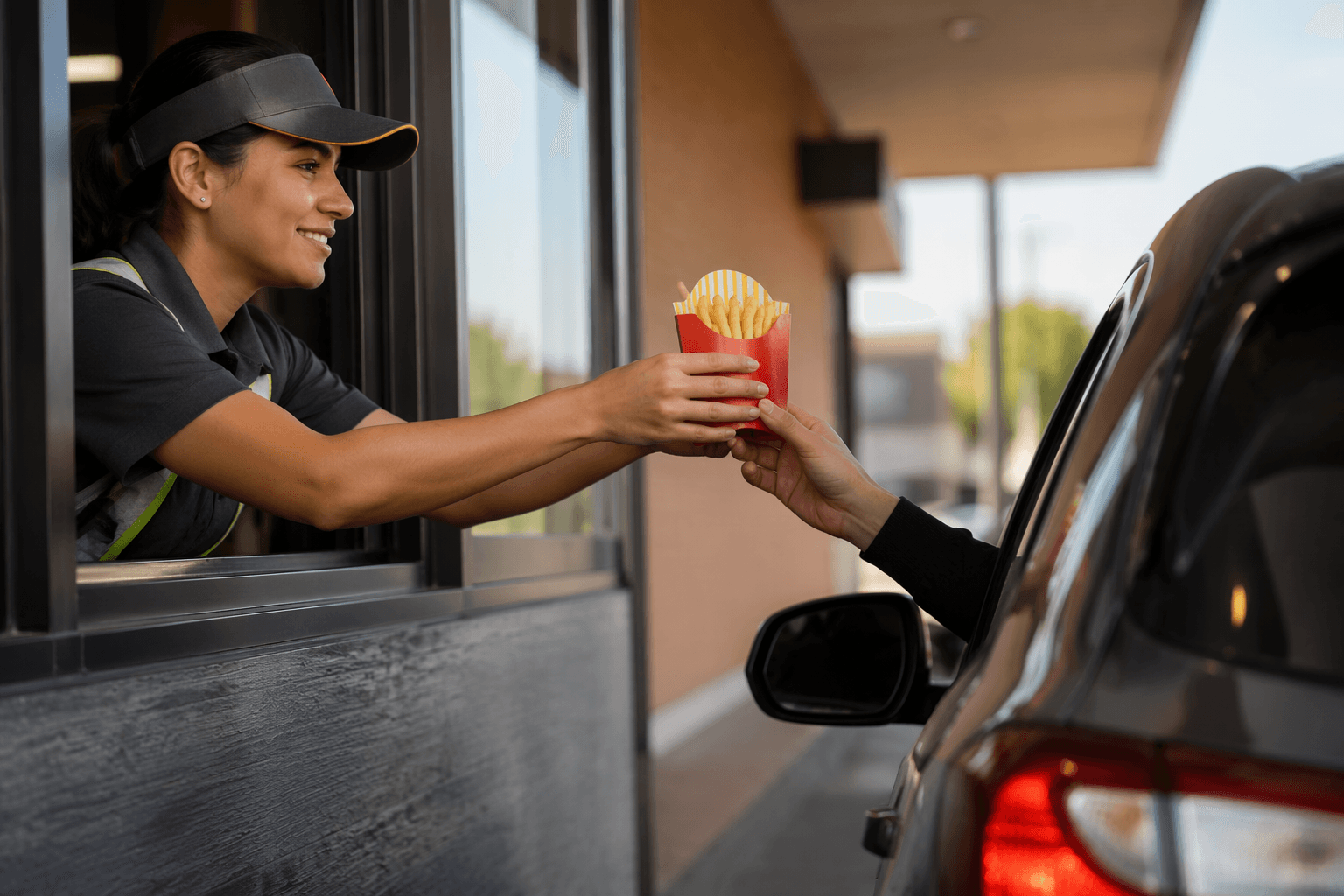
The drive-thru looks routine until you list everything that can go wrong in one place. OSHA says young workers there may face car exhaust, noise, prolonged standing, strains and sprains, and workplace violence. That combination means the problem is not only speed, but exposure: to traffic, to fumes, and to constant pressure.
OSHA also states that automobile exhaust contains harmful pollutants, primarily carbon monoxide. That makes the lane outside a real indoor-outdoor health issue, especially when a shift keeps the window area busy for hours. The Centers for Disease Control and Prevention’s National Institute for Occupational Safety and Health says restaurant and retail jobs are common places for young workers to encounter hazards, and that little or no prior work experience and a lack of safety training contribute to injuries.
Noise belongs in this lane too. NIOSH recommends an exposure limit of 85 dBA over an eight-hour shift, which is a reminder that the clatter of cars, headsets, equipment, and speakers adds up fast. If a crew member is standing all shift, turning repeatedly, and leaning into traffic while trying to move orders, the injury may start as fatigue and end as a strain, a slip, or a bad reaction to a tense customer.
Kitchen and food prep: heat, repetition, and fast hands
The kitchen is where the obvious burns live, but the less visible injuries can be just as disruptive. OSHA’s restaurant map separates cooking and food preparation because hot surfaces, sharp tools, and repetitive motions create different risk patterns. A fryer station can produce burns in seconds, while a prep area can create slow-building strain through constant reaching, twisting, and lifting.
This is where workers often underestimate the cumulative risk. A crew member may not think of repeated motion as a safety issue until a wrist, shoulder, or back starts giving out in the middle of rush. OSHA’s broader youth-workplace guidance says young workers have a right to conditions that do not pose a risk of serious harm, and the restaurant guidance shows that harm is not always dramatic. Sometimes it is a hot splash, a cut from a tool, or a body worn down by one shift too many in the wrong posture.
General hazards matter here too. A tight kitchen can turn into a traffic problem when people cross paths with trays, boxes, and hot equipment. Safety is not only about the fryer itself, but about whether the layout lets people move without colliding, overreaching, or rushing around one another.
Lobby and serving areas: the front end is not the easy part
The serving zone can look calmer than the kitchen, but it carries its own hazards. Customers, trays, spills, entryways, and constant movement create collision points that workers often ignore because the room looks familiar. The map’s value is that it forces you to treat the front counter and dining area as a worksite, not just a public space.
That matters for posture and fatigue as much as for confrontation. A cashier or front-counter worker can spend a full shift standing, turning, greeting, bagging, and resetting the space, which adds up in the same way that a long kitchen shift does. OSHA’s zone approach makes clear that safety is not only about hot oil or sharp equipment. It is also about fatigue, posture, traffic flow, and whether the restaurant is arranged so employees can move safely under pressure.
For managers, that means the lobby cannot be treated as a low-risk zone simply because it lacks a fryer. A crowded front end can become the place where a hurried turn, a dropped tray, or a customer conflict turns into an injury or an incident that spreads into the rest of the shift.
Delivery and storage: where lifts, cold, and trips stack up
In delivery and storage, the risks shift again. Cold exposure, lifting strain, freezer access, and trips are the problems OSHA highlights in this zone. That makes the back room a place where injury often starts quietly, with a grab for a heavy box or a quick step around a cluttered floor.
This is also where young or new employees can get hurt before they understand the rhythm of the store. CDC and NIOSH say lack of prior work experience and lack of safety training contribute to injuries, which is exactly why stock handling and freezer access need clear rules. A worker who is still learning the store may not see a low cart, a slick threshold, or the strain that comes from carrying too much at once.
Cleanup and close: the last hour can be the worst hour
The clean-up zone may be the clearest hazard map on the whole list because the dangers are stacked in plain sight. OSHA says cleanup can involve burns and scalds, cuts, electrical hazards, hazardous chemicals, slips, trips and falls, and strains and sprains. That is a full inventory of how a shift can go wrong once the pace drops but the physical work gets messier.
Slips are the most obvious threat, especially when a crew member is tempted to rush across a wet floor or finish a close-out task before the room is truly dry. OSHA and California’s restaurant safety guidance both stress that restaurant cleaners face chemical exposures that can irritate the skin, eyes, and lungs or even cause burns, which is why the mop bucket is not just a housekeeping tool. It is a hazard point.
The cleanup hour is where small mistakes snowball. A cord left out, a wet corner ignored, a chemical used without the right protection, or a hasty move with a sharp tool can end a shift with an injury that never appeared during the rush.
What workers should notice before anyone else does
The map works because it turns a broad restaurant into a set of checks you can run in your head before the doors open or the rush hits. Ask which zone is most dangerous today: the wet floor by closing, the fryer during lunch, the stockroom after a delivery, or the drive-thru lane when traffic stacks up. That question is simple, but it changes how you move.
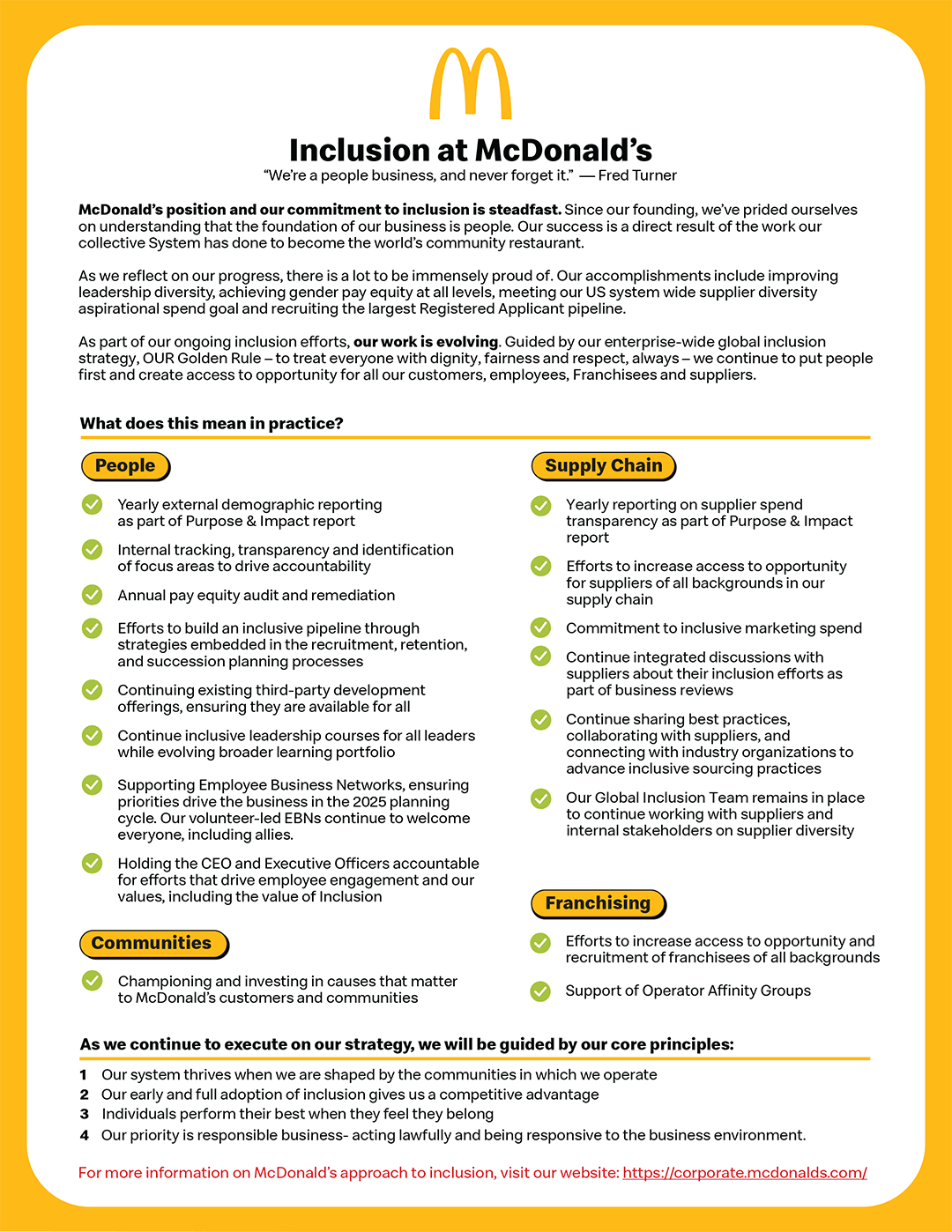
OSHA says employers must train young workers exposed to hazardous materials and provide personal protective equipment such as gloves, aprons, and foot protection. That means safety is not just individual caution, it is also what the restaurant supplies and reinforces. McDonald’s says its People Brand Standards apply across company-owned and franchised restaurants and include workplace violence prevention policies, training, and reporting mechanisms, which puts the company’s own policy layer on top of OSHA’s guidance.
For McDonald’s crews, the lesson is straightforward: one shift holds several different workplaces at once. The worker who can spot the hazard by zone is often the one who gets home with the fewest surprises.
This article was produced by Prism’s automated news system from verified source data, official records, and press releases, then run through automated quality and moderation checks before publishing. The system is built and supervised by the people who set the standards it runs under. Read our full AI policy.
Did this article answer your question?