Russian strike damages Ukraine's first McDonald's in Kyiv again
Kyiv’s first McDonald’s was hit again near Lukianivska metro station, forcing another safety response at a restaurant long tied to wartime normalcy.

Russian ballistic missiles struck civilian areas in Kyiv overnight, damaging the McDonald’s near Lukianivska metro station in the Lukianivka district and again putting one of the city’s most familiar workplaces under fire. The restaurant, Ukraine’s first McDonald’s when it opened on May 27, 1997, evacuated staff to shelter in time because of safety protocols, a reminder that for crew members in Kyiv, the job now includes knowing exactly where to run when the alarms sound.
The strike hit the same restaurant that was damaged in a January 18, 2025 attack. Kyiv officials said that earlier assault killed three people and injured three others, while also damaging the Lukianivska metro station’s glass entrance, nearby buildings, several cars and a water pipeline. McDonald’s said it had already begun repair work after that attack and pledged to restore the restaurant, underscoring how quickly routine can turn back into uncertainty for workers whose shifts depend on whether a building, a station and the surrounding streets are safe enough to reopen.
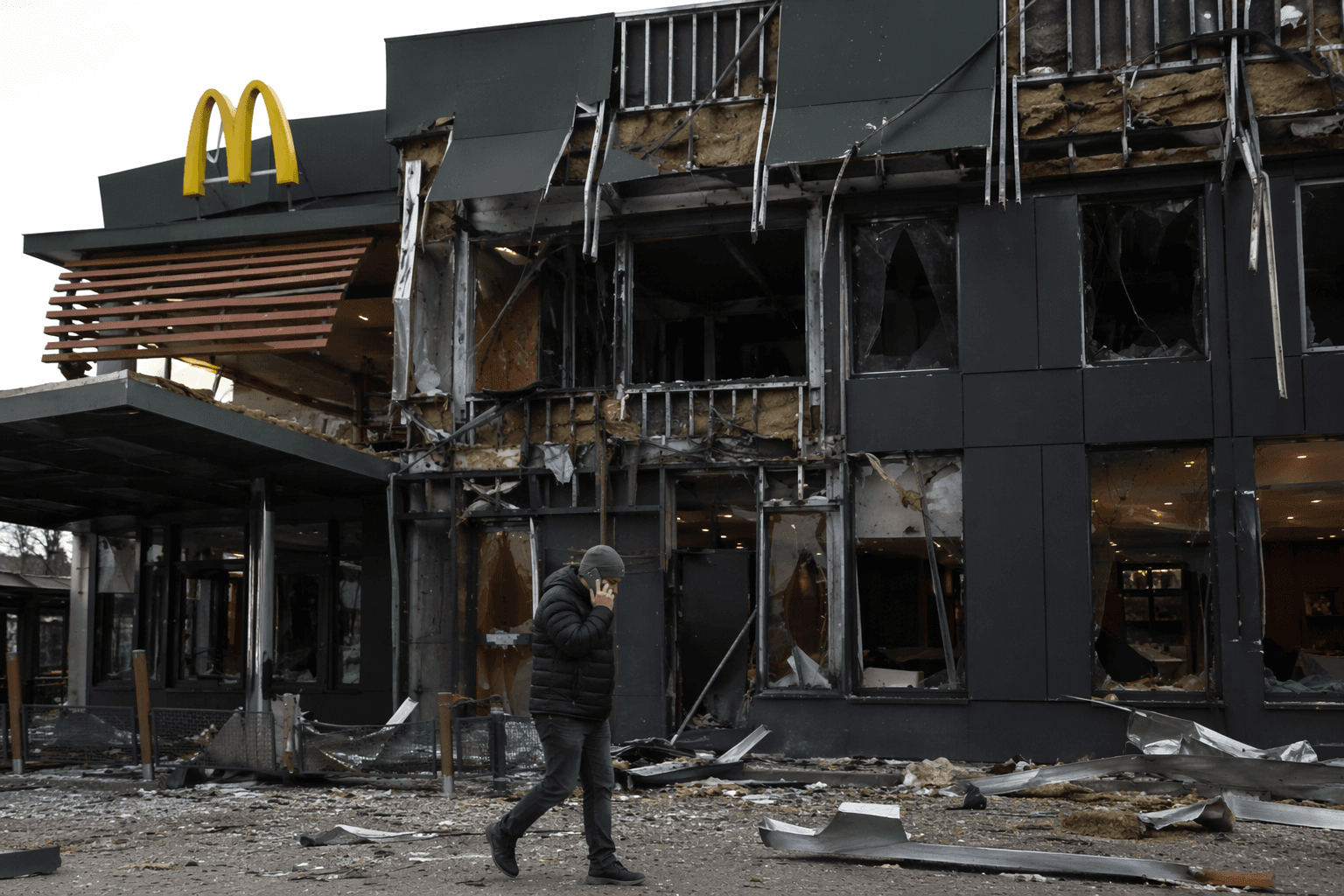
On May 24, 2026, Lukianivska metro station was temporarily closed for repairs after its above-ground entrance hall was damaged by the blast wave. Eyewitness footage showed the Kvadrat shopping center near Lukianivka almost completely destroyed, while a large fire broke out at the nearby market. For McDonald’s employees, that means more than damage to a storefront. It means disrupted commutes, delayed openings, and another round of decisions about whether the restaurant can operate, when crews can return and how managers protect people before they protect sales.
McDonald’s broader wartime response has already shown how deeply the company has had to balance business continuity with worker safety. After Russia’s full-scale invasion on February 24, 2022, McDonald’s paused operations in Ukraine, then said it continued paying salaries to more than 10,000 employees while preparing a phased reopening in Kyiv and western Ukraine after consulting Ukrainian officials, suppliers and security specialists. The company also left Russia in May 2022, saying continued ownership there was inconsistent with its values.
That history gives the Kyiv damage a sharper workplace meaning. This is not just about an iconic facade in Lukianivka. It is about a crew that has already lived through evacuation drills, suspended service and uncertain reopenings, all while one of the world’s largest restaurant chains tries to keep pay, safety and dignity intact during war.
This article was produced by Prism’s automated news system from verified source data, official records, and press releases, then run through automated quality and moderation checks before publishing. The system is built and supervised by the people who set the standards it runs under. Read our full AI policy.
Did this article answer your question?