San Francisco wage hike to affect McDonald's workers across city shifts
A crew member who works just two hours in San Francisco can trigger the city’s $19.61 floor, forcing McDonald’s operators to track every shift location more tightly.

San Francisco’s new $19.61 minimum wage took effect on July 1, and for McDonald’s crews the practical change starts at the clock-in screen. The city rule applies to employees performing work in San Francisco, including part-time and temporary workers, and it reaches anyone who works at least two hours a week in the city. That means a floater, a trainer, or a worker covering part of a partial shift can pull a store into a higher wage obligation even when most of the week happens somewhere else.
For managers, that turns scheduling into a location-by-location accounting exercise. A San Francisco shift now carries a different labor cost than a nearby market outside the city limits, so labor forecasts, shift coverage, and payroll corrections all have to line up with where the work actually happened. McDonald’s franchise model makes that harder to centralize, because wage-compliance decisions often sit with the individual operator rather than the brand. Local wage changes can follow workers into other jurisdictions, including remote work arrangements, so address-level tracking is necessary instead of storewide assumptions.
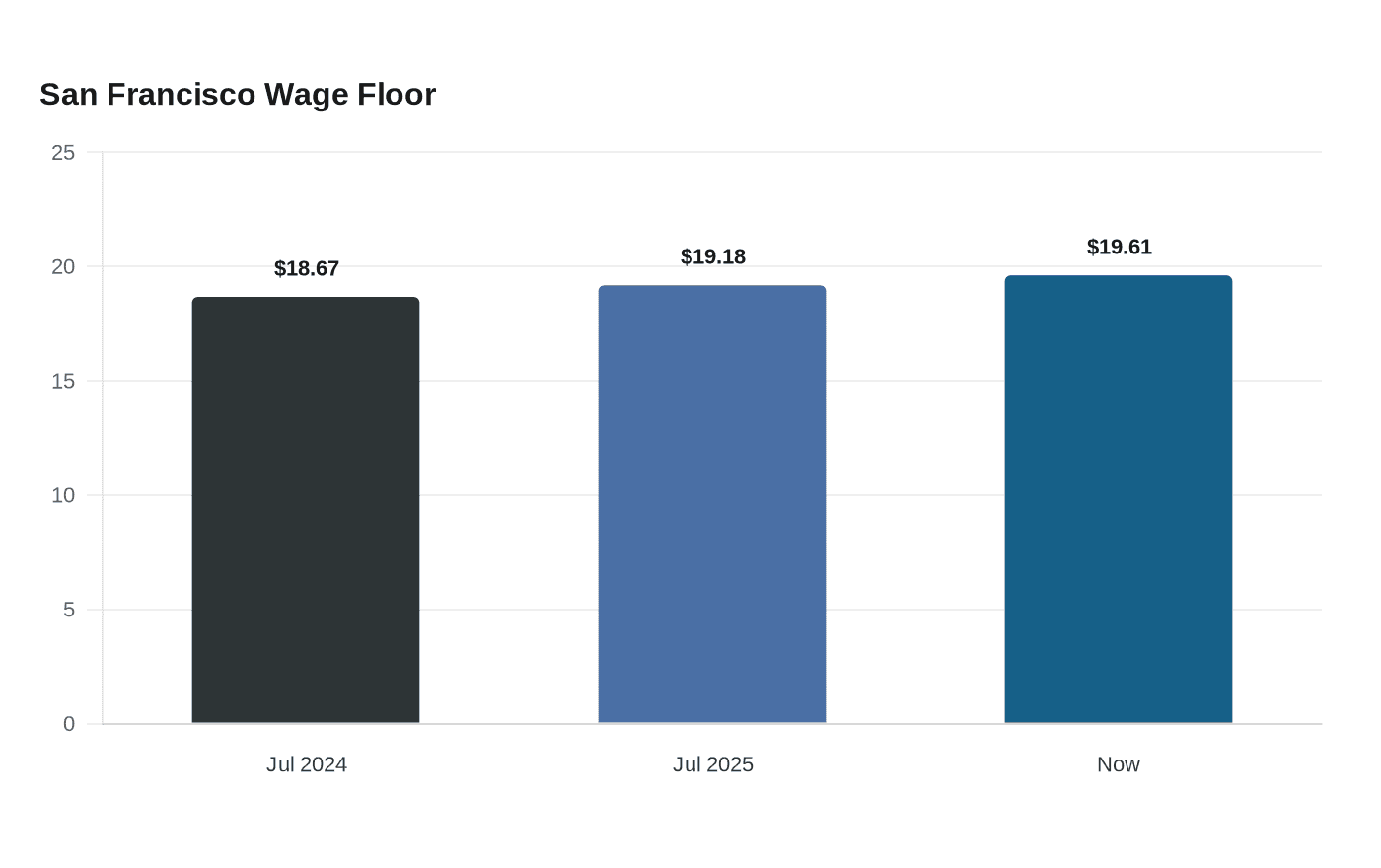
A wage floor that moved from $18.67 in July 2024 to $19.18 in July 2025 and now to $19.61 changes what workers expect from a fast-food job in the city. It also raises the bar for staffing decisions, because every extra hour on the schedule now costs more and every empty shift is more expensive to fill. That can improve retention for entry-level crew members, but it can also tighten the space between crew pay and shift-manager pay, especially in stores already dealing with the statewide fast-food minimum of $20 an hour that took effect in April 2024 for franchise restaurants with 60 or more locations in California.
Employers are required to post the wage notice, and failure to do so may result in penalties. San Francisco also keeps a separate government-supported employee minimum wage, which is set to rise to $17.35 on July 1, 2026, while the general city floor adjusts annually under the Consumer Price Index formula in Article 1.4 of the San Francisco Labor and Employment Code.
This article was produced by Prism’s automated news system from verified source data, official records, and press releases, then run through automated quality and moderation checks before publishing. The system is built and supervised by the people who set the standards it runs under. Read our full AI policy.
Did this article answer your question?