Senate Democrats propose $25 federal minimum wage, pressure builds on McDonald’s pay
Senate Democrats' $25 wage push would hit McDonald's franchises first, where pay ladders, staffing and menu prices are already set market by market.

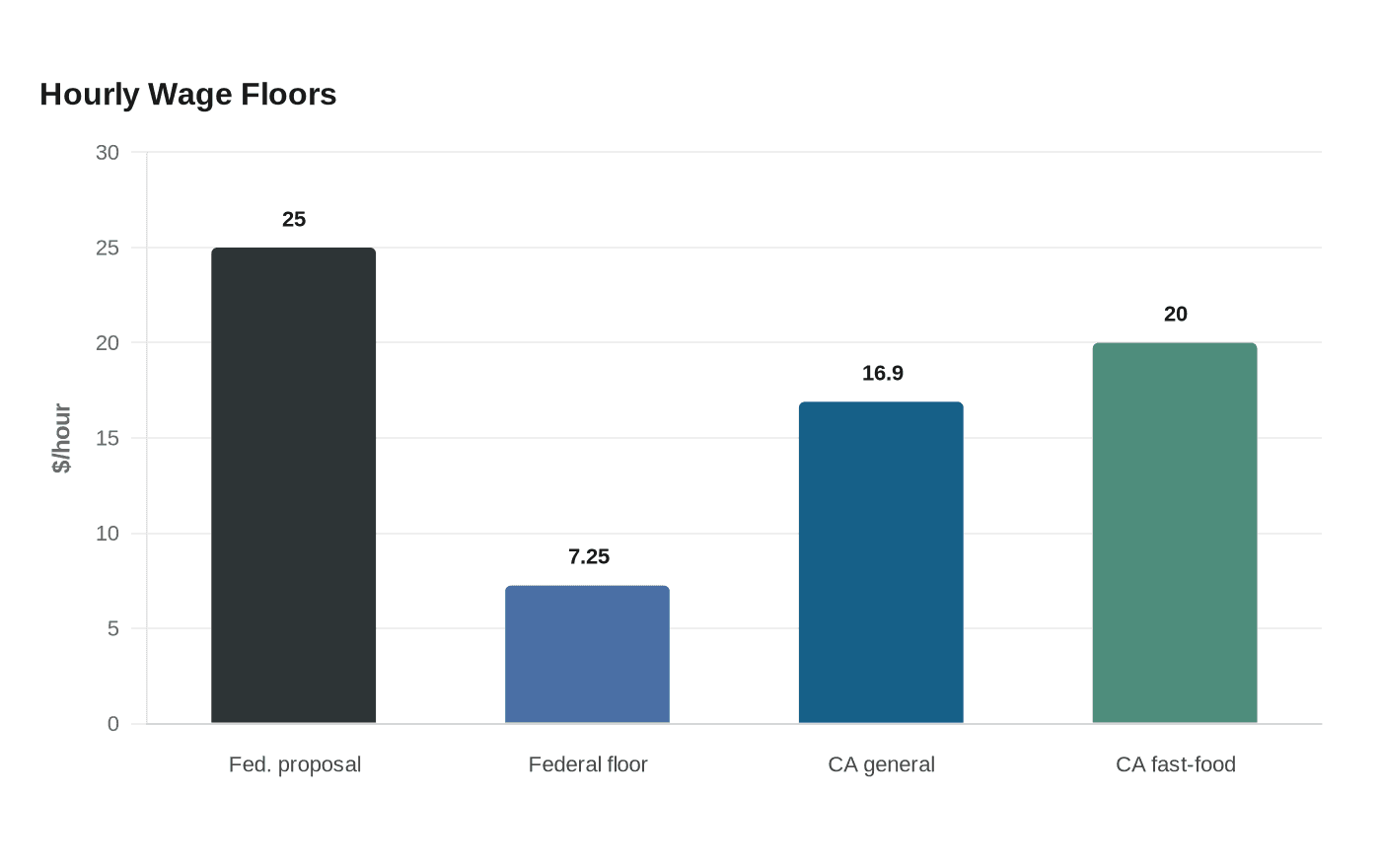
Senate Democrats moved June 25 to propose a federal minimum wage of $25 an hour over five years, a change that would force McDonald’s owners and managers to rethink starting pay, shift-leader steps and crew staffing long before any restaurant saw the full increase.
The proposal would more than triple the federal floor, which has sat at $7.25 an hour since July 24, 2009. Inside McDonald’s, the chain’s pay is not set by one national hourly rate. In lower-wage states, a new federal floor would immediately squeeze the pay ladders that separate crew, shift leader and assistant manager work, while also putting new pressure on scheduling, overtime and retention.
The pressure would run through the franchise system first. About 95% of McDonald’s restaurants worldwide are owned and operated by independent local business owners, leaving franchisees to handle most of the day-to-day labor and pricing decisions that follow a wage increase. For store managers, that can mean deciding whether to raise starting wages, compress differentials between roles, trim hours or absorb higher labor costs through menu prices.

Its company-owned restaurants were on a path to an average hourly wage of $15 in a phased, market-by-market approach. A federal move to $25 would widen the gap between company plans and the new political baseline, especially in places where competing employers raise pay to keep workers from leaving for slightly better jobs nearby.
California's minimum wage for all employers rose to $16.90 an hour on January 1, 2026, and the fast-food minimum reached $20 an hour on April 1, 2024. California also created a Fast Food Council within the Department of Industrial Relations to set an hourly minimum wage and develop standards, rules and regulations for the industry.
Under federal law, covered nonexempt workers are owed the higher wage when state and federal rules differ.
This article was produced by Prism’s automated news system from verified source data, official records, and press releases, then run through automated quality and moderation checks before publishing. The system is built and supervised by the people who set the standards it runs under. Read our full AI policy.
Did this article answer your question?