Voice AI Drive-Thru Orders Expand Beyond Pilots, Reshaping Crew Roles
Hi Auto's AI surpassed 100 million drive-thru orders at 96% accuracy. Now crew are the monitors accountable for the 4% it gets wrong.
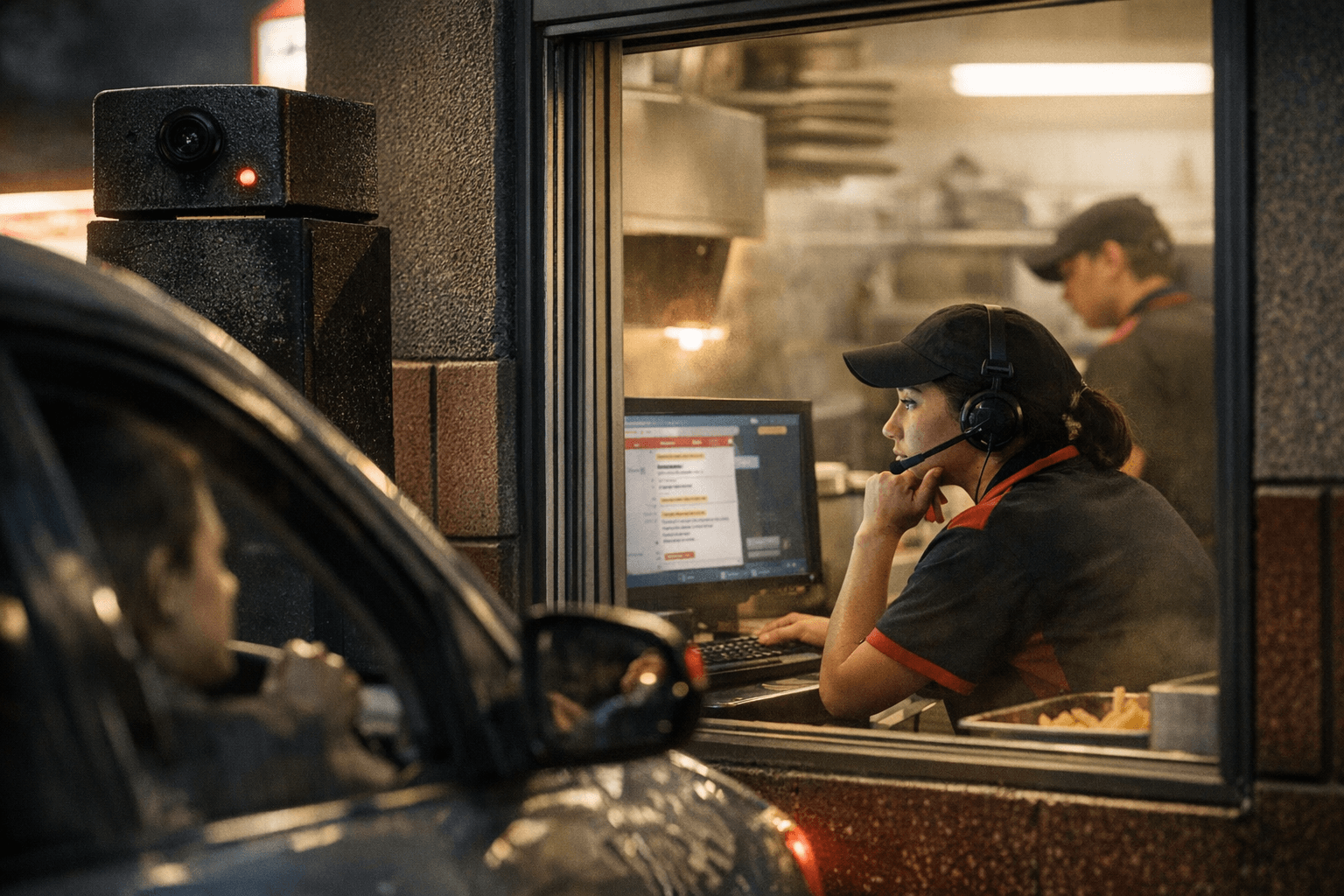
A customer pulls to the pickup window holding a receipt. The AI confirmed the order correctly at the speaker; the crew member monitoring the screen approved it. The bag is already sealed and the order is wrong. That remake, and the dispute that follows, is the operational friction accompanying voice AI as it moves from McDonald's-era test programs into live deployments across roughly 1,000 drive-thru locations in the U.S., U.K., and Australia.
The scale is specific. Hi Auto, which describes itself as the leading AI order taker for QSRs, announced it had crossed 100 million drive-thru orders processed annually, claiming 93% order completion and 96% accuracy across its active locations. At that volume, 96% accuracy still means millions of wrong orders each year. The gap between a vendor's headline metric and a store-level dispute is where crew accountability gets murky.
Quail Digital and Audivi formed a partnership to deliver a voice AI hardware platform for quick-service restaurant drive-thrus. The new system is provided free to QSR operators using the integrated solution, designed with real-time AI order processing to enable faster and more accurate drive-thru operations. The companies described the offering as "plug-and-play," targeting the cost and complexity concerns holding many franchisees back.
That frictionless entry matters because McDonald's history with drive-thru AI is not clean. Earlier pilots were paused when accuracy and guest satisfaction fell below acceptable thresholds. What changed is the acoustic hardware, the maturity of the speech models, and one structural design decision: current implementations route unrecognized inputs to a human operator in real time rather than guessing. The AI handles what it can confidently parse; everything ambiguous lands with whoever is monitoring the screen.
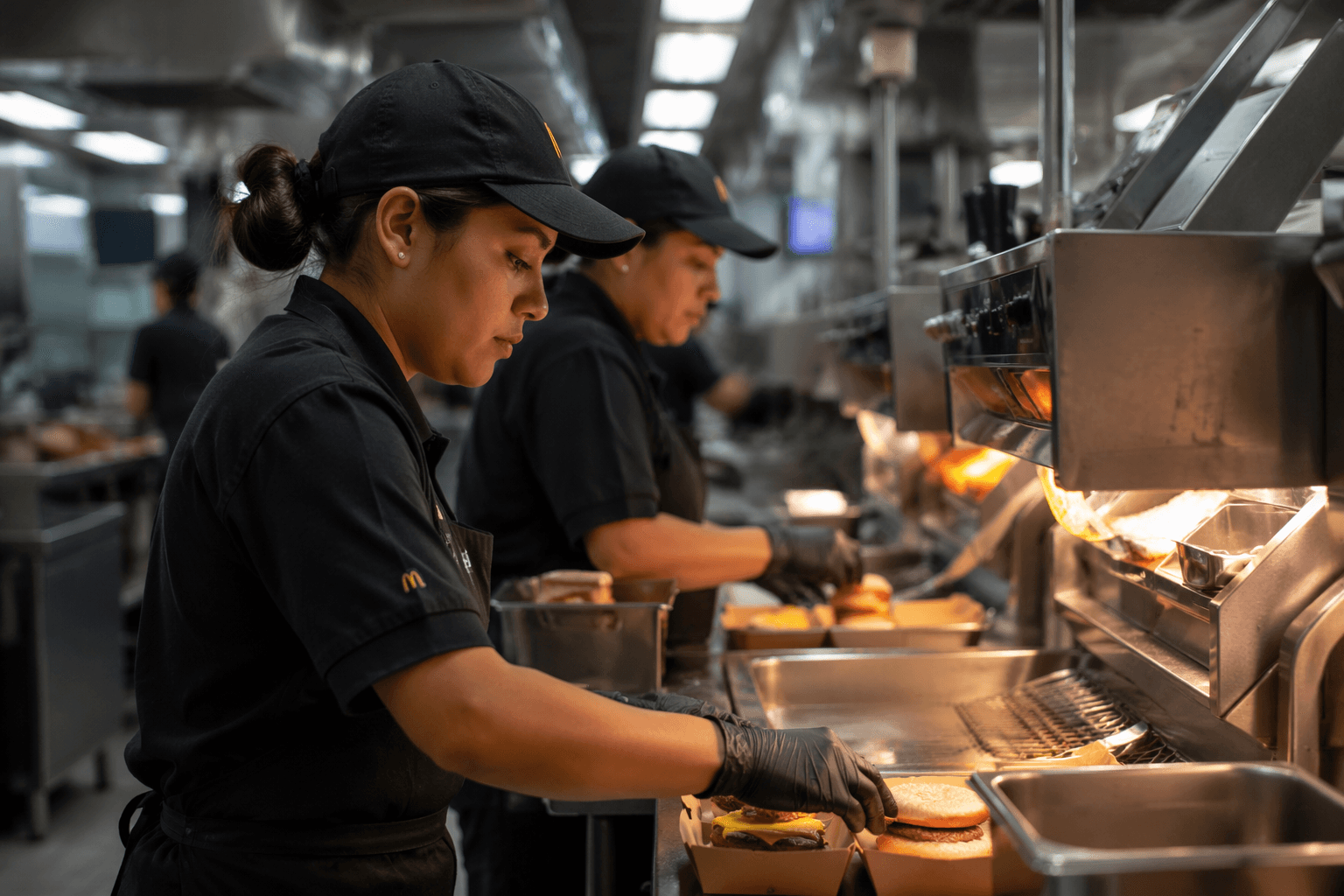
That monitoring function is the new job description for a significant portion of the crew. The headset does not disappear; it gets repurposed. Instead of capturing every order, the crew member watches the AI's output on the kitchen display feed, validates or corrects before the ticket routes to production, and steps in when the system cannot parse a heavy accent or a five-modifier custom order. The intervention window is short. A mishear that clears without correction becomes a wrong bag at the window, a customer dispute, and a remake charge hitting the store's waste report alongside the accuracy tally.
Performance metrics are where managers need to act before deployment, not after. Time-to-handout and order accuracy have historically been individual crew accountability numbers; once AI handles intake, those figures blend system performance with human monitoring quality. Managers who do not renegotiate KPIs before going live risk punishing crew for system errors or, worse, obscuring a poorly calibrated AI behind crew performance scores.
Staffing math follows the same direction across trade reporting and vendor projections: fewer dedicated order-takers, more headcount redirected to production, window service, and accuracy verification. In markets where Fight for $15 legislation and subsequent minimum wage increases have already compressed franchise margins, that reallocation may be built into the deployment plan before crews are briefed on it. The franchise structure compounds this: the technology decision and its funding sit with the franchisee, while the schedule consequences land on the crew.
When the AI misfires repeatedly on specific items or accents, document it. Log the item, the time of day, the acoustic conditions, and the correction made, then route that record to the manager before accuracy reports are reviewed. The current generation of voice AI is designed to improve with localized feedback, and stores that build a formal correction loop into daily operations will close the error gap faster than those treating each mishear as isolated. For any order loaded with modifiers, or any customer the system consistently struggles to parse, override early rather than letting the AI confirm a guess and move the problem to the window.
This article was produced by Prism’s automated news system from verified source data, official records, and press releases, then run through automated quality and moderation checks before publishing. The system is built and supervised by the people who set the standards it runs under. Read our full AI policy.
Know something we missed? Have a correction or additional information?
Submit a Tip