Asana webinar spotlights AI teammates that surface project risks earlier
Asana’s latest AI demo goes straight at work’s most hated chore: chasing status updates after the damage is already done. monday.com buyers will notice.

Chasing status updates is still one of the most expensive routines in work management. By the time a manager has pulled together the latest project notes, the missed dependency or delayed handoff is often already visible in the calendar, the inbox, and the next escalation meeting.
That is the pressure point Asana aimed at in its April 21 webinar. The company said operations teams spend hours chasing updates, synthesizing project data, and building reports only to surface risks too late. Its pitch for AI teammates was simple and pointed: automatically generate project updates, surface delivery risks earlier, and cut down the manual reporting that still eats up so much manager time. The webinar also put a real customer in the frame. Antonio Sironi, senior project manager at Acerbis SpA, was set to discuss how the Italian manufacturer uses AI teammates across more than 30 projects as an assistant project manager and quality assistant. Acerbis has said its projects can range from 400 to 1,100 tasks apiece, which makes the promise of earlier risk detection more than a nice demo feature.
For monday.com, the competitive warning is obvious. Buyers are no longer just shopping for a place to store tasks and timelines. They are comparing platforms on how well those platforms reduce status-chasing, identify blockers, and help leaders act before a project slips. monday.com has already moved into that lane with Portfolio AI reports that can be generated in one click as a separate monday doc. The report includes an executive summary, a pie chart of project health statuses, key highlights, project metrics, and a risk-insights synopsis, and it updates daily as projects change. The company’s enterprise materials also point directly to AI-driven risk insights and portfolio-wide dashboards.
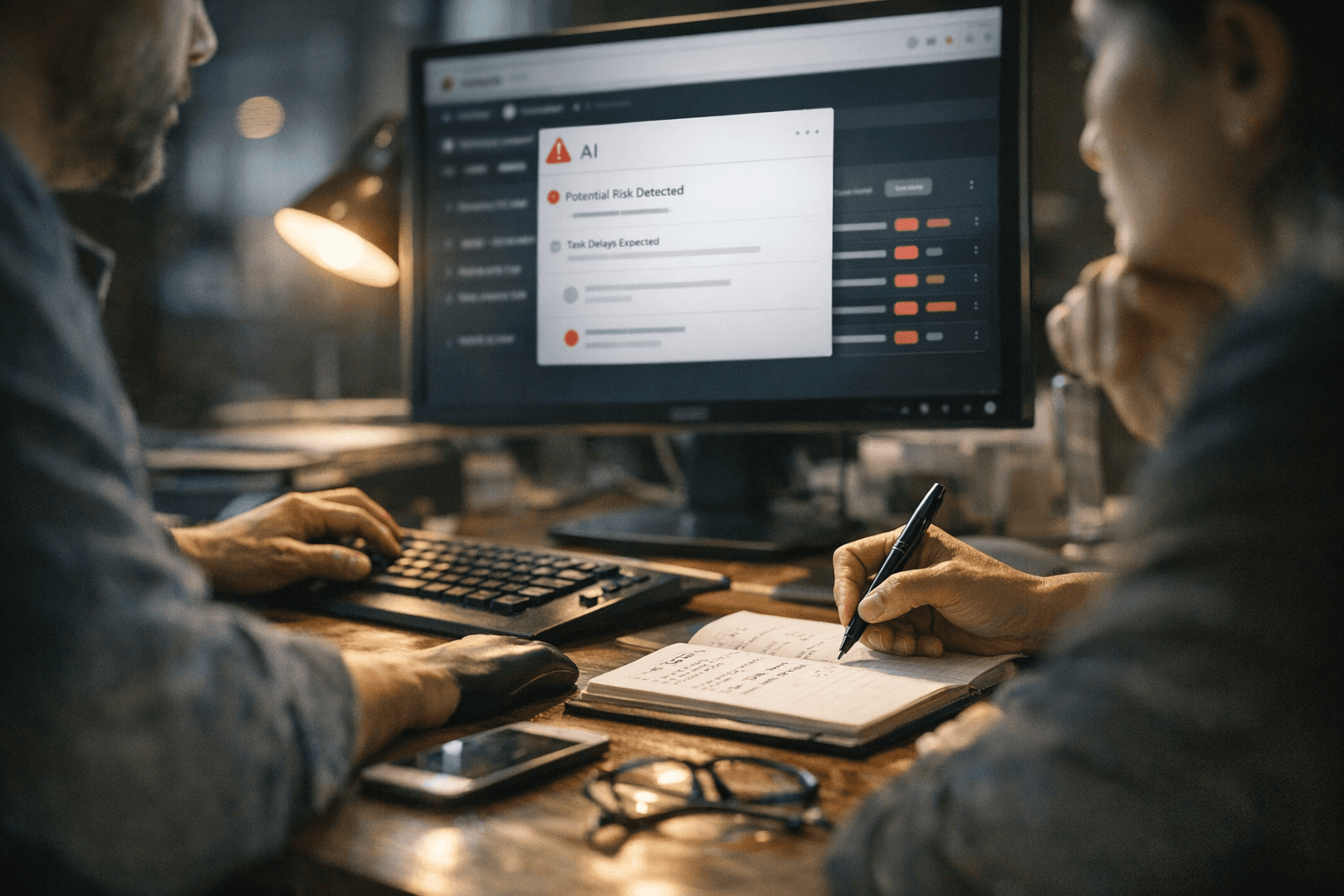
That matters inside monday.com as much as it does in the market. Product teams are being asked to make AI useful at the workflow level, not just decorative at the edges. Sales teams are being asked to prove that monday.com can lower the cost of coordination for customers who are tired of manual reporting and want software that helps them run the business, not just record it. monday.com has been broadening that bet since July 2025, when it introduced monday magic, monday vibe and monday sidekick as part of a platform-wide AI shift, then later added monday agents and monday campaigns.
The company’s latest numbers show why the stakes are high. In the fourth quarter of 2025, monday.com reported revenue of $333.9 million, up 25% from a year earlier. It said monday vibe became the fastest product in company history to pass $1 million in annual recurring revenue, customers with more than $50,000 in ARR made up 41% of total ARR, and it added a record number of customers with more than $100,000 in ARR. The message from Asana’s webinar is clear: the next fight in work management is over which AI can find trouble first.
Know something we missed? Have a correction or additional information?
Submit a Tip