How Monday.com employees can monitor WARN notices, layoffs and protections
monday.com employees should watch three official feeds, state WARN pages, the federal DOL database and tracker sites, because covered layoffs trigger a 60‑day countdown and can appear before public announcements.
1. Quick facts you need to know
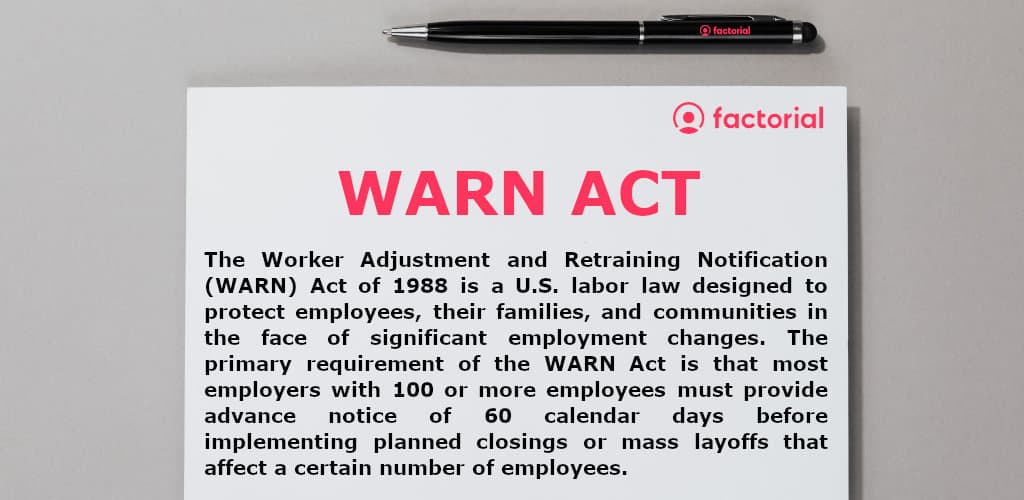
The Worker Adjustment and Retraining Notification Act (WARN) requires covered employers to provide 60 calendar days’ advance written notice for qualified plant closings and mass layoffs. Employers with 100 or more full‑time employees meet the coverage threshold, and many sources cite the mass‑layoff trigger as 50 or more employees. The law’s purpose is to give affected workers time to prepare and seek alternatives; as Warntracker puts it, “A WARN (Worker Adjustment and Retraining Notification) notice is a notice required by the federal WARN Act … which mandates that employers with 100 or more employees provide at least 60 days advance written notice of a plant closing or mass layoff affecting 50 or more employees.”
2. Where to monitor official WARN filings
Start with government feeds: your state workforce or labor department’s WARN page and the federal Department of Labor WARN database. For example, California’s EDD is cited as one of the most comprehensive state databases; the federal DOL feed is the primary place for national WARN filings. Check those official databases monthly and treat them as the definitive record for filings that affect office locations and employee counts.
3. Why you should follow both government records and tracker sites
Not all monitoring tools work the same way. Warntracker emphasizes that it follows individual WARN records from government entities and captures office‑level counts, small layoffs and non‑press‑covered events. As Warntracker explains: “We are tracking layoffs across all industries, not just tech. We are following individual WARN records from government entities, rather than crowdsourced data. Most of these records indicate exact offices and employee counts affected at each office, rather than just a single overall number for the entire company. These records are often more exhaustive than the crowdsourced data. This means they reflect small layoffs, as well as layoffs from companies which may not be large enough to be announced in the press.” Use tracker sites like Layoffs.fyi for sector signals and Warntracker for government‑record detail; together they cover gaps that one source alone can miss.
4. How filing timing and dates work, and what “future” dates mean
The 60‑day countdown is triggered when an employer files a WARN notice, but public availability of that filing can vary. Warntracker warns: “The timeline for filing these notices can vary they may be made available before or after a public announcement,” and notes, “This is also why some of the layoff dates in our tracker are in the future.” In practice, that means a filing can appear in an official database before a press release, or a company may announce layoffs before a formal filing shows up. For monday.com employees, the implication is clear: monitor both company communications and government filings, and treat the filing date as the legal trigger where applicable.
- State WARN page, check monthly (example: California EDD is commonly cited as comprehensive).
- Federal DOL WARN database, check regularly for cross‑jurisdiction filings.
- Google Alerts, set alerts for “WARN notice + [monday.com/your industry]” and broader competitor keywords. The LinkedIn guidance recommends: “Set Google Alerts for 'WARN notice + [your company/industry]'.”
- Layoff trackers, follow Layoffs.fyi for tech sector activity and Warntracker for government records.
- Competitor filings, watch filings from peers as early indicators of sector‑wide cuts.
5. Practical monitoring checklist: feeds and cadence
6. Red flags managers and employees should treat as urgent
LinkedIn’s checklist lists early warning signs that often precede larger actions: “🟥 Your company files a notice (60-day countdown starts) 🟥 Multiple competitors filing (sector-wide cuts coming) [...] 🔻Contractors being let go first 🔻Design team consolidation or reporting structure changes.” If you see several of these indicators together, accelerate your personal preparedness steps immediately, don’t wait for a public announcement.
7. Immediate personal actions to protect your work and mobility
If you suspect a layoff risk, act fast and methodically: refresh your portfolio and resume, update LinkedIn monthly (not in a panic), and save non‑confidential work examples and contacts to personal devices. LinkedIn advises specific steps: “refresh portfolio with recent work; get screenshots before you lose access; update LinkedIn and resume monthly (not when panic hits); save important work examples and contacts to personal devices (non‑confidential only); document your impact with metrics.” Focus on preserving measurable outcomes (KPIs, metrics) that show your contribution.

8. Financial preparedness: targets and ballpark figures
Plan financial buffers and benefits expectations realistically. The LinkedIn guidance recommends an emergency fund of 3–6 months; lists COBRA planning at an “18–36 months” timeline as an average consideration; and gives severance ballpark guidance of “1–2 weeks pay per year of service (varies widely, check your handbook).” It also notes unemployment benefits typically run about 26 weeks and replace roughly 40–50% of wages (state‑dependent), and reminds workers that 401(k) withdrawals generally carry age‑59½ rules and a 10% early‑withdrawal penalty plus taxes unless exceptions apply. Treat these figures as planning assumptions, not legal guarantees.
9. Legal complications and limits to expect
WARN compliance raises gray areas that vary by fact pattern. NatLawReview cautions that WARN compliance is “evergreen” and flags two recurring complications: the “unforeseen business circumstances” exception (used by some employers during COVID and requiring a fact‑specific inquiry) and unresolved questions about remote and virtual worker coverage. As NatLawReview explains, “Employers must also consider whether any of their remote or virtual workers are entitled to WARN notice. Courts continue to grapple with this question due to the significant shift to remote work that occurred over the past few years.” NatLawReview also advises, “Remember to consult with counsel about the WARN Act and related employment laws if your business is contemplating a layoff.” If you need legal clarity about entitlement or timetables, seek counsel or union advice rather than assuming coverage.
10. How to read company communications and sample phrasing
Corporate communications often blend strategy and legal compliance. A sample restructuring communication quoted in the legal guidance shows typical framing: “And in a challenging economic environment, efficiency takes on greater importance. So, in an effort to drive more efficiency, control costs, and speed up decision‑making, I have decided to restructure our organization.” Treat language like this as a signal to check formal filings and your employee handbook for severance and notice language rather than a definitive legal timeline.
11. Verification, reporting and what to trust for office‑level impact
For precise office‑level counts and affected locations, rely on government WARN records where available; Warntracker highlights that these records “often include exact offices and employee counts affected at each office, rather than just a single overall number for the entire company.” Cross‑check filing dates against press releases and internal communications because the filing might precede or follow an announcement. If you’re documenting impact for the press or for internal escalation, capture filing dates, the notice’s effective date (which can be in the future), and any differences between office‑level numbers and company‑wide totals.
12. What monday.com employees should do next
If you work at monday.com or a similar SaaS firm, put the monitoring list into a simple routine: monthly checks of your state WARN page, weekly Google Alerts, and a watch on Layoffs.fyi and Warntracker for sector and office‑level signals. Update your emergency fund, preserve non‑confidential work evidence, and review your employee handbook for severance and benefits language. Finally, if you see formal filings or receive an internal notice, consider early legal or career counseling, the WARN clock can start on the filing date, and planning ahead preserves options.
13. Closing: why this matters for career control
WARN is a legal safety valve intended to buy employees time; for tech workers at monday.com it translates to measurable windows and concrete signals, a 60‑day potential runway, official filings that can reveal office‑level impacts, and a predictable set of red flags. Combine government records, targeted trackers and disciplined personal prep to convert passive risk into actionable steps. When employers invoke restructuring language, act on the signals: monitor, verify, document and give yourself the financial and job‑search runway the law was designed to provide.
This article was produced by Prism’s automated news system from verified source data, official records, and press releases, then run through automated quality and moderation checks before publishing. The system is built and supervised by the people who set the standards it runs under. Read our full AI policy.
Did this article answer your question?