Jira vs monday.com comparison highlights usability, pricing, and workflow tradeoffs
monday.com looks easier to adopt, but Jira still wins when the work starts getting technical, messy, and deeply integrated. The choice is less about price and more about who needs the tool every day.
The day-to-day tradeoff
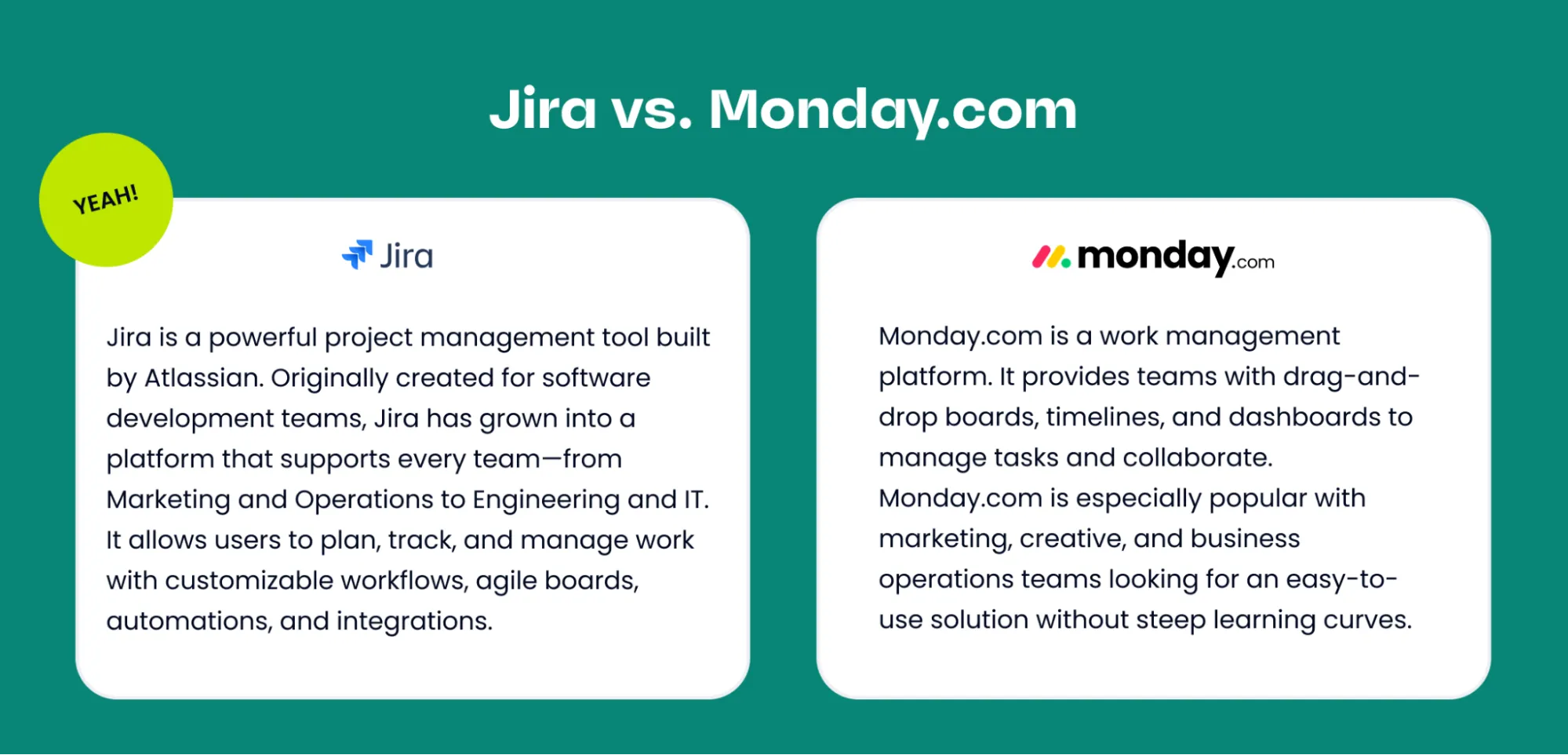
If your team wants one place where product, engineering, design, and go-to-market can see the same work, monday.com is built to feel lighter and more readable. If your workflows depend on agile rituals, issue tracking, and a dense ecosystem of dev tools, Jira still has the stronger native pull. That is the real split in this comparison: monday.com is trying to be the cross-functional layer around the engineering team, while Jira remains the system that many software teams already trust for planning, tracking, and shipping.
Software Advice’s updated comparison gives monday.com the better average user rating, 4.6 from 5,723 reviews, versus Jira’s 4.4 from 15,311 reviews. But the same page also shows the tension buyers care about most: Jira starts at $7.91 per month, monday.com at $9.00, and the cheaper option is the one that already carries more developer credibility. For engineering and product leaders, that means the buying decision is not a simple “best reviewed wins” verdict. It is a question of whether the tool has to speak fluently to developers every day, or whether it mainly has to keep everyone else aligned around their work.
Where monday.com helps teams move faster
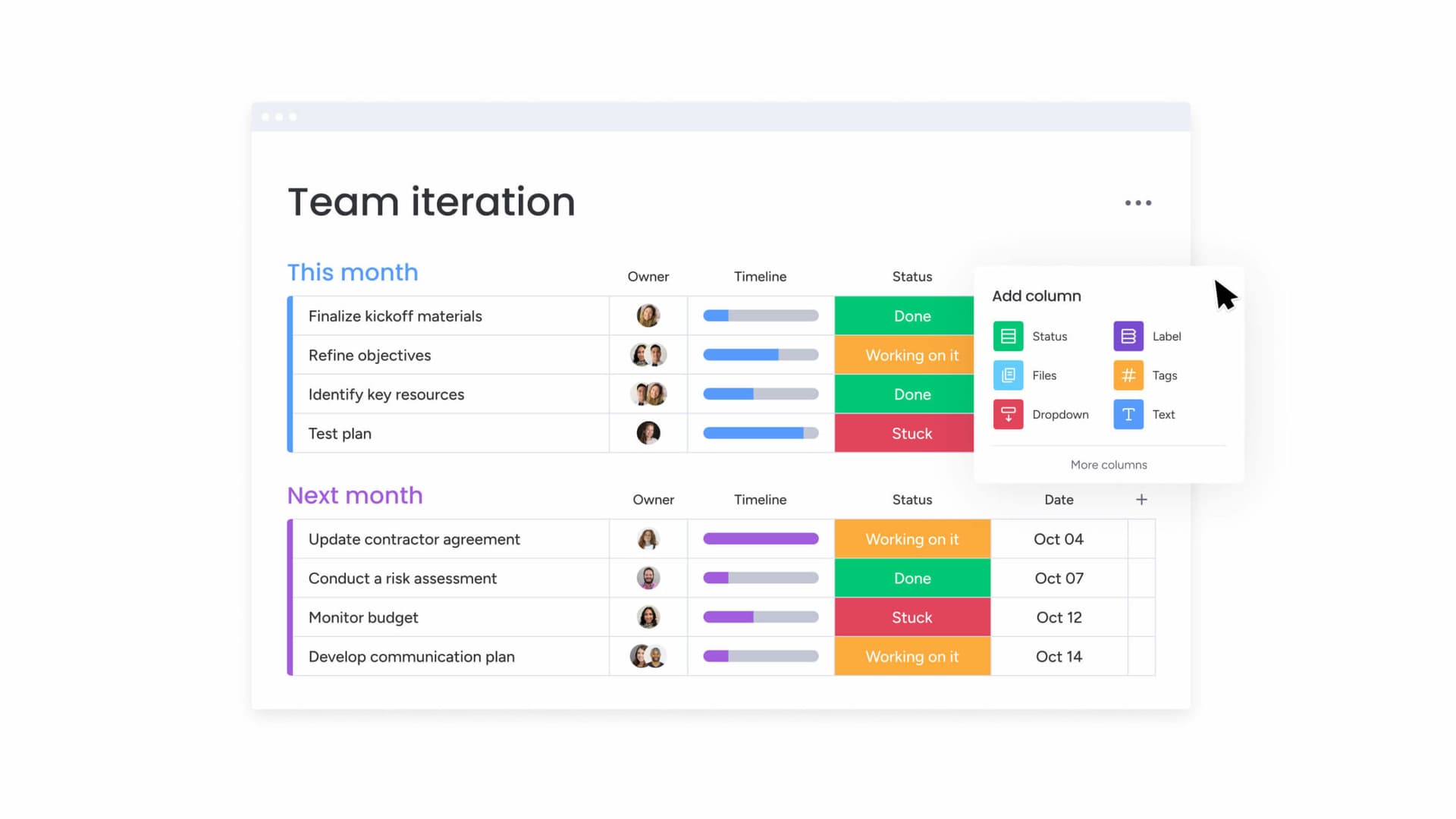
monday.com’s advantage is usability. Software Advice highlights its broader work-management flexibility, and monday.dev is now pitched as an end-to-end development execution platform for engineering, product, and cross-functional teams that can plan, build, ship, and measure software in one connected workspace. That matters when the real bottleneck is not code, but coordination: roadmaps, status visibility, handoffs, docs, and the need to keep non-technical partners out of the dark.
The product story inside monday.com reinforces that direction. monday.dev includes shareable roadmaps, collaborative documents, centralized metrics, sprint automations, and AI-assisted bug categorization and PRD summarization. Those features are aimed at reducing context switching, not just logging tickets. For leaders deciding on a stack, that makes monday.com especially appealing when the goal is to let engineering, product, design, and client-facing teams work from the same visible system without forcing everyone into a developer-first interface.
That broader promise is also what makes monday.com attractive to technical operations and revenue-facing teams that need to see engineering progress without learning Jira’s logic. The company says monday.dev is designed for a shared platform, and its main integrations pages point to 850+ integrations and apps on the broader platform, with 200+ integrations on the integrations page itself. For teams trying to centralize work across departments, that flexibility can reduce adoption friction, especially when the day-to-day users are not all engineers.
Where Jira still wins
Jira still owns the more developer-native posture. Atlassian describes Jira as built for agile and DevOps teams, with support for scaling, customization, integrations, and automation, and says it works for teams from 10 to 10,000. The company also points to more than 3,000 apps in the ecosystem, which is the kind of depth technical buyers lean on when they need a tool to plug into an existing development stack rather than sit beside it.
That ecosystem matters because Jira is not just a board or a task list. Atlassian frames it as the place where software teams collaborate, track, and ship, with flexible planning for Scrum, Kanban, and mixed methodologies, plus release tracking and cross-functional collaboration. In practical terms, Jira remains the safer bet when the team needs detailed workflow control, specific issue types, and a surrounding marketplace that can stretch across the rest of the engineering toolchain.
The comparison page also shows why Jira keeps its hold on technical teams even when another product scores well on usability. Software Advice calls out Jira’s strong integration and automation capabilities, while Atlassian’s own pages lean hard into its agile and DevOps identity. For engineering leaders, that can make Jira less pleasant for casual users but more dependable when the process itself is complex enough that flexibility and extensions matter more than a clean first impression.
Pricing and packaging are part of the workflow decision
On paper, Jira starts cheaper. In practice, monday.com can become more expensive once teams need features such as Gantt charts, time tracking, and advanced reporting, which Software Advice says are often locked behind higher tiers. It also notes that monday.com requires a minimum of three paid users and that its mobile app does not always match desktop capabilities. Those are not footnotes for buyers at scale; they are the sort of packaging details that can turn a “simple” rollout into a plan-level negotiation.
That matters because the real cost of a work platform is usually adoption, not list price. If you need everyone from product managers to sales engineers to update the same workspace, monday.com’s ease of use can shorten onboarding and reduce resistance. If your users live in sprint planning, backlog grooming, incident triage, and release management, Jira’s lower entry price and deeper developer scaffolding can become the better long-term value even when the setup is less friendly to everyone else.
The integration story is more nuanced than it looks
Both vendors know the decision often comes down to what they can connect to, not just what they can do on their own. monday.com says its Jira Cloud integration replaced a deprecated older version and now supports two-way sync, team-managed projects, additional supported fields, and OAuth-based setup without requiring an admin token. That makes monday.com less of a sidecar than it used to be in dev workflows, especially for teams that need information to flow both ways between engineering and business users.
Atlassian, meanwhile, keeps pushing the breadth of Jira’s ecosystem, with more than 3,000 apps and thousands of integrations and automations across the marketplace. For larger teams, that breadth is not just a feature count. It is a sign that Jira can serve as the center of a more specialized operating model, where the platform is expected to adapt to the company’s process rather than forcing the company to adapt to the platform.
What this means for monday.com internally
For monday.com, this comparison lands in the middle of a strong growth story and a still-demanding competitive market. The company said it had more than 250,000 customers worldwide and reported FY2025 revenue of $1.232 billion, up 27% year over year, with Q4 revenue of $333.9 million, up 25% year over year. It also said customers with more than $50,000 in ARR represented 41% of total ARR, and that monday vibe became the fastest product in company history to surpass $1 million in ARR.
Those numbers matter to employees because they show momentum, but they do not erase the product test in front of technical buyers. The company’s co-founders Roy Mann and Eran Zinman said larger customers are increasingly standardizing on monday.com for mission-critical workflows, while CFO Eliran Glazer pointed to progress with bigger customers. The open question for engineering, product, sales, and customer success is whether monday.com can keep proving that it belongs not only in marketing and operations, but also in the harder conversations where teams compare planning depth, reporting, and developer credibility against Jira.
A practical way to choose
Use monday.com when the priority is fast adoption, cross-functional visibility, and a simpler system that non-technical teams will actually keep updated. Use Jira when the workflow is more technical, the team already depends on agile and DevOps structure, or the organization needs a deep marketplace and more specialized control around software delivery. If the question is where engineers will do their most serious daily work, Jira still has the edge; if the question is how to keep the whole company aligned without making work feel like a developer-only language, monday.com is increasingly the more readable bet.
Know something we missed? Have a correction or additional information?
Submit a Tip