Microsoft highlights Accenture’s huge Copilot rollout, boosting enterprise AI adoption case
Microsoft is pointing to Accenture’s 743,000-person Copilot rollout as proof that enterprise AI is moving from pilots to operating model.

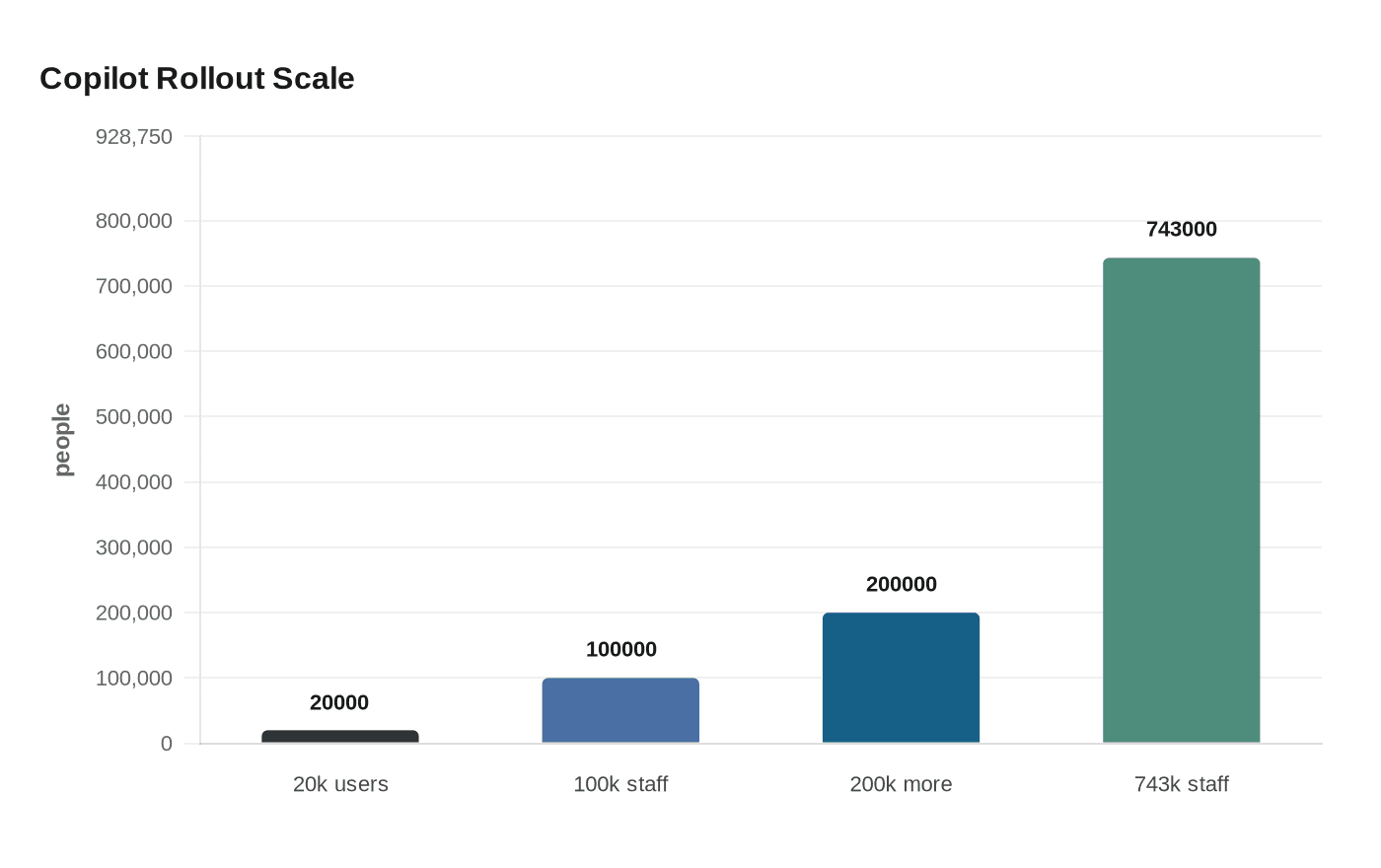
Microsoft is using Accenture’s Copilot rollout to make a bigger point about enterprise AI: the conversation has shifted from demos to deployment at workforce scale. Accenture is rolling out Microsoft 365 Copilot across about 743,000 employees, a footprint Microsoft says is its largest enterprise Copilot deployment to date.
The path to that scale was slow by design. Accenture began testing Microsoft 365 Copilot in August 2023, first with a few hundred senior leaders, then expanded to about 20,000 users within months. Microsoft said the rollout relied on a phased, people-first approach built around training, communications, data governance and access controls, a reminder that enterprise AI programs rise or fall on change management as much as model quality.

The numbers Accenture is citing are the kind that sales teams can use in skeptical accounts. In 2025 data from a 200,000-user sample, 97% of employees said they completed routine tasks 15 times faster with Copilot, while 53% reported significant gains in productivity and efficiency. That is the sort of proof point that matters when AI is being judged less on novelty and more on whether it can actually remove friction from daily work.
For Microsoft, the timing matters too. The company first said Microsoft 365 Copilot would be generally available to enterprise customers on November 1, 2023, and since then the rollout has become part of a longer commercial arc. In November 2024, Microsoft, Accenture and Avanade said they were launching a Copilot business transformation practice to accelerate gen-AI adoption for customers, and by late 2024 they were already talking about 100,000 employees with a commitment to deploy 200,000 more.
That trajectory is the real lesson for enterprise software teams, including those building and selling workflow tools like monday.com. Large buyers now want AI that is dependable across heterogeneous users, tied to specific workflows and governed well enough that clients can trust it. Tony Leraris, Accenture’s chief information officer, has been central to that effort, overseeing technology, governance, applications, infrastructure and services. For product, engineering and sales teams, the takeaway is plain: the winning AI story is no longer about whether workers will use it, but which workflows it can speed up first, at scale, without breaking trust.
Know something we missed? Have a correction or additional information?
Submit a Tip