Monday.com explains how enterprise service desks coordinate work across teams
Monday.com is turning the service desk into a cross-functional control center, where IT, HR, finance, and facilities work from one system. AI and automation now decide how fast that system moves.
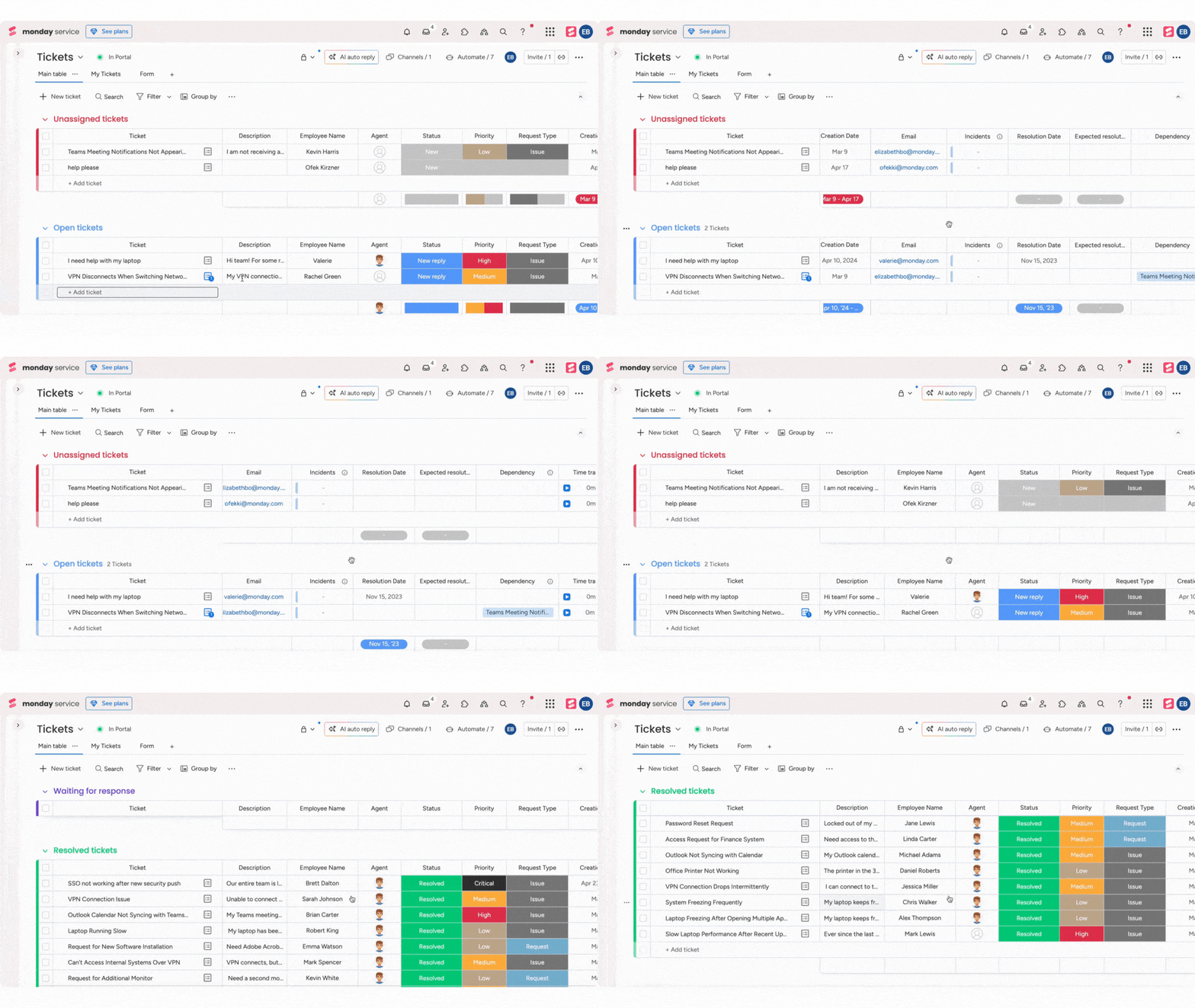
In large organizations, the enterprise service desk now spans IT, HR, finance, facilities, and procurement. Monday.com is extending the job beyond closing requests to managing service requests, incidents, and operational workflows across large organizations.
What a modern service desk actually does
The key shift is breadth. A modern enterprise service desk is built to centralize work that used to live in inboxes, spreadsheets, and side conversations, then route it through structured workflows with approvals, SLA tracking, knowledge management, self-service, reporting, and integrations. The hardest part of internal service is rarely the first request; it is the handoffs, permissions, and follow-through that determine whether work gets resolved cleanly or stalls between teams.
Monday.com extends IT service management into HR, finance, legal, marketing, facilities, and field service. In practice, that means the same operating model can handle a payroll issue, a laptop replacement, a facilities request, or an access problem without making employees learn a different process for each department.
Why the definition changed
This is not a cosmetic rebrand of help desk software. Monday.com positions enterprise service desks as platforms for requests, incidents, and inquiries across business departments, supported by self-service portals, ticketing, knowledge bases, and intelligent automation. It is an internal system of record for work that needs context, accountability, and speed.
That broader definition reflects how large organizations now operate. Once requests cross functions, the real pain point becomes fragmentation: one team owns the issue, another owns the asset, another approves the change, and nobody sees the whole path. A service desk can carry context from intake to resolution.
AI is being used for triage, not theater
Monday.com support documentation lists AI ticket triage in monday service, and monday sidekick can help teams review and manage work across Tickets and Incidents boards. That is a more practical use of AI than the generic chatbot most workers have seen elsewhere. The goal is to sort, summarize, and direct work faster so human agents can spend time on exceptions that require judgment.

That is also where the risk sits. Gartner’s October 29, 2025 ITSM outlook expects AI to improve service quality, but warns about immature solutions, rising platform costs, and the need to prepare workers for more autonomous workflows. For enterprise teams, AI in service management only pays off if it is connected to the systems that matter: identity, assets, collaboration tools, and the permissions behind each request.
What this means for people inside monday.com
For engineers, the service desk story is really about reliability at the edges. If the platform is going to coordinate HR, finance, and facilities as well as IT, then integrations, permissions, and workflow logic become product decisions with operational consequences. A broken handoff or weak identity link does not just annoy a user, it can delay access, approvals, or equipment in another department.
For product managers, service experiences are judged by speed and transparency, not by how elegant the interface looks in a demo. A request that moves cleanly through intake, approval, assignment, and closure feels invisible to the employee. Sales teams can use the same framing with enterprise buyers who want one place to manage internal requests instead of a patchwork of inboxes and spreadsheets.
In fiscal 2025, the company reported revenue of $1.232 billion, up 27% year over year, with customers with more than $50,000 in ARR representing 41% of total ARR. Monday.com reported that its enterprise customers with more than $50,000 in ARR grew from 2,295 at Dec. 31, 2023 to 3,201 at Dec. 31, 2024.
The market is maturing with them
The IT service management market stood at $14.36 billion in 2025 and $16.62 billion in 2026, while Gartner has shifted from the older ITSM Magic Quadrant to a Market Guide for IT Service Management Platforms. Buyers are no longer shopping for a narrow help desk tool; they are evaluating platforms that can support automation, workflow, and business-wide coordination.
Enterprise service management has evolved beyond ITSM, with front-office and back-office integration, collaboration, and employee experience now part of the category.
This article was produced by Prism’s automated news system from verified source data, official records, and press releases, then run through automated quality and moderation checks before publishing. The system is built and supervised by the people who set the standards it runs under. Read our full AI policy.
Know something we missed? Have a correction or additional information?
Submit a Tip