monday.com plans 20% staff cuts, lifts 2026 margin outlook
monday.com said it will cut about 620 jobs, or 20% of staff, while raising its 2026 margin outlook. The reset points to a leaner AI-driven operating model.

monday.com said in a 6-K filing it would cut about 620 jobs, or roughly 20% of its workforce, while lifting its 2026 margin outlook. The move hit the Israeli work-OS company’s Tel Aviv base especially hard, with one count putting about 350 of the layoffs there, and it comes under co-CEOs Roy Mann and Eran Zinman as the company pushes a tighter operating model.
The restructuring was tied to an AI-driven growth strategy, which matters inside monday.com because it changes how work gets distributed across product, engineering, sales and customer success. For engineers, the pressure now tilts toward automation, internal tooling and features that reduce support burden. For product managers, the bar rises on which roadmap items can justify scarce headcount. For sales teams, the question becomes how to preserve enterprise growth with leaner coverage and fewer layers of support.
The cuts landed after a stronger first quarter on paper. monday.com reported first-quarter 2026 revenue of $351.3 million on May 12, up 24% from a year earlier, and said net income reached a record $64 million. It reiterated full-year 2026 earnings guidance after that report, but later reset its long-term targets, forecast 2026 revenue of about $1.466 billion to $1.475 billion and withdrew 2027 goals.
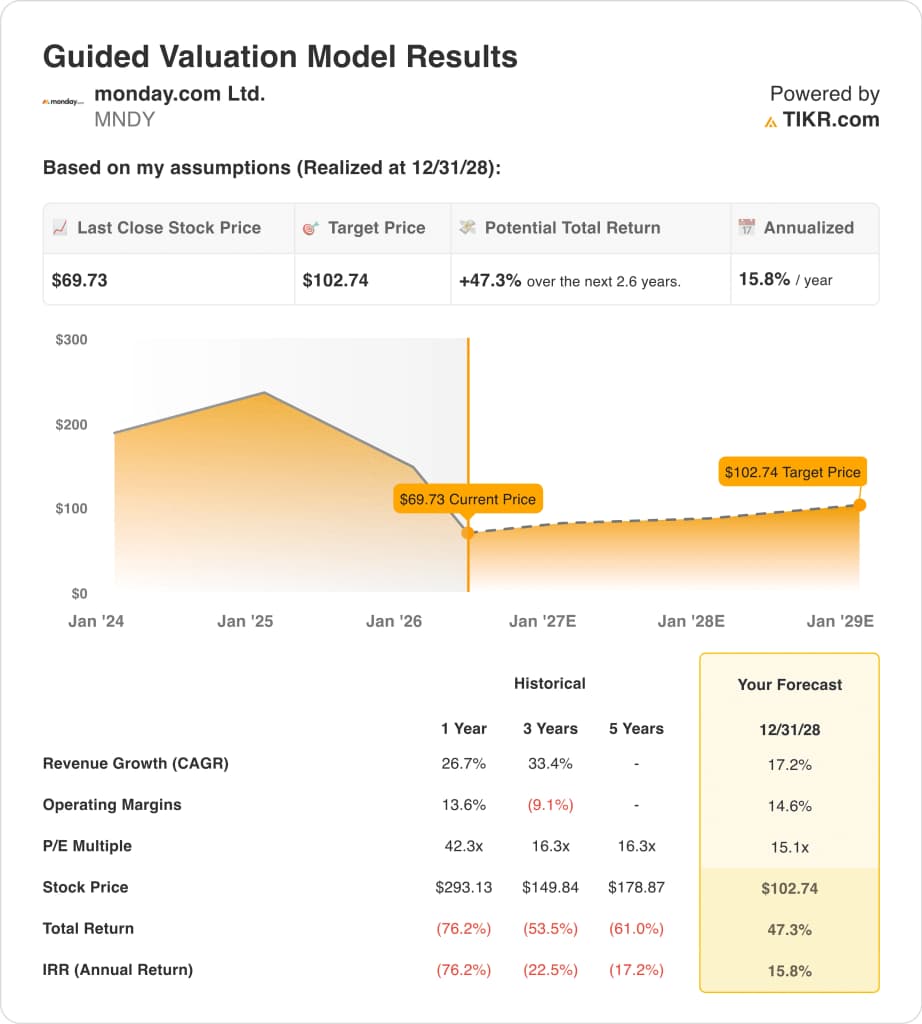
That lower outlook prompted analyst downgrades from BofA Securities and Baird, both of which pointed to the margin reset and the withdrawn targets. monday.com stock was already under pressure, down more than 51% in 2026 and about 75% from its peak. For employees, the message is that the company is now valuing profitability and AI leverage as much as raw headcount growth, a shift that will shape hiring, promotion timing and how much work the remaining teams are expected to absorb.
This article was produced by Prism’s automated news system from verified source data, official records, and press releases, then run through automated quality and moderation checks before publishing. The system is built and supervised by the people who set the standards it runs under. Read our full AI policy.
Did this article answer your question?