monday.com’s global teams need more than chat to stay aligned
Global teams do not stay aligned by chatting harder. They stay aligned when decisions, context, and ownership live in the work itself.
The real test of async is whether work survives the handoff
Chat can keep a project moving for a few hours. It does not keep a distributed team aligned across Tel Aviv, New York, London, Sydney, São Paulo, Tokyo, Denver, Kiev, and the rest of monday.com’s footprint. The teams that work well in that environment are the ones that write things down, explain why a decision was made, and make the next owner obvious.
That is the core lesson in GitLab’s remote-work guidance: over-communicate, give maximum context, document outcomes where people can find them, and keep meetings from becoming the default answer to every problem. For a company like monday.com, that is not an abstract management philosophy. It is the difference between a culture that scales and a culture that drowns in status updates, duplicate questions, and Slack churn.
A hybrid company still needs an operating system for decisions
monday.com says most teams work in a hybrid model, with three days a week together in the office and the rest of the week flexible. That setup has the upside people want from office time, faster trust-building, quicker feedback, easier collaboration on messy problems. But it also means the company is constantly switching between synchronous and asynchronous work, often across time zones and functions.
The company’s careers pages describe a global workforce spread across major hubs, and its office footprint has expanded over time from Tel Aviv, New York, San Francisco, Miami, Chicago, London, Sydney, São Paulo, and Tokyo to later listings that also include Denver, Warsaw, and Melbourne. That is a lot of distance to cover with one tool, or one habit. When a product manager in New York, an engineer in Tel Aviv, and a designer in London are all moving on the same feature, chat can surface a question, but it rarely preserves the full history of a decision.
The teams that trust each other are not the ones with the most messages. They are the ones where people know where the truth lives.
The company’s own product points in the same direction
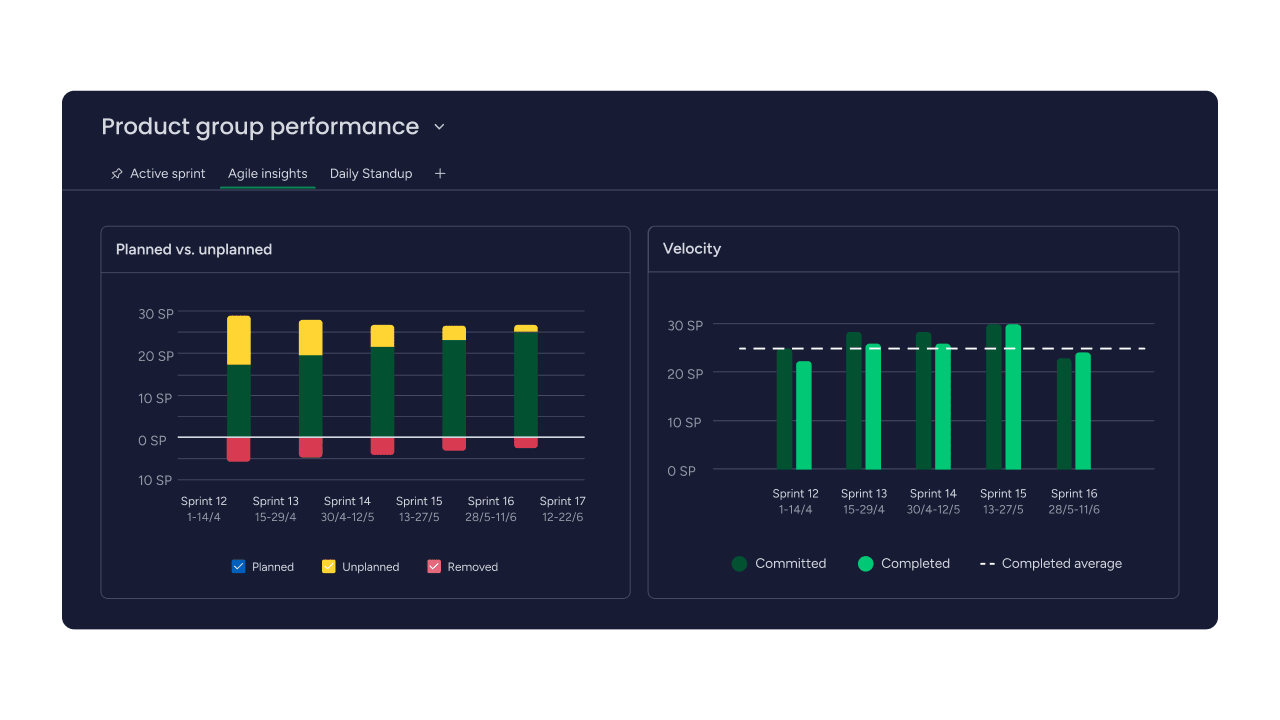
monday.com’s monday dev positioning makes the underlying logic unusually clear. The platform supports scrum, kanban, and hybrid agile workflows, and it is built to centralize the product lifecycle and connect engineering work in one place. That matters because distributed teams do not just need to talk more often. They need a shared system that keeps product, engineering, design, and data aligned around the same source of context.
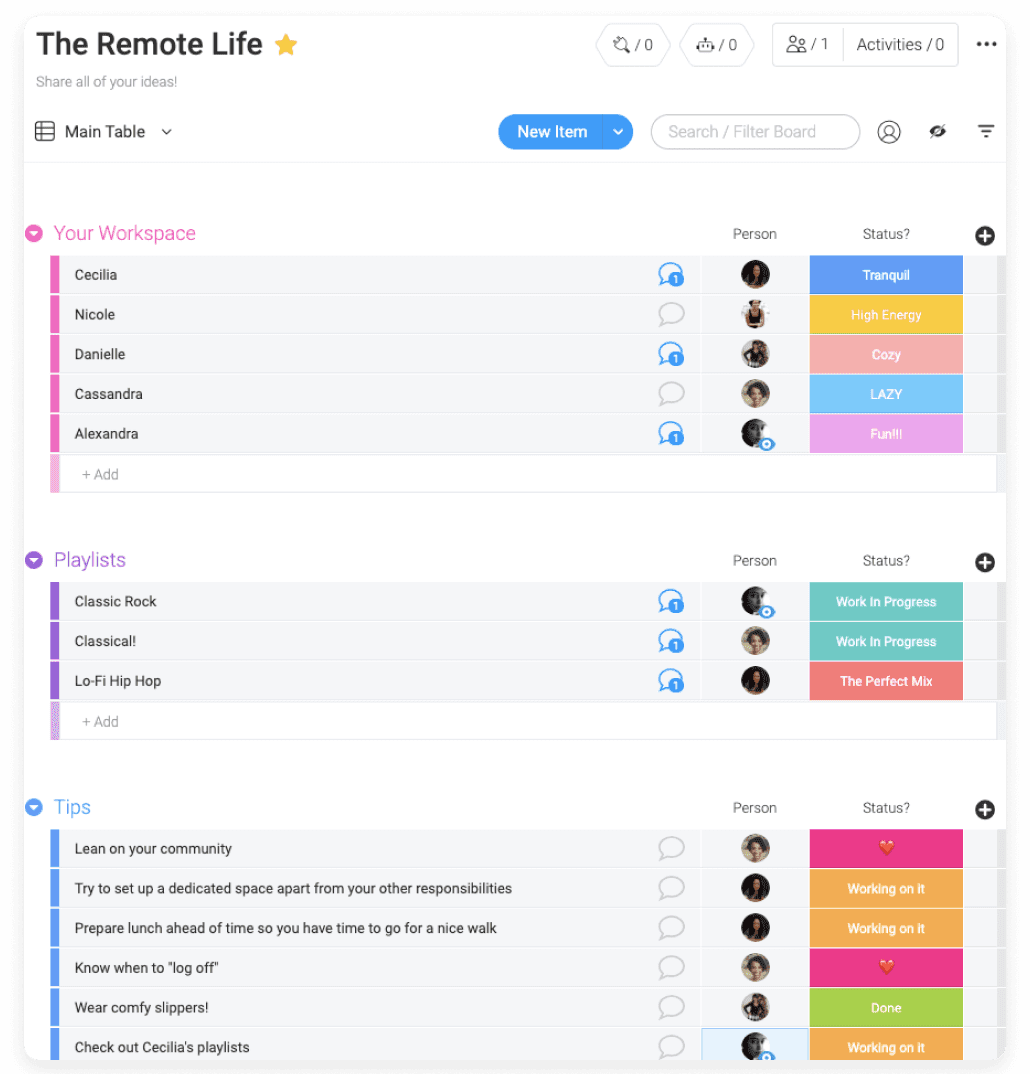
In practice, that means the work itself has to carry more of the burden that used to be handled by hallway conversations. A task should show what changed, why it changed, who owns the next step, and where the decision was recorded. If that information only exists in a meeting or a chat thread, it disappears for anyone in a different time zone, or anyone who joins the project later.
That is why async discipline is not a nice-to-have for a work-OS company. It is part of the product story. monday.com is effectively selling a way to make collaboration searchable rather than ephemeral, which is exactly what distributed teams need when they want speed without constant re-explanation.
Why scale makes alignment harder, not easier
The coordination problem gets sharper as the company grows. monday.com said it had about 2,500 employees worldwide in 2024, including 1,500 in Israel, and planned to grow its workforce by 20% while hiring for 400 open positions in Israel. It also reported fourth-quarter revenue of $268.0 million for fiscal 2024, up 32% year over year, said net dollar retention rose to 112%, and announced it had reached $1 billion in annual recurring revenue about a decade after launch.
Those numbers matter here because they show a company with real operating momentum, not a startup improvising its way through one more sprint. Growth like that creates more teams, more dependencies, more handoffs, and more chances for information to get trapped inside a meeting room. The faster product development moves, the less patience there is for repeated syncs that could have been avoided with better documentation.
The company’s new London headquarters, a planned 80,000-square-foot space in Fitzrovia, is another sign of that scale. monday.com said the site would house regional leadership, R&D, product development, go-to-market, AI, HR, and legal teams under one roof. That is the kind of physical concentration that can help with culture, but it does not erase the need for async discipline. A bigger office can speed up a conversation; it cannot replace a shared record of what was decided.
What strong distributed teams do differently
The most effective global teams at monday.com are likely to treat documentation as part of the workflow, not as an afterthought. They make the rationale visible with the task, not hidden in a follow-up message. They also keep meetings lean, so live time is used for decisions that genuinely benefit from real-time debate.
A practical version of that looks like this:
- Write down the decision, not just the outcome.
- Keep the context attached to the work, so someone in another office can pick it up.
- Make response expectations explicit, especially across time zones.
- Use meetings for ambiguity, conflict, or tradeoffs, not for routine updates.
- Treat handoffs as a product problem, because that is where distributed teams usually lose time.
That approach is less glamorous than announcing another collaboration feature, but it is what separates a calm, high-trust team from one that feels permanently on call. The point is not to eliminate conversation. It is to stop using conversation as the storage layer for the company’s memory.
Why this matters inside monday.com, not just around it
For engineers, product managers, and salespeople inside monday.com, this is about more than convenience. It shapes how quickly products ship, how cleanly teams hand off work, and whether a global organization can keep its pace without multiplying confusion. When the company talks about agile workflows, centralized product lifecycle management, and cross-functional collaboration, the hidden requirement is the same one GitLab highlights: give people enough context that they do not need to ask twice.
That is what modern hybrid work really demands from monday.com’s culture. Not more chat, but better norms. Not more meetings, but better records. In a company built to help other teams coordinate work, the hardest and most important test is whether its own global teams can stay aligned without losing the thread.
This article was produced by Prism’s automated news system from verified source data, official records, and press releases, then run through automated quality and moderation checks before publishing. The system is built and supervised by the people who set the standards it runs under. Read our full AI policy.
Did this article answer your question?