OpenAI makes GPT-5.5 Instant default, raising the bar for workplace AI
GPT-5.5 Instant is now ChatGPT’s default, and its memory tools raise the stakes for workflow software like monday.com.

OpenAI’s new default ChatGPT model is built to remember more and miss less, and that pushes workplace AI one step closer to becoming part of the workflow, not just a helper on the side.
On May 5, OpenAI made GPT-5.5 Instant the default model for all ChatGPT users, saying it is meant to be smarter, more accurate, and more concise, with reduced hallucinations and stronger personalization controls. The company has also said the model keeps the low-latency feel that made the earlier version easy to use at scale, while improving performance in sensitive areas such as law, medicine and finance.

For monday.com, that matters because the bar is no longer just whether AI can draft something quickly. The harder question is whether it can carry enough context to be trusted in recurring work like project updates, ticket summaries, meeting recaps and handoffs. OpenAI says ChatGPT can now use relevant context from past chats, saved memories, files and connected Gmail, and it can search past conversations faster. Users can also turn saved memories and chat-history reference on or off separately, a sign that memory is useful, but not something everyone will want enabled by default.
That split between usefulness and risk is where the real change lands for workplace software teams. Persistent memory helps when a sales rep wants a cleaner recap of a long account thread, or when an engineering lead needs a status update that remembers the last sprint, the last blocker and the last owner. It is a bad fit when the context is stale, sensitive or high-stakes, especially in regulated workflows where a mistaken summary can become a compliance problem instead of a productivity gain.
OpenAI had already previewed the broader direction in its April 23 GPT-5.5 launch, saying the model was especially strong in agentic coding, computer use, knowledge work and early scientific research. The API version became available on April 24, giving developers a faster path to build on top of the new stack. For monday.com engineers and product managers, that means the competitive test is shifting toward whether workflow tools can match that same mix of speed, context and reliability.
monday.com has already staked out that territory. On July 10, 2025, it introduced monday magic, monday vibe and monday sidekick, and in its Q4 and full-year 2025 results, monday.com said monday vibe was the fastest product in company history to pass $1 million in ARR. The company also reported 27% full-year revenue growth and said customers with more than $50,000 in ARR represented 41% of total ARR.
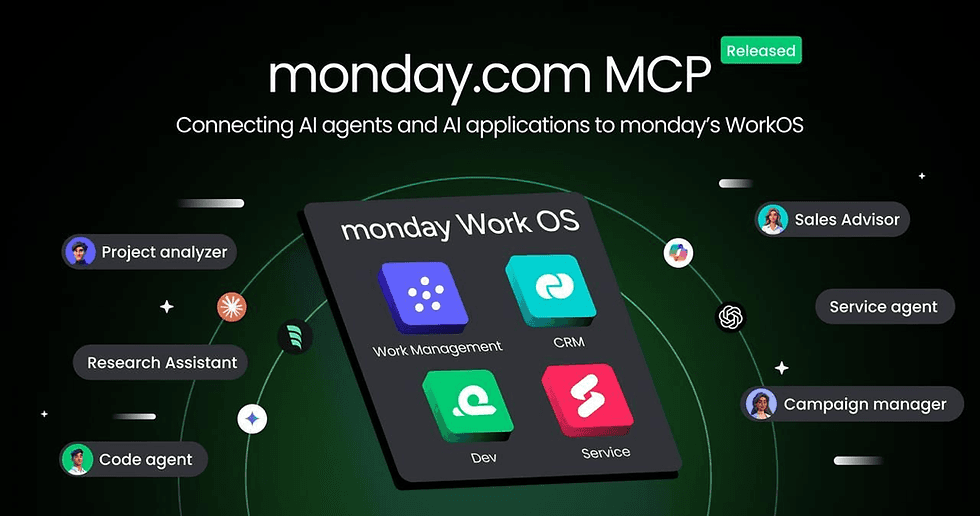
The next phase is less about whether AI can write a decent update and more about whether it can actually carry work forward. monday.com’s support docs already point to that future, with monday MCP connecting to ChatGPT so users can manage tasks, query boards and automate workflows through natural-language prompts. As OpenAI pushes memory and model quality into the default experience, workflow software has to prove it can do the same job with tighter controls, cleaner context and fewer mistakes.
Know something we missed? Have a correction or additional information?
Submit a Tip