Oracle Pushes a Converged Data Architecture for Agentic AI — a Relevance Signal for monday.com's Agent Strategy
Oracle, which runs 97% of Fortune Global 100 transaction systems, says fragmented data stacks break production AI agents, a verdict that forces a build-or-partner call at monday.com.
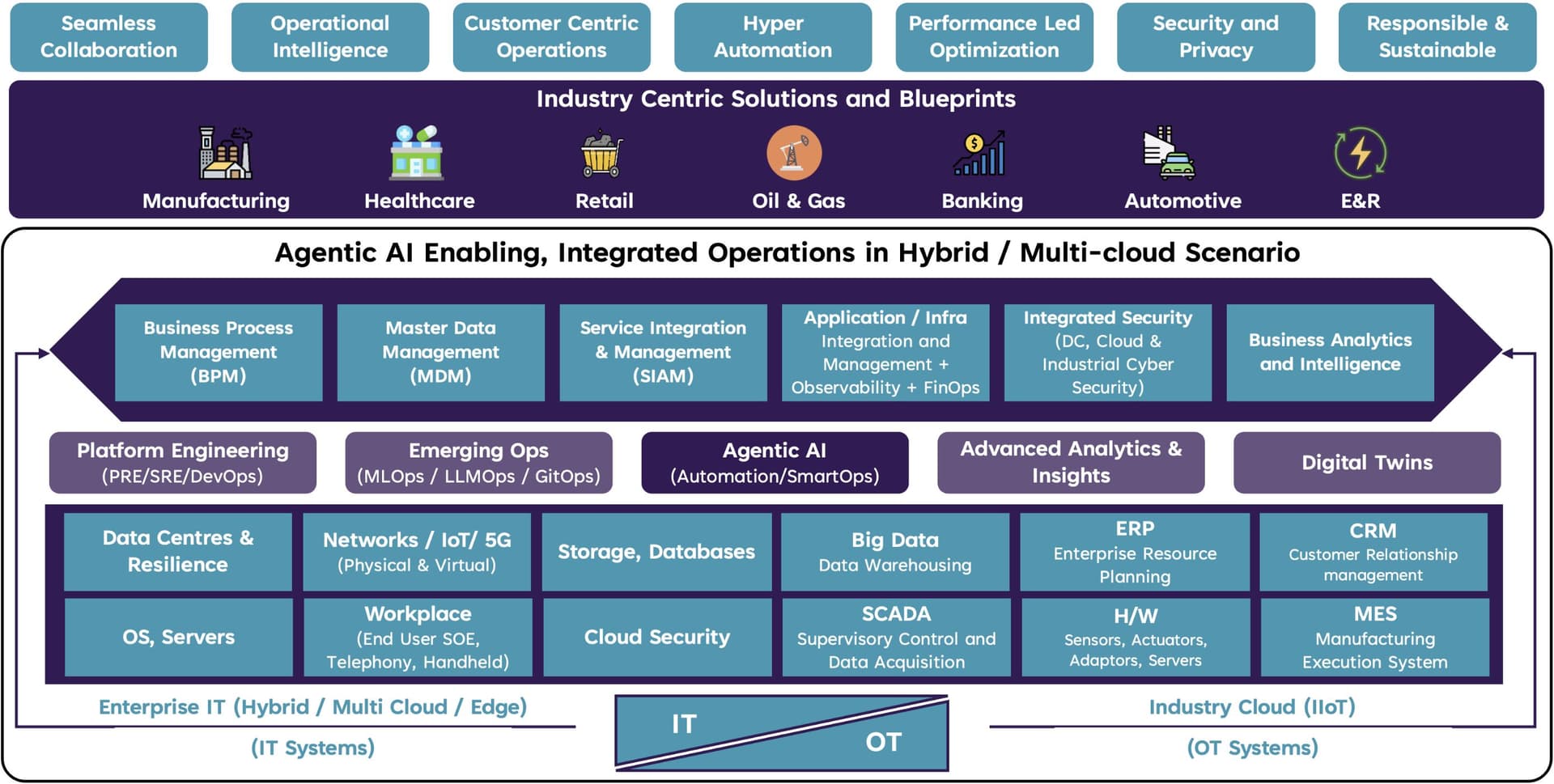
Production AI agents don't fail because of bad models. They fail because their context goes stale.
That is the core argument Oracle put forward last week when it announced a suite of agentic AI capabilities for its Oracle AI Database. The centerpiece is the Unified Memory Core, a single ACID-transactional engine that processes vector, JSON, graph, relational, spatial and columnar data without a sync layer. The release also included Vectors on Ice, which brings native vector indexing to Apache Iceberg tables; a standalone Autonomous AI Vector Database service; and an Autonomous AI Database MCP Server designed to give agents direct data access without custom integration code.
Oracle's architectural diagnosis is specific: agents built across a vector store, a relational database, a graph store and a lakehouse require sync pipelines to maintain current context. Under production load, those pipelines fall behind. The Unified Memory Core is Oracle's answer to that synchronization problem, collapsing the stack into a single consistent source of truth.
The company carries real weight behind that argument. By Oracle's own count, its database infrastructure runs the transaction systems of 97% of Fortune Global 100 companies. Maria Colgan, Vice President of Product Management for Mission-Critical Data and AI Engines at Oracle, acknowledged the reality of heterogeneous enterprise data environments: "As much as I'd love to tell you that everybody stores all their data in an Oracle database today, you and I live in the real world. We know that that's not true."
That acknowledgment matters directly for monday.com, which surfaces structured work data across boards, CRM objects, automations and integrations, and recently announced an agent marketplace. Oracle's architectural bet is that enterprise buyers will increasingly want agents to operate against a single governed memory layer rather than a patchwork of specialized stores connected by adapters. If that preference takes hold in procurement conversations, monday.com's agent story becomes inseparable from its data story.

The practical engineering question is a build-or-partner decision. monday.com's product teams can invest in an internal vector store with enterprise-grade access controls, or they can develop pre-built connectors to converged enterprise data platforms. Both paths require the same underlying discipline: defining freshness SLAs for data used by agents, implementing versioned knowledge snapshots for reproducible agent decisions, instrumenting agent decisions with rich telemetry and an immutable audit trail, and ensuring agent-scoped permissions map to enterprise RBAC.
Those requirements become contractual in regulated industries. Finance, healthcare and government customers treat auditability and data lineage as non-negotiable, which means monday.com's agent capabilities face their hardest test in the enterprise segments where deal sizes are largest.
Oracle's release is not the finish line for this debate. It is a marker that the world's largest database vendor has decided the agent memory problem belongs in the database layer, not in a web of sync pipelines. For monday.com, the combination of an agent marketplace and a clear technical story about how agents access, reason over and are constrained around customer data will be decisive in competitive bake-offs where governance is no longer a secondary consideration.
Know something we missed? Have a correction or additional information?
Submit a Tip