BLS project management outlook mirrors Nintendo production careers
The BLS description of project management sounds generic until you map it to Nintendo, where producers live or die by coordination, risk control, and keeping teams moving.

What the BLS is really describing
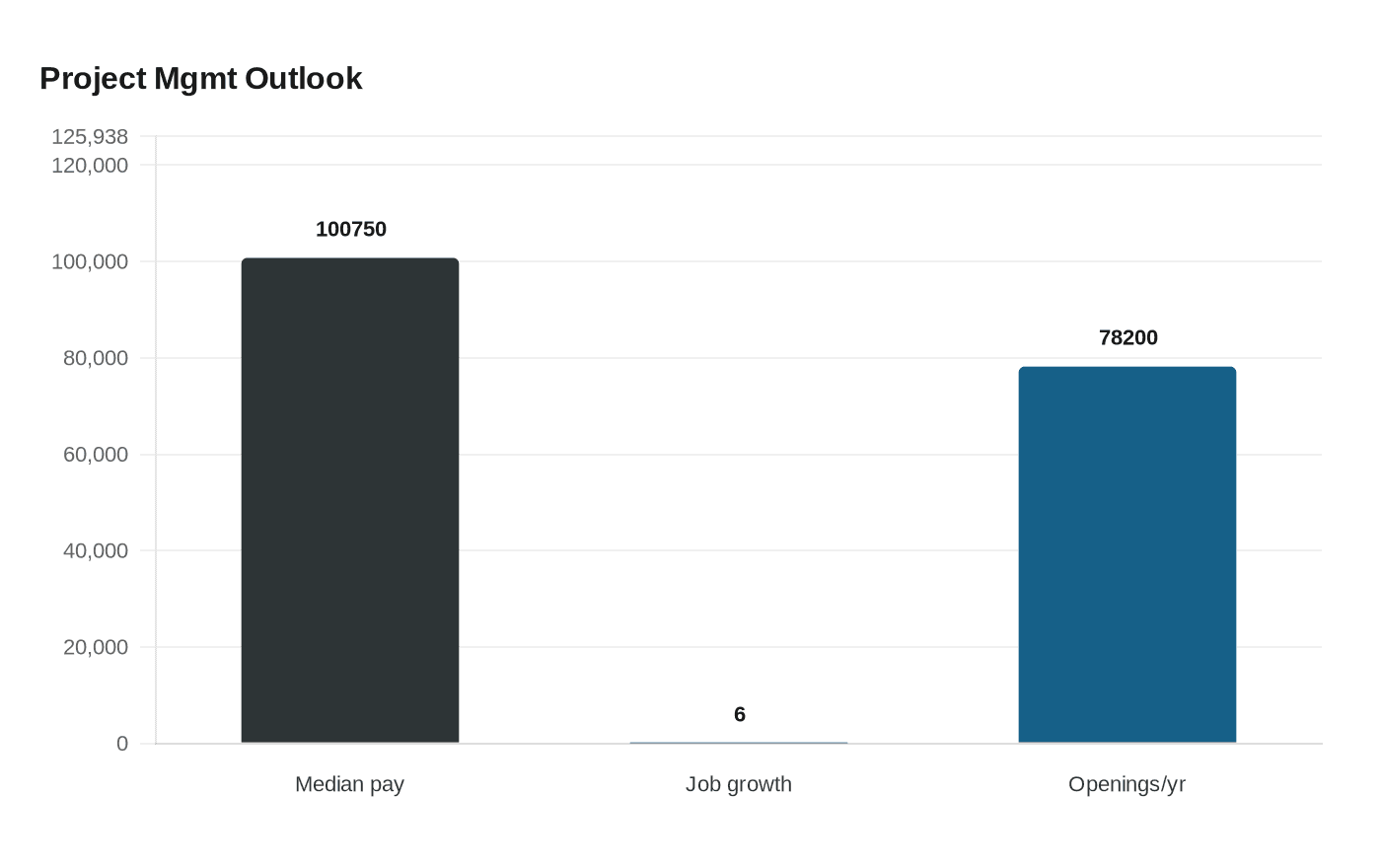
Project management specialists are paid to hold a lot of moving parts together, and that is exactly why the Bureau of Labor Statistics profile lands so neatly on Nintendo’s production culture. The occupation centers on coordinating budgets, schedules, staffing, and the countless details that decide whether a project ships cleanly or slips apart. The BLS says the median pay was $100,750 in 2024, the entry point is usually a bachelor’s degree, and employment is projected to grow 6 percent from 2024 to 2034, with about 78,200 openings a year on average when growth and replacement demand are combined.
That matters inside a company like Nintendo because a producer, coordinator, or business-facing project lead often does the same work without carrying the exact title. The job is not just about making a timeline look neat. It is about keeping creative, technical, localization, marketing, and operations work aligned long enough for the game, system, or service to hold together as one product.
The real Nintendo translation: budget, schedule, stakeholders, risk
If you work in Nintendo production, the BLS language translates cleanly into everyday leadership habits. Budget ownership means understanding not just what a feature costs, but what it costs in people time, vendor dependency, QA cycles, localization load, and launch risk. Schedule tracking means more than updating a milestone sheet; it means knowing when a delay in one area will ripple into certification, asset review, or release planning.
Stakeholder alignment is where Nintendo’s culture becomes especially distinctive. A lead who can keep engineering, design, QA, localization, legal, marketing, and regional teams pointed at the same target is already doing project management, even if their badge says something else. Risk management is the least glamorous part and often the most valuable: catching a dependency early, surfacing a scope change before it becomes a surprise, and protecting quality when pressure rises near launch.
For Nintendo workers trying to grow, those habits are often more promotable than title alone. The people who move up are usually the ones who can explain tradeoffs clearly, keep decision-makers informed, and prevent small problems from becoming franchise-level embarrassment.
Why the work is harder than a spreadsheet
The BLS also describes project management as mostly office-based work, with occasional travel and some weeks that run beyond 40 hours. That description should sound familiar to anyone who has watched a game team enter a milestone crunch or a cross-functional launch window. In practice, the job is sustained coordination under pressure, with enough context switching to make neat process diagrams feel optimistic.
That is especially true at Nintendo, where quality standards are part of the brand. A project lead is not just pushing speed. The job is to preserve the kind of finish that makes a game feel unmistakably Nintendo while still moving the work forward. When the schedule is tight, the real skill is deciding what must be solved now, what can be deferred, and what must never be compromised.
Why Nintendo’s corporate framing makes this skill set visible
Nintendo’s own management policy says it aims to introduce new forms of entertainment while maintaining robust corporate management. That is not just a polished corporate line. It describes the balancing act that makes good project leadership so valuable there: creative ambition on one side, disciplined execution on the other.
The company also says its business is guided by growing the Nintendo IP fanbase and fostering long-term relationships with consumers. That is a reminder that project management at Nintendo is not only about a single shipment date. It is about protecting trust across product cycles, which makes schedule discipline, careful communication, and consistent quality part of the same job. The company’s governance structure, which uses a Company with Audit and Supervisory Committee format, reinforces that this is a large, closely managed organization where process and accountability matter.
Nintendo’s FY2025 annual report, covering the fiscal year ended March 31, 2025, sits inside that same pattern: a company that has to think like a long-horizon operator, not just a hit-driven studio. For employees, that means the ability to coordinate across functions is not a side skill. It is a core management currency.
Nintendo has been built on cross-functional execution from the start
This is not a new expectation dressed up in modern language. Nintendo’s company history points to the 1983 launch of the Family Computer System, known outside Japan as the Nintendo Entertainment System, and to the 1985 start of Super Mario Bros. Those launches were never just creative feats. They were coordinated product efforts that required hardware, software, manufacturing, and market timing to line up.
Nintendo’s early development interviews make the same point from another angle. Staff involved in those projects described doing programming, idea generation, manufacturing setup, and even commercial production work. That kind of all-hands production culture helps explain why Nintendo still rewards people who can move across boundaries. The legacy is not “everyone does everything” in a vague sense. It is that the company has long valued people who understand how a product becomes real.
That history matters now because modern game work is even more interdependent. A producer who understands one department but not the others will hit a ceiling fast. A producer who can translate between them becomes the person teams rely on when the work gets complicated.
How to read Nintendo’s current openings through a project-management lens
Nintendo’s U.S. careers page currently lists 65 open roles across studios, teams, locations, and departments, including an IT Project Manager, ERPs role in Redmond, Washington. That is a useful signal for applicants and employees alike: Nintendo treats project management as a distinct job family, not just an informal habit. It also shows how broad the coordination work can be, spanning software engineering, localization, marketing, sales, operations, and support functions.
For people inside the company, the takeaway is practical. If you want to move from contributor to leader, you do not need to wait for a project-manager title to start acting like one. The habits that travel best are:
- owning the budget conversation instead of hoping someone else will
- tracking schedule risk before a deadline becomes a crisis
- keeping stakeholders aligned on what matters most
- documenting tradeoffs clearly so decisions are reversible and informed
- protecting quality when pressure rises, especially near launch
Those are the moves that make a producer, coordinator, or lead look ready for the next level.
The career signal hiding in plain sight
The BLS profile can look generic until you compare it with Nintendo’s production reality. Then it becomes a translation guide for how game leadership actually works: not as pure creative inspiration, and not as bureaucratic oversight, but as the disciplined management of people, time, money, and expectations. In a company that still builds its identity on legacy franchises, careful launches, and long consumer relationships, the most valuable managers are often the ones who make complexity feel invisible.
This article was produced by Prism’s automated news system from verified source data, official records, and press releases, then run through automated quality and moderation checks before publishing. The system is built and supervised by the people who set the standards it runs under. Read our full AI policy.
Did this article answer your question?
