DOL Proposes 2026 Rule Reshaping Independent Contractor Classification for Employers
The DOL's proposed 2026 rule could save small businesses $2.31 billion over 10 years by making it easier to classify workers as independent contractors.
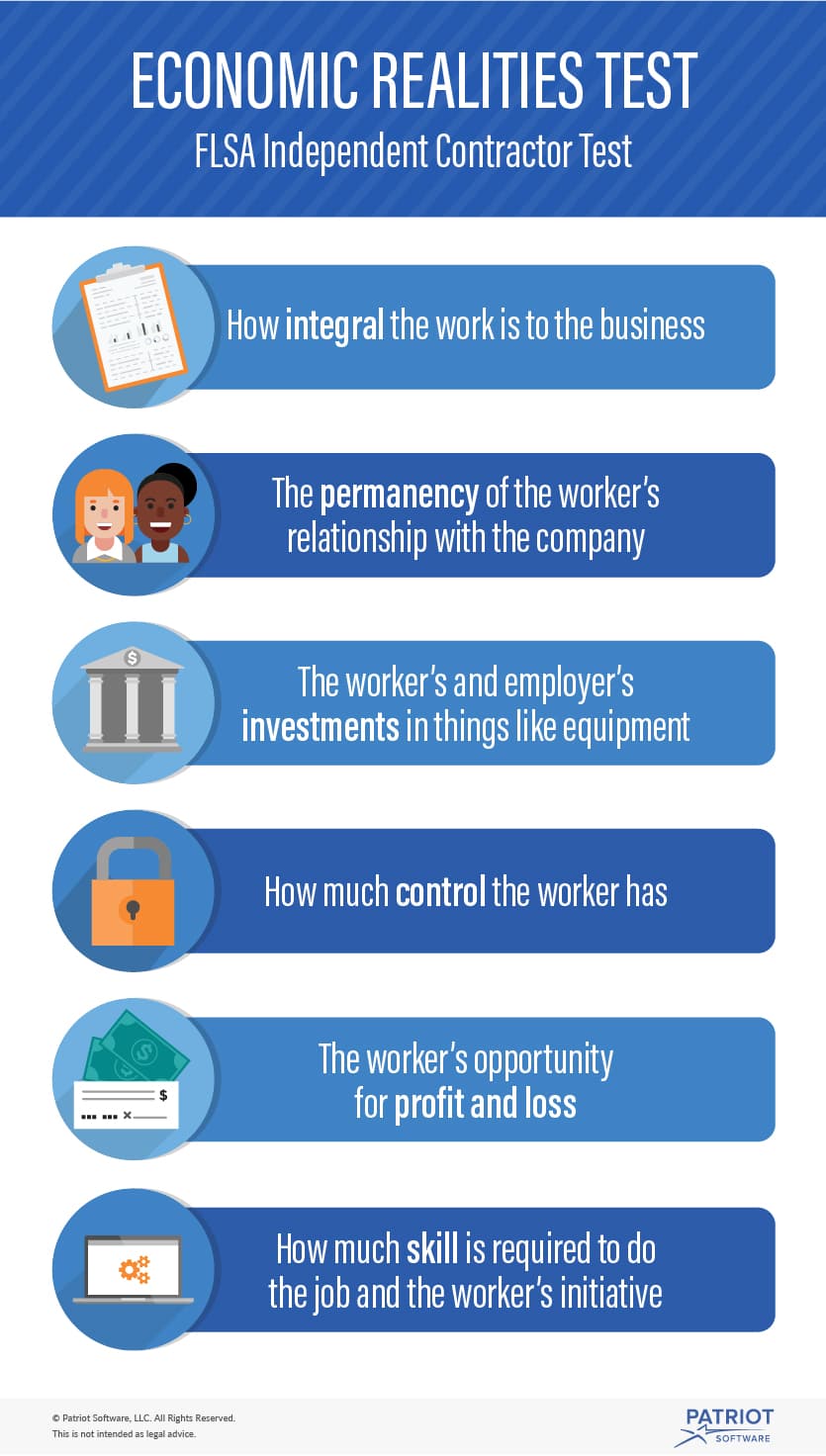
The U.S. Department of Labor's Wage and Hour Division announced a proposed rule on February 26, 2026, that would tear up the existing 2024 independent-contractor classification standard and replace it with a framework centered on economic dependence rather than a six-factor test that legal analysts say consistently pushed toward employee status.
The proposal, formally titled "Employee or Independent Contractor Status Under the Fair Labor Standards Act, Family and Medical Leave Act, and Migrant and Seasonal Agricultural Worker Protection Act," was published in the Federal Register the following day, February 27, opening a 60-day public comment window that closes April 28, 2026.
The core shift is methodological. Where the 2024 rule applied six factors that, according to the SBA Office of Advocacy, "often leaned toward treating independent contractors as employees," the 2026 proposal applies what attorneys at Sandberg Phoenix describe as an economic realities test. "The proposed rule applies an economic realities test which focuses on the economic dependence of the worker on a putative employer or on himself or herself," wrote attorney John Gilbert in a March 9 analysis. The two core factors under this framework are the nature and degree of control over the work, and the worker's opportunity for profit or loss based on their own initiative or investment. Secondary considerations, including the skill required, the duration of the relationship, and whether the work is part of an integrated unit of production, are explicitly subordinate. As the SBA Office of Advocacy noted, "these should help guide the decision, but they are not as important as the core factors."
Critically, the rule privileges real-world circumstances over paperwork. "The rule recognizes that the facts of the case matter more than what is contractually or theoretically possible arising out of the relationship between the parties," Gilbert wrote.
The estimated economic stakes are significant. The SBA Office of Advocacy projects the proposed rule would save small businesses $2.31 billion over ten years, discounted at 7 percent, amounting to $329 million in annualized cost savings. Phillips Lytle attorneys James R. O'Connor and Beatrice Nisoli, writing in a March 3 client alert, characterized the proposal as "a progeny of a similar framework from the first Trump administration" and noted it could benefit contractors directly, not just employers. Under the 2024 rule's investment-comparison approach, individual contractors were structurally disadvantaged because a company's capital investment will almost always exceed a single worker's; Phillips Lytle flagged that an overly burdensome test risks pushing employers to convert contractors to employees rather than navigate the compliance exposure.

For companies using contractor workforces, including those in the gaming industry that rely on freelance developers, localization specialists, and contract QA testers, the practical guidance from multiple law firms is consistent: don't wait for finalization. Maynard Nexsen, in its analysis titled "How Far Will The Pendulum Swing?", advised employers to audit their existing classifications against other enforcement regimes now, noting that the DOL is only one of several agencies with jurisdiction. The IRS, EEOC, NLRB, and numerous state agencies all apply their own variations of worker-classification tests governing taxes, workers' compensation, wages, and unemployment benefits. A favorable DOL rule does not neutralize exposure under those parallel frameworks.
Honigman's client alert was direct in its conclusion: "These developments reflect shifting federal agency priorities rather than changes to the underlying statutory landscape." The comment period represents the practical window for employers to shape the final rule; Phillips Lytle specifically urged businesses currently using or considering independent contractors to submit comments before April 28. The SBA Office of Advocacy, which is separately soliciting small-entity input on the impacts of both the 2024 rule and the 2026 proposal, has designated Assistant Chief Counsel Janis Reyes as the direct contact at janis.reyes@sba.gov.
Maynard Nexsen noted the final regulatory approach "may change depending on public comments," meaning the version published in February is not necessarily the version that takes effect.
This article was produced by Prism’s automated news system from verified source data, official records, and press releases, then run through automated quality and moderation checks before publishing. The system is built and supervised by the people who set the standards it runs under. Read our full AI policy.
Did this article answer your question?