EA’s franchise-driven growth underscores Nintendo’s quality-first business case
EA’s record year shows blockbusters still finance risk, but the layoffs around it warn Nintendo that franchise strength does not guarantee staffing stability.
EA’s numbers are a reminder that scale still pays
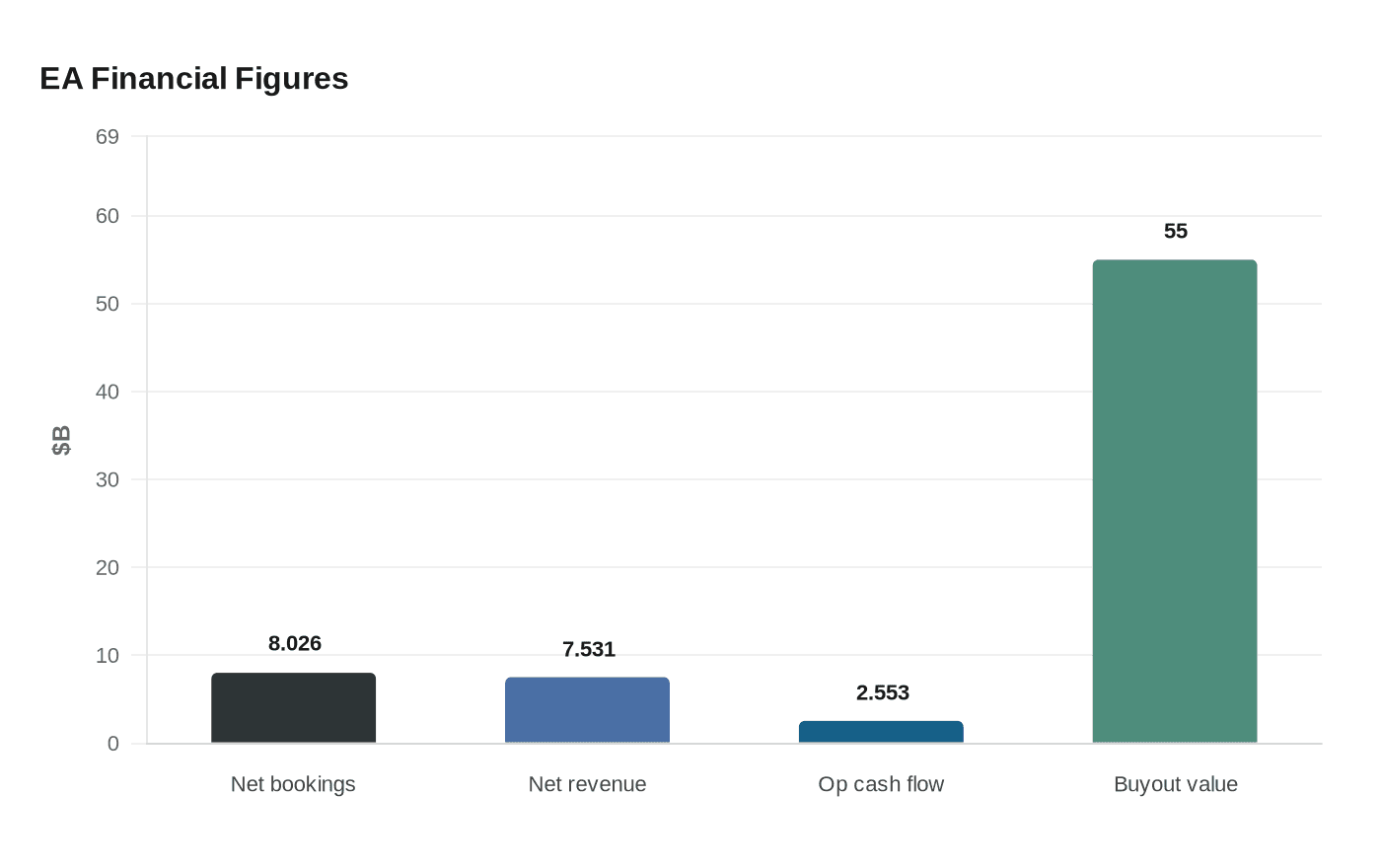
Seven million copies in three days did not buy Electronic Arts a quiet year. It helped produce a record $8.026 billion in net bookings for fiscal 2026, up 9% from a year earlier, while net revenue reached $7.531 billion and operating cash flow climbed to $2.553 billion. For Nintendo employees, the lesson is not about EA specifically. It is about the way a few massive franchises can still carry an entire business, from marketing and localization to post-launch support and the room to take creative risks elsewhere.

EA said Battlefield 6 was its best-performing Battlefield in a fiscal year and that the launch set numerous franchise records. Global Football net bookings rose mid-single digits, while Apex Legends finished the year up double digits. That combination is the clearest signal in the report: dependable franchises do more than sell games. They create the financial slack that lets teams extend support windows, invest in content updates, and keep larger organizations moving without betting every quarter on a brand-new hit.
Why this matters inside Nintendo
That logic should sound familiar in Kyoto, Tokyo, and every Nintendo office that touches software, publishing, brand, or business planning. Nintendo’s most important franchises have always functioned as a stabilizer for the wider company, and the current cycle makes that even more visible. Mario, Zelda, and Pokémon are not just cultural icons. They are the portfolio anchors that can help justify new tools, new teams, and new experiments when the market is unforgiving.
The business takeaway is straightforward: big franchises create audience trust, and trust gives leadership more confidence to allocate people and money. When a platform holder believes its core audience will keep showing up, it can support smaller projects without turning every greenlight into a survival test. That is the real portfolio lesson from EA’s year. Strong IP is not a substitute for creativity, but it can fund the conditions creativity needs to survive.
EA’s staffing story shows why revenue and stability are not the same thing
The other half of EA’s year is harder to ignore. On March 9, 2026, the company laid off an undisclosed number of Battlefield developers across DICE, Criterion, Ripple Effect, and Motive, even as it said Battlefield remains one of its biggest priorities and that it is continuing to invest in the franchise. EA had already cut employees at Skate developer Full Circle in February 2026. Those moves landed after the kind of commercial success that normally suggests breathing room.
That gap matters for Nintendo workers because it shows how quickly a strong top-line result can coexist with internal pressure. A profitable franchise can support more hiring, but it can also become a magnet for restructuring if executives decide they need a tighter cost base or a different production model. For developers and QA teams, that means success does not automatically translate into calmer schedules. For localization and publishing staff, it means hit-driven plans can still produce churn even when a franchise is performing well.
The buyout adds another layer of uncertainty
EA’s strategic backdrop is just as important as its financial one. On September 29, 2025, the company announced a definitive agreement to be acquired by a consortium led by Saudi Arabia’s Public Investment Fund, Silver Lake, and Affinity Partners in an all-cash transaction valued at about $55 billion. EA described it as the largest all-cash sponsor take-private investment in history. By May 5, 2026, the company said its debt process had been completed with strong investor demand and that it remained in constructive engagement with regulators.
That combination of big numbers and unresolved deal mechanics is a warning sign for any large publisher. It means the market can reward franchises while still forcing management into a more defensive posture behind the scenes. For Nintendo, which is not facing the same ownership uncertainty, the point is different but related: investors will still pressure any company to prove that its biggest brands are worth the resources they consume. A franchise can be beloved and still be judged brutally on margin, cadence, and return on development time.
Nintendo’s hardware-software flywheel changes the equation
Nintendo enters this comparison from a stronger position because its core franchises do not stand alone. They are tied to hardware demand. Nintendo’s investor-relations schedule lists its fiscal-year earnings release for the year ending March 2026 on May 8, 2026, just as the company is being watched for how its game pipeline supports the Switch 2 cycle. CNBC reported that Nintendo had sold 17.37 million Switch 2 units by December 31, 2025, making it Nintendo’s fastest-selling console ever, and that the company kept its forecast at 19 million units for the fiscal year ending March 2026.
That matters because a hardware-software flywheel gives Nintendo more ways to absorb risk than a publisher living more heavily on live services and annualized franchises. Strong hardware demand can stabilize staffing plans, sharpen budget confidence, and create more room for smaller projects that do not need to carry the quarter. At the same time, investors are also watching memory-price pressure and the strength of the game pipeline, which means even Nintendo’s stronger position still depends on disciplined execution.
What the portfolio lesson means for daily work
For Nintendo teams, EA’s results argue for a simple but demanding approach:
- Protect the franchises that reliably move the business, because they buy time for everyone else.
- Use those franchises to support localization, post-launch content, and quality assurance instead of starving them in favor of the next shiny bet.
- Treat smaller projects as a source of future portfolio strength, not as disposable side work.
- Assume the market will reward quality, but only if that quality is paired with cost discipline and clear planning.
That is why the comparison with EA matters. The company just proved again that blockbusters can still produce scale, but it also showed that scale alone does not create stability. For Nintendo, the business case for quality-first development is still intact. The difference is that the company has to use its strongest franchises not only to win sales, but to preserve the space where the next breakthrough can actually be built.
Know something we missed? Have a correction or additional information?
Submit a Tip