Nexon results show why Nintendo cares about scale, retention and concentration
Nexon’s quarter shows the money is still in retention, not just launch hype. For Nintendo teams, the lesson is concentration: a few durable hits can outperform a wide catalog.
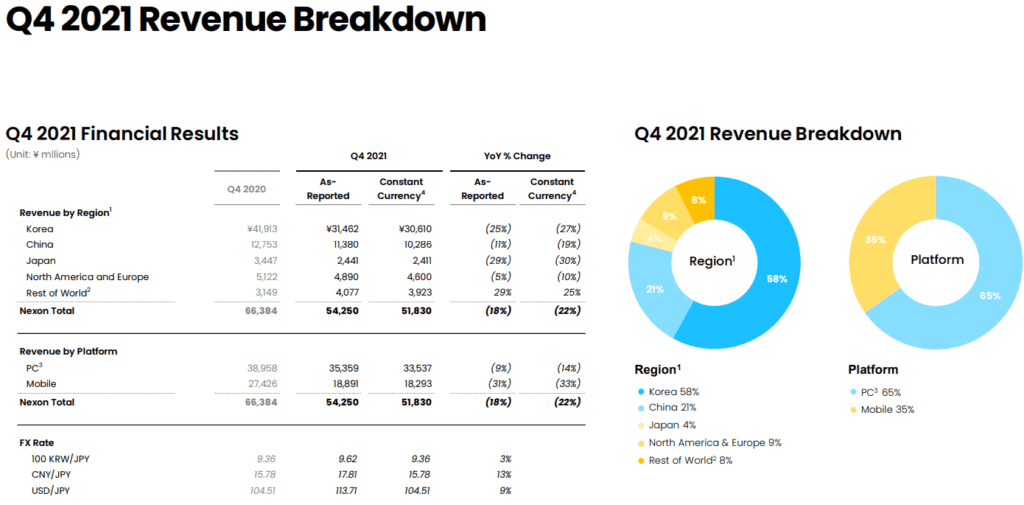
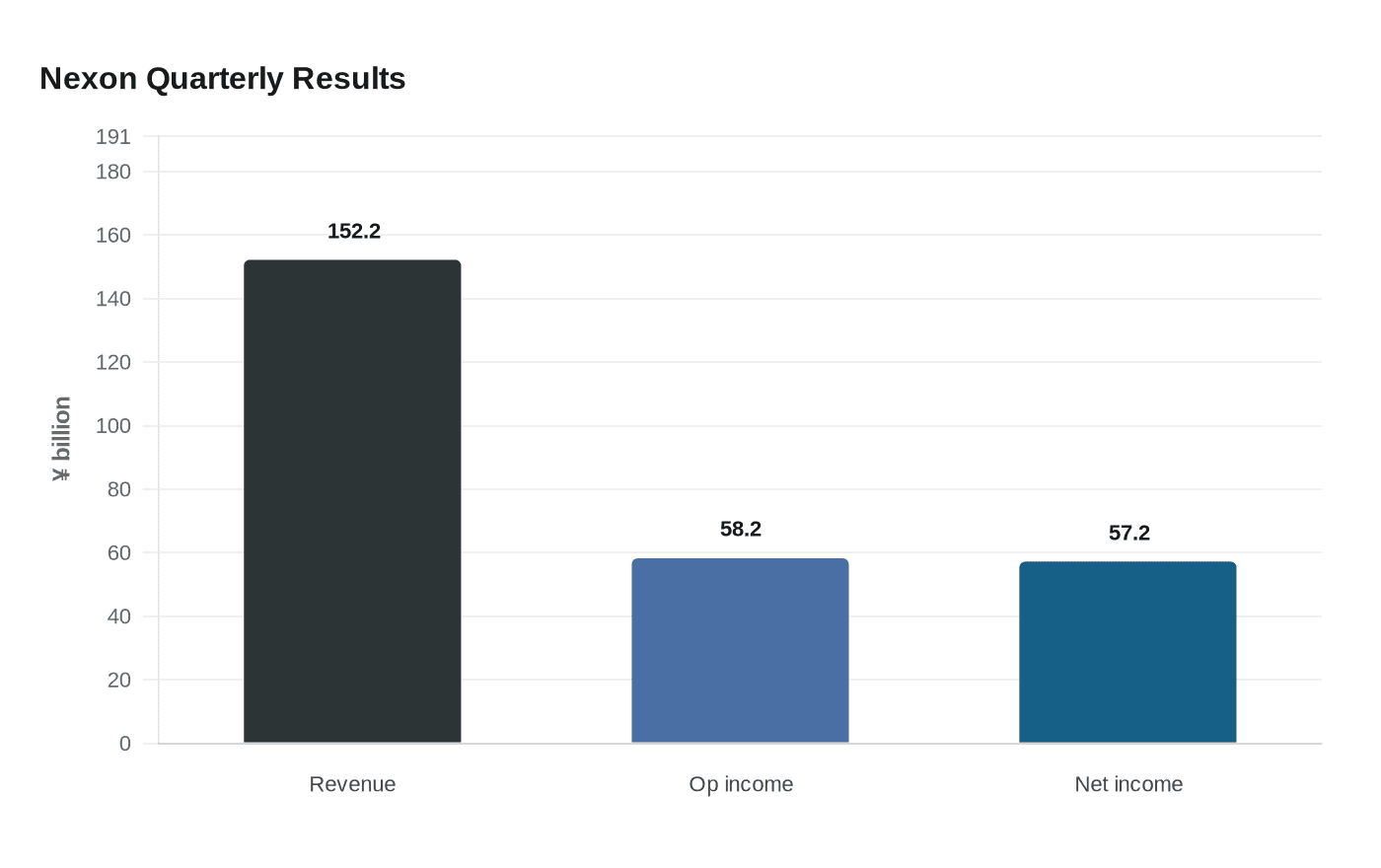
Nexon’s quarter makes a simple point that many game businesses still resist: scale only matters when players stay. The company posted record quarterly revenue of ¥152.2 billion, up 34 percent year over year as reported and 26 percent in constant currency, while operating income rose to ¥58.2 billion and net income reached ¥57.2 billion, up 118 percent. A ¥14.5 billion foreign-exchange gain helped net income, but the more operationally important signal was that the business still leaned hard on a small number of durable titles rather than a broad spread of releases.
For Nintendo, that matters because it cuts to the center of how a premium game organization thinks about quality and risk. A company built around long franchise legacy and high expectations cannot afford to confuse volume with health. Nexon’s numbers show why management teams keep caring about audience stickiness, monetization depth, and the ability of a few games to carry the whole portfolio for long stretches. That is not a call for Nintendo to mimic Nexon’s live-service playbook. It is a reminder that when a game retains players deeply enough, it can support updates, community work, store visibility, and business momentum long after the launch campaign fades.
ARC Raiders is the clearest example in the quarter. Nexon said the game sold an additional 4.6 million units in the first quarter, bringing cumulative sales to 15.5 million by the end of the period, and later said it had surpassed 16 million units worldwide. More than half of active players had already spent over 100 hours in the game, and total playtime crossed 1.5 billion hours. Those are the kinds of engagement numbers that justify live-service investment because they show not just a hit, but a habit. Nexon also said ARC Raiders is now supported by a steady stream of content updates, with the Frozen Trail update scheduled for October 2026 as the biggest since launch and built around both free and premium content.
That kind of cadence is the business model lesson in plain view. The game is not being treated as a one-time shipment; it is being managed as an ongoing relationship with a concentrated audience that still has room to spend time and money. For planners and producers at Nintendo, the takeaway is not that every title should become a service. It is that when a product does invite long-term play, the organization has to be ready for the operational burden that follows: content planning, QA coverage, live balancing, community management, localization, and store strategy all become part of the product, not afterthoughts.
MapleStory shows the same logic in a different shape. Nexon said the MapleStory franchise grew 42 percent year over year in the quarter, driven by MapleStory: Idle RPG and MapleStory Worlds. The company framed that growth as evidence of a broader franchise-expansion and hyperlocalization strategy, which is a notable word choice for any publisher watching its most valuable brands. Instead of assuming a legacy IP can coast on recognition alone, Nexon is trying to extend the franchise across new formats and regional approaches, then use that expansion to deepen the audience rather than chase a totally new one every cycle.
That approach comes with tradeoffs, and Nexon’s own portfolio review makes them visible. The company said it cancelled three projects and redirected additional funding to NAKWON and Woochi the Wayfarer. It also said it has 15 games in development and is focusing on projects with global appeal. That is not portfolio sprawl for its own sake. It is concentration with a filter: fewer bets that management believes can travel, plus the willingness to cut projects when the case is no longer strong enough.
The March 31 Capital Markets Briefing makes the structure of that discipline clearer. Nexon said its transformation plan centers on redesigning game development, cost discipline, IP portfolio management anchored by enduring brands, accelerated expansion in global markets, and a robust pipeline of new titles in development. The Q1 materials added two operational details that matter inside any large game company: the plan also includes improving the creative process and keeping headcount and HR costs flat for the year. In other words, the company is trying to do more with a disciplined people structure, not by simply hiring its way out of pressure.

That is especially relevant for teams working inside a culture that already treats quality as a non-negotiable. Nintendo does not need a lecture about release standards. What Nexon’s quarter suggests is that even in a business with strong IP, management still has to decide where creative freedom ends and portfolio discipline begins. That is a familiar tension for Japan HQ and global offices alike: the closer a title gets to true international scale, the more the organization has to reconcile local creative instincts with the demands of retention, monetization, and regional fit.
Nexon’s handling of Dungeon & Fighter Mobile underscores that tension. The company said development was transferred to Tencent for greater hyperlocalization, while Neople retains creative control over co-development. That is a practical split between market adaptation and brand guardianship. It suggests Nexon sees some markets, especially China, Taiwan, Korea, and Japan, as requiring deeper local execution than a central team can always provide, but it also shows the company is cautious about surrendering the creative core of an important property.
For Nintendo business teams, the lesson is less about outsourcing and more about governance. If a franchise is expected to live across regions and platforms, the company has to decide which decisions can be localized and which ones must stay under the strongest internal control. That affects QA standards, localization workflows, approval chains, and how much autonomy global offices actually get when they are asked to grow an audience without compromising the brand.
Nexon is also stretching its IP beyond software, which is another sign of how aggressively it is trying to deepen audience attachment. In April, it opened Maple Island, a permanent MapleStory-themed attraction at Lotte World Adventure in Seoul. The zone is roughly 2,000 square meters and gives the franchise a physical footprint inside a major leisure destination in Jamsil, South Korea. That move is more than merchandising. It is a branding play that turns franchise familiarity into a place-based experience, reinforcing the idea that strong game IP can generate value outside the download or purchase screen.
The timing matters too. Nexon’s CEO, Junghun Lee, reportedly told employees in a May 14 email that Q2 2026 would be the toughest period of the year, which signals that leadership sees the current stretch as a transition before later catalysts arrive. That kind of message is common in businesses where quarterly performance can hinge on content timing, update windows, and audience momentum rather than on a clean, linear growth curve. It is also a reminder that strong quarters can mask the amount of coordination required to keep them going.
For Nintendo, the deeper lesson is not that scale alone wins. It is that scale without retention is expensive noise, while a focused hit with durable engagement can fund a much larger strategy. Nexon’s quarter rewards concentration, tight portfolio management, and careful handling of live content. That is why the comparison is useful: Nintendo’s real challenge is not whether to chase every live-service trend, but how to preserve its quality-first identity while still learning from businesses that turn a few sticky games into an operating model.
Know something we missed? Have a correction or additional information?
Submit a Tip