Nintendo employees should note, U.S. game spending hits $60.7 billion in 2025
U.S. game spending reached $60.7 billion in 2025, giving Nintendo a bigger ceiling for software, services, and repeat play than any single hardware number.

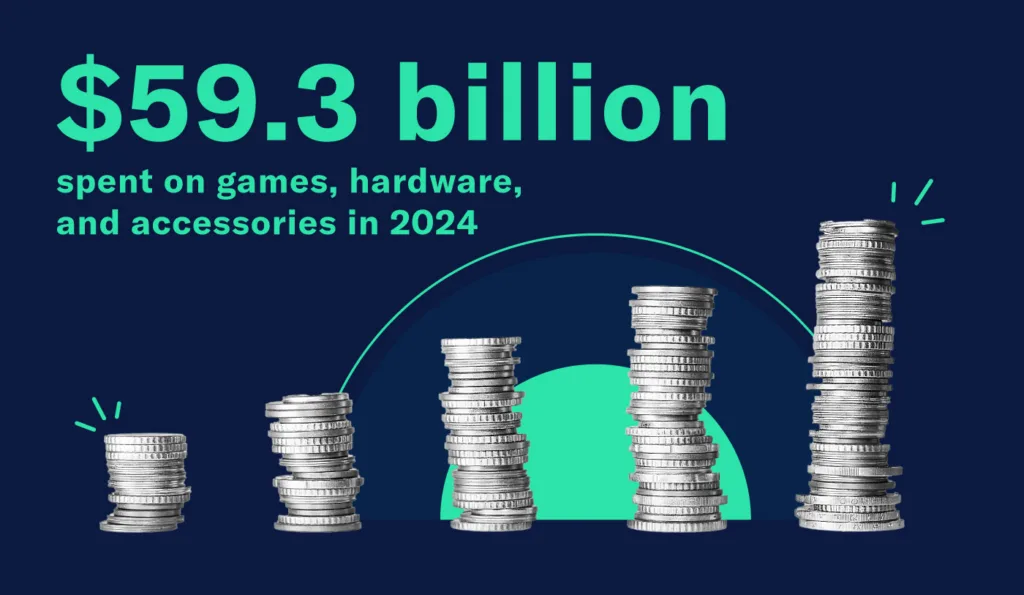
The biggest number for Nintendo employees right now is not a console shipment total. It is $60.7 billion: the amount U.S. consumers spent on video games in 2025, according to the Entertainment Software Association. That was the second-highest level on record and 1.4 percent above 2024, a sign that the market remains large even when individual launches swing up or down.
For Nintendo, the implication is bigger than one hardware cycle. A market of that size rewards companies that can combine premium software, digital services, accessories, and recurring engagement instead of leaning only on boxed sales tied to one platform. That is why account systems, online features, eShop merchandising, downloadable content, and cross-media connections matter more than ever. The ceiling is high, but only for teams that can turn a release into repeat play.

The spending mix also shows where the business is broadening. Subscriptions rose sharply, mobile spending kept expanding, and hardware sales still grew. That combination points to a consumer base that is comfortable moving across device types and payment models, which puts a premium on portability, convenience, and cross-platform awareness. For Nintendo’s developers, designers, QA teams, and localization staff, that means the product has to feel coherent from the first trailer through launch marketing, account setup, online play, and post-launch updates.
That shift matters inside Nintendo’s quality-first culture because a bigger market does not lower the bar. It raises expectations. Producers and planners can no longer think only in terms of initial unit sales or a single franchise beat. They have to think about attach rates, repeat engagement, and whether a game can create a second and third reason for players to stay invested. In practice, that puts more weight on distinctive experiences that are easy to understand and strong enough to support long-tail revenue.
It also gives Nintendo more whitespace to work with. The company can still grow through software, but the same market data points to room in services, family play, digital purchasing, and new demographics that expect games to follow them across screens. A market this large can support ambitious bets, including for future hardware and future online features. It just also makes misfires easier to spot, which is why clarity, timing, and differentiation matter as much as creativity.
This article was produced by Prism’s automated news system from verified source data, official records, and press releases, then run through automated quality and moderation checks before publishing. The system is built and supervised by the people who set the standards it runs under. Read our full AI policy.
Know something we missed? Have a correction or additional information?
Submit a Tip