Nintendo localization testing protects releases, trust, and regional launch readiness
Localization testing is the last defense between a polished Nintendo release and a game that feels broken, confusing, or culturally off in another market. It protects trust, certification, and launch timing.
Localization testing is where global polish is won or lost
A game can be translated perfectly and still fail players if the UI breaks, the timing slips, or a region-specific detail lands badly. For Nintendo, localization testing is the last line that keeps a release from feeling unfinished in another market, and it is one of the clearest examples of quality control shaping the player experience before a game ever reaches shelves or storefronts.
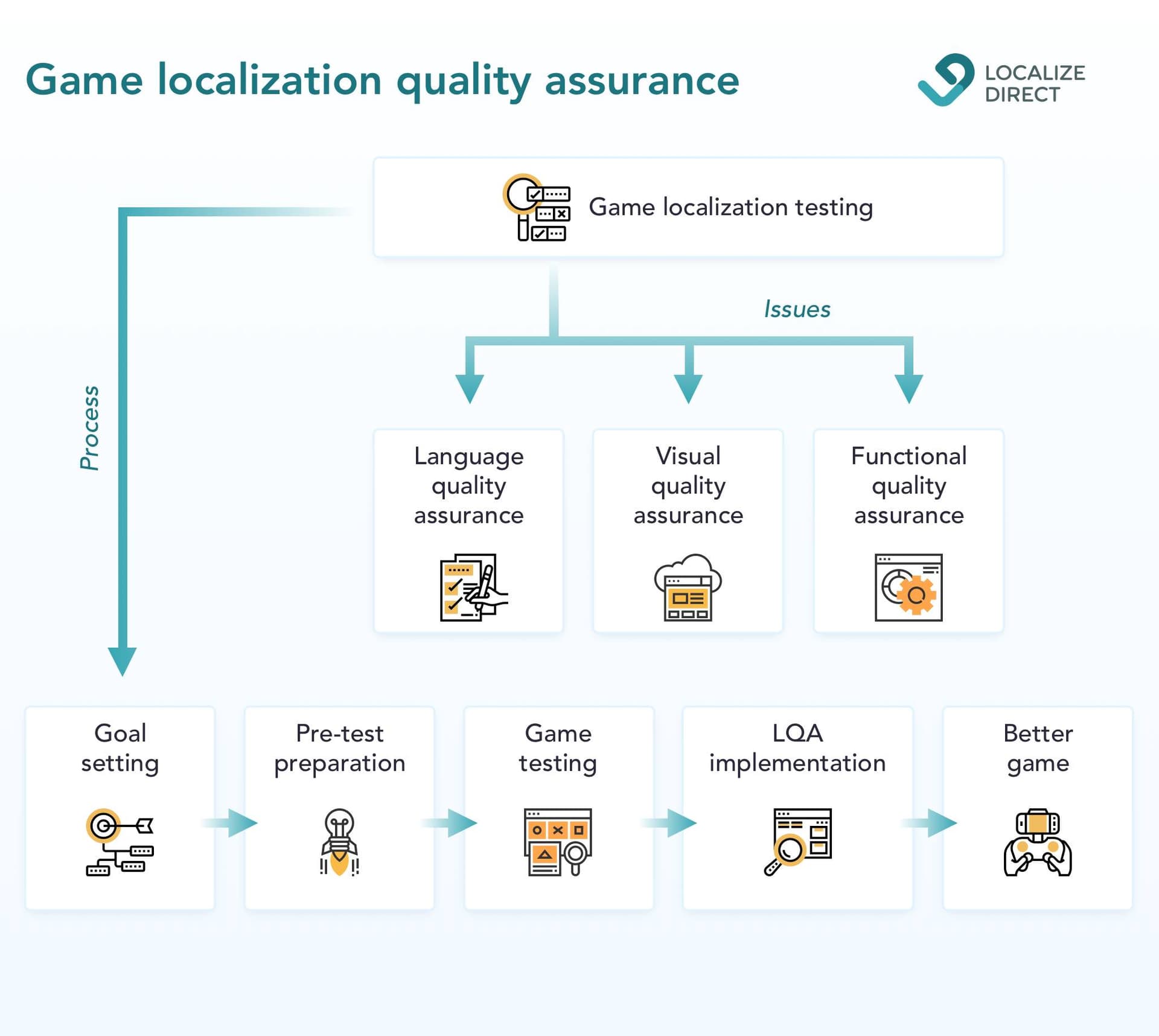
The stakes are bigger than proofreading. Localization teams are checking whether a release still behaves correctly when language, region, and cultural context change. That means text expansion and truncation, font coverage, right-to-left or mixed-script behavior when relevant, date and number formats, voice-over sync, controller prompts, and any imagery or wording that might not carry the same meaning in another country.
What localization testing actually has to catch
The most obvious failures are often the easiest to miss in production. A menu label that fits neatly in Japanese or English can wrap badly in another language, pushing a button prompt off-screen or making a screen look broken even when the code is working exactly as written. Voice-over can drift out of sync with character animation. A number format can read correctly in one region and feel foreign or confusing in another.
The work also goes well beyond the main menu. Strong localization testing follows the whole player journey, including tutorials, achievements, error messages, e-commerce copy, parental controls, online notices, and even save-data prompts. That matters because players do not experience games as isolated screens. They move through every layer, and any one of them can create friction if the localization was treated as a final pass instead of a core part of quality assurance.
For Nintendo teams, that makes the tester’s job closer to systems validation than simple language review. They are not only checking whether the words are correct. They are checking whether the game behaves as a coherent product in the market where it is about to launch.
Why this matters so much in a Nintendo environment
Nintendo’s reputation is built on a quality-first culture, which makes localization testing part of brand protection, not just a production task. A release that feels sloppy in one region can undercut the idea that the game was designed for that audience in the first place. When a player sees a translated message, a correctly placed prompt, and a UI that fits the language naturally, the experience feels intentional rather than converted.
That trust is especially important because Nintendo serves a global audience with different legal notices, age-rating expectations, store policies, and player habits. A release that works in one market can stumble in another because the surrounding requirements are different, even when the core game is unchanged. Localization testers are helping the company avoid those mismatches before they become public-facing problems.
This is why the work carries both cultural and operational weight. A team may think it is validating language, but it is also validating whether the product meets the expectations of the region it is entering. In Nintendo’s case, that means preserving the company’s reputation for clean, carefully considered releases across markets that do not all share the same rules or assumptions.
The hidden bugs that only appear in one region
Some of the most disruptive issues only surface when a specific language pack or region code is active. A build can look stable in internal testing and still break when a different character set is loaded, when a longer translated string expands the UI, or when a region-specific notice appears where it was not expected. Those are the kinds of failures that make localization testing so central to launch readiness.
There is also the cultural layer. Wording, imagery, and examples can land differently depending on the market, even if the literal translation is accurate. A phrase that feels harmless in one region may feel awkward, unclear, or out of place in another. For a company like Nintendo, where franchises often cross age groups and national borders, that kind of mismatch can erode confidence fast.
The best localization testers are trained to notice the failure before the player ever sees it. They watch for the awkward pause in voice-over sync, the cropped label in a settings screen, the parental control notice that uses the wrong regional convention, and the store copy that does not match the expectations of the local market. Those details are small individually. Together, they determine whether a release feels premium or merely translated.
Localization is also release management
The most important business lesson is that localization is not a post-production cleanup task. It is a parallel track with its own QA burden, and producers need to treat it that way from the start. When localization issues appear late, they can delay certification, marketing assets, or store updates, turning what looked like a minor text problem into a launch problem.
That is why localization testing functions as an early warning system. It can flag risk before it reaches the point where a release date, regional rollout, or retail plan has to move. A late-breaking issue might not come from the gameplay itself at all. It might come from a line of legal copy, a region-specific screen, or a UI element that behaves differently once the language changes.
For producers, that means schedule planning has to leave room for localization as real QA work. For designers, it means text length and cultural sensitivity need to be considered early, not after implementation. If a layout is built only for the original language, the team is creating avoidable rework later. The earlier the system is designed to tolerate language variation, the more stable the launch path becomes.
What teams inside Nintendo should take from it
Localization testing is a reminder that global quality does not happen automatically. It has to be tested, screen by screen, system by system, with the player’s regional experience in mind. That is especially true in a company where franchises carry long-standing expectations and where a release is judged not only on whether it runs, but on whether it feels native to the audience receiving it.
For developers, the practical lesson is to build for translation from the beginning, not after the fact. For QA testers, the mandate is to treat language changes as a source of functional bugs, not just wording issues. For localization staff, the work is part linguistic judgment and part product defense, because every region can expose a different kind of failure.
Nintendo’s global reputation depends on that discipline. The final test of a release is not whether the source version was polished. It is whether the game still feels complete, trustworthy, and launch-ready once it crosses a border.
This article was produced by Prism’s automated news system from verified source data, official records, and press releases, then run through automated quality and moderation checks before publishing. The system is built and supervised by the people who set the standards it runs under. Read our full AI policy.
Did this article answer your question?
