Nintendo Org Chart Reveals How Teams Coordinate, Share Risks, and Ship Games
Nintendo’s org chart is less about titles than traffic flow: it shows who sets scope, who protects vision, and who can unblock a ship date.
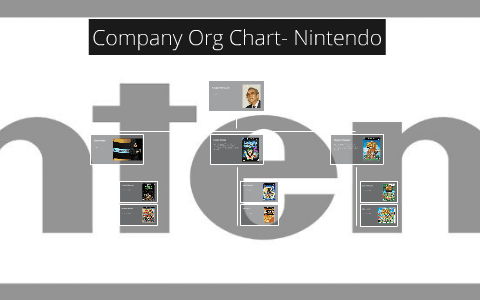
The org chart is a map of decisions, not just titles
A studio can look opaque from the outside because many roles sound familiar while doing very different work. At Nintendo, the useful way to read the org chart is to follow the work: who sets the schedule, who decides what gets cut, who owns the player experience, and who has to sign off before a game can move forward. That matters because the company’s quality-first culture depends on clean handoffs, not on everyone trying to solve the same problem at once.
The core lesson is simple: the org chart is really a map of who has to talk to whom when things get complex. If a feature slips, a build breaks, or a narrative change ripples into another market, the important question is not just who reports to whom. It is who owns the risk, who can make the tradeoff, and who can keep the project moving without damaging the final product.
Who shapes the work before it reaches players
Producers sit at the center of coordination. Their job is to manage schedules and dependencies, which means they are often the first people looking at how one team’s delay affects another team’s work. In practice, that makes the producer a traffic controller for the project, making sure the order of work matches what the team can actually deliver.
Directors play a different role. They protect the creative vision and make tradeoffs when scope gets tight, which means they are the people deciding what the game needs to remain recognizable and what can be trimmed or delayed. Designers shape the rules, progression, and player experience, translating broad goals into actual systems that feel good to play.
Engineers then turn those ideas into functioning systems. Artists build the visual layer that makes the game legible and memorable. QA tests whether the whole thing works in practice, which makes that team one of the clearest early-warning systems in the studio. Localization adapts the product for each market, so the game can work in more than one language, more than one cultural context, and more than one release plan.
Business and publishing teams sit on the path to the player as well. Their responsibility is to make sure the project reaches players on time and in the right form, which means they are involved in decisions that can affect launch timing, packaging, and market readiness. None of those jobs exists in isolation, and the org chart becomes meaningful only when you see those dependencies together.
Why a small issue can become a production problem
The fastest way to misread a studio is to treat titles as if they describe all authority equally. A creative director and a producer may both sound important, but they are not doing the same job. One protects the vision; the other protects the plan. If you ask the wrong person for the wrong decision, you waste time and risk turning a manageable issue into a bottleneck.
That distinction matters in every part of the pipeline. A gameplay bug can be a QA finding, but the right fix may live with engineering, design, or the team that owns the affected system. A text issue in another language may look small on paper, but if the approval chain is unclear, localization can end up waiting on narrative sign-off from the wrong person. In a company that cares deeply about polish, those delays do not stay small for long.
Nintendo’s quality-first culture depends on this clarity because it lets teams move quickly without collapsing into confusion. The goal is not speed for its own sake. The goal is to move with enough precision that the studio can protect the game’s standards while still shipping on schedule.
How to use the org chart in real work
If you are in QA, the org chart is a routing tool. Knowing who owns gameplay, UI, or backend systems helps you send feedback to the right place faster, which is the difference between a fix that lands and a bug that keeps circulating. It also helps you separate surface problems from ownership problems, so you do not waste time chasing a team that cannot actually resolve the issue.
If you are in localization, the org chart can save you from dead ends. Knowing where narrative approvals live means you can go straight to the person or team that can answer, instead of waiting for a chain of relays that may never reach the right desk. That matters when wording changes affect timing, tone, or consistency across markets, because the delay is often caused by process confusion rather than by the work itself.
If you are in business or publishing, the chart helps you ask for the right kind of decision. A creative director can tell you what best supports the game’s identity, while a producer can tell you what is realistic within the schedule. Those are different questions, and confusing them makes it harder to support the project in a way that respects both the release plan and the game itself.
What Nintendo’s structure says about collaboration
Large game companies are cross-functional by nature. A game is not built by one discipline handing off a finished object to another in a neat line. It is built by overlapping teams whose work affects each other constantly, which is why the org chart is less about hierarchy than about coordination.
The strongest studios understand that clean handoffs are not bureaucratic extras. They are how quality gets protected without stalling the team. When everyone understands which team owns which risk, fewer problems get misrouted, fewer decisions get delayed, and fewer surprises surface after the work is already too far along to fix easily.
That is the practical value of reading the org chart well at Nintendo. It tells you who shapes scope, who protects quality, and who unblocks shipping. In a company where legacy and polish matter, that is not administrative trivia. It is how the work actually gets done.
This article was produced by Prism’s automated news system from verified source data, official records, and press releases, then run through automated quality and moderation checks before publishing. The system is built and supervised by the people who set the standards it runs under. Read our full AI policy.
Did this article answer your question?
