Nintendo posts salary ranges, benefits and office rules for graduates
Nintendo is spelling out graduate pay in Kyoto, and the numbers show a premium package built around housing aid, bonuses and in-person work.
Nintendo lays out a fuller deal for new graduates
Nintendo’s graduate recruiting page does something many Japanese employers still avoid: it puts real numbers on the table. For applicants aiming at Kyoto, the company is no longer asking them to guess what a first job might be worth. It is showing salary bands, annual income examples, housing support, leave rules and office expectations all at once, which makes the offer easier to judge and much harder to spin.
The headline numbers matter most. Nintendo says the 2027 new-graduate intake is for people graduating between April 2024 and March 2027 who can start on April 1, 2027. Initial placement is mainly in Kyoto, with some roles in Tokyo. For Kyoto-based hires, first-year annual income examples run from 560 to 730 depending on degree level and year, and Nintendo says those figures include bonuses, housing support and 20 hours of monthly overtime. That is unusually concrete by Japanese recruitment standards, and it gives candidates a real basis for comparing Nintendo with other employers instead of reading between the lines.
What the pay package actually includes
Nintendo’s disclosure is more useful than a bare salary table because it shows how the company packages compensation. Annual bonuses are paid twice a year, raises happen once a year in April, and commuting allowance is separate from the income examples. That separation matters, because it signals that the company is trying to show the full structure of compensation rather than blending everything into a number that sounds larger than it is.
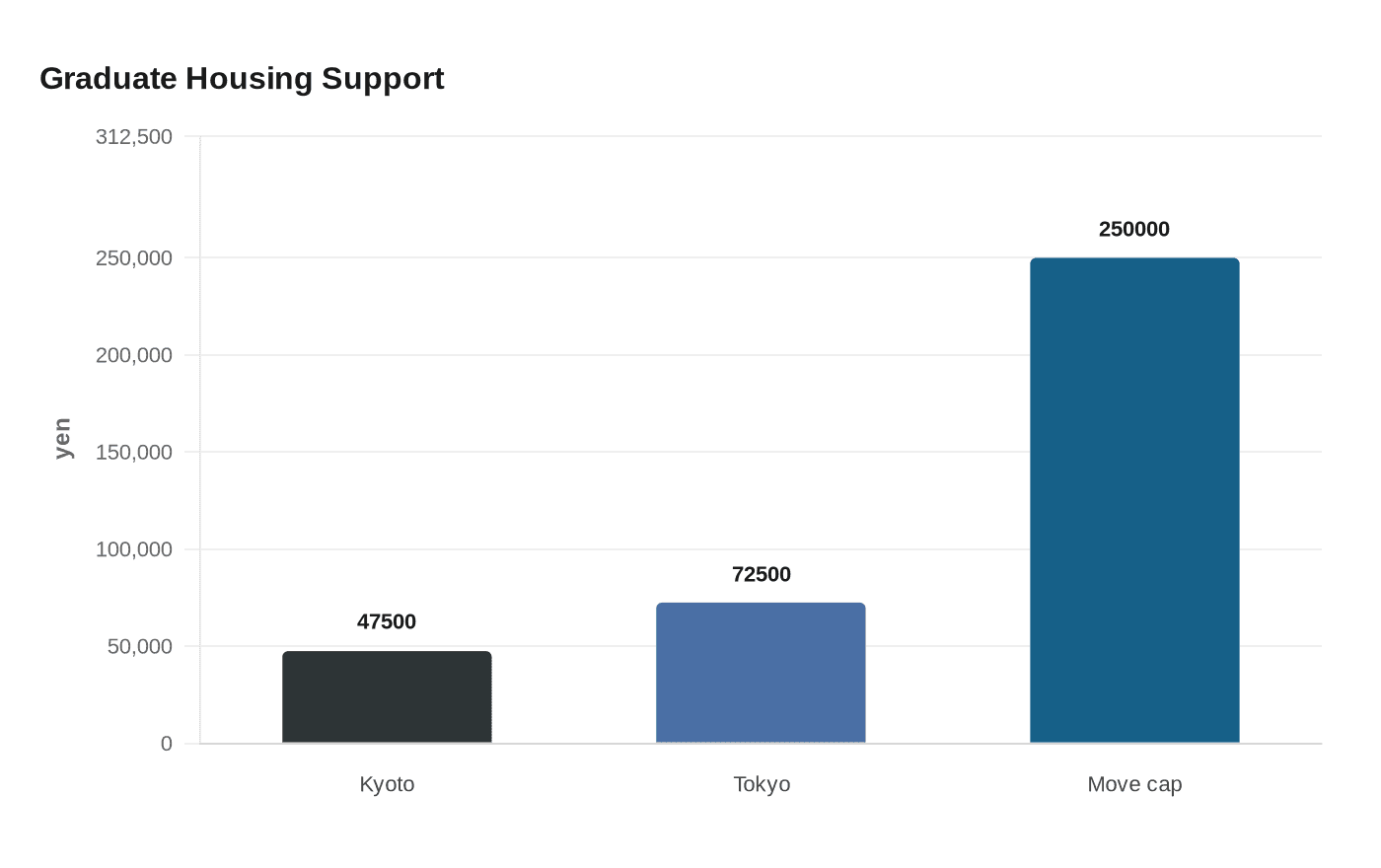
The housing support is especially notable. New graduates based in Kyoto can receive 47,500 yen per month for up to three years after hiring, while Tokyo-based placements get 72,500 yen per month. Nintendo also offers a one-time moving support payment capped at 250,000 yen. For a graduate deciding whether to build a life in Kyoto, that changes the math in a very practical way: the company is helping with the cost of relocating and settling in, not just advertising a salary.
There is also an optional welfare program with 1,200 points per year, and some support categories are subsidized at a more generous 1 point = 500 yen rate. That kind of detail tells candidates that Nintendo is thinking beyond base pay. It is building a broader support system around daily life, family needs and long-term retention.
The work pattern is still built around the office
Nintendo’s rules for new hires are just as revealing as the compensation. The standard workday is 7 hours and 45 minutes, the company uses flextime, and core time runs from 10:00 to 15:00. It also lists 125 annual holidays for 2026. On paper, that is a relatively structured schedule with some flexibility, but not a fully location-agnostic model.
The biggest signal is the company’s insistence on in-person work at its Kyoto offices because it values face-to-face communication. That points to a culture that still treats physical proximity as important to how work gets done, especially in a business where design, QA, localization, production and business teams often need to move in lockstep. For Nintendo, the office is not just a place to sit, it is part of the production model.
That can be attractive if you want the clarity of a stable, team-heavy environment and the chance to learn inside a company that prizes coordination and polish. It can also be a limitation if you are comparing employers on flexibility alone. The message is not remote-first; it is collaborative-first.
Why the package says something about Nintendo’s hiring priorities
The structure of the offer suggests Nintendo is serious about filling roles where cross-functional communication matters most. The company’s quality-first reputation depends on designers, QA testers, localization staff and business teams staying tightly aligned, and the in-person requirement fits that reality. If you work on a franchise with global expectations and a long legacy, small mismatches between teams can show up in the final product.
That is also why the compensation package is built the way it is. Nintendo is not presenting pay as a standalone incentive; it is bundling salary, housing, bonuses, leave and welfare support into a longer-term employment proposition. The message is that it wants graduates who will stay, learn and grow inside a stable system rather than hop in and out of the company quickly.
The annual salary examples reinforce that point. A first-year Kyoto package of 560 to 730, depending on degree level, is not just a wage, it is a preview of how Nintendo values early-career talent. By including overtime and housing support in the example, the company is acknowledging the real cost of living and the real shape of work. It is also telling applicants that it expects sustained contribution, not only hours on a clock.
How Nintendo stacks up in Japan’s talent market
Nintendo’s disclosure lands at a time when major Japanese entertainment companies are competing more openly for graduates. Sony Interactive Entertainment Japan has also announced a large April 2026 starting-salary increase for new graduates, which shows that the race for talent in games and technology is real, not hypothetical. In that context, Nintendo’s decision to publish detailed pay examples looks less like a courtesy and more like a response to market pressure.
The company has room to frame itself as a strong employer. Nintendo says it had 3,084 full-time employees at the Japan parent level as of March 2026 and 8,666 employees globally at the end of that month. Its average annual salary for fiscal 2025 was 966, with an average employee age of 40.2 years and average tenure of 14.4 years. Those figures suggest a mature, comparatively stable workforce and a company where people tend to stay. For candidates, that can mean institutional knowledge and continuity. It can also mean a slower-moving culture with more established expectations.
That gap between the company-wide average salary and the graduate package is worth reading carefully. It shows there is a long runway for progression inside Nintendo, but it also underlines how much of the company’s compensation advantage sits in the middle and later stages of a career. New graduates are being offered a strong entry point, not the full reward structure that long-tenured employees enjoy.
What candidates should take away
Nintendo is offering more than a competitive starting paycheck. It is offering a Kyoto-centered career path with explicit housing help, scheduled raises, twice-yearly bonuses, annual holidays, flextime and a workplace model built around direct communication. For the right graduate, especially someone entering design, QA, localization or business operations, that is a serious package.
The flip side is just as clear. Nintendo still expects people to show up, coordinate closely and build their careers around the company’s offices rather than around their own location preferences. That may be exactly the bargain many graduates want in a market that still rewards stability and brand prestige. It also shows where Nintendo remains old-school, even as it modernizes how openly it talks about pay.
This article was produced by Prism’s automated news system from verified source data, official records, and press releases, then run through automated quality and moderation checks before publishing. The system is built and supervised by the people who set the standards it runs under. Read our full AI policy.
Know something we missed? Have a correction or additional information?
Submit a Tip