Nintendo Restricts Tomodachi Life Sharing After Players Prove Why Rules Are Needed
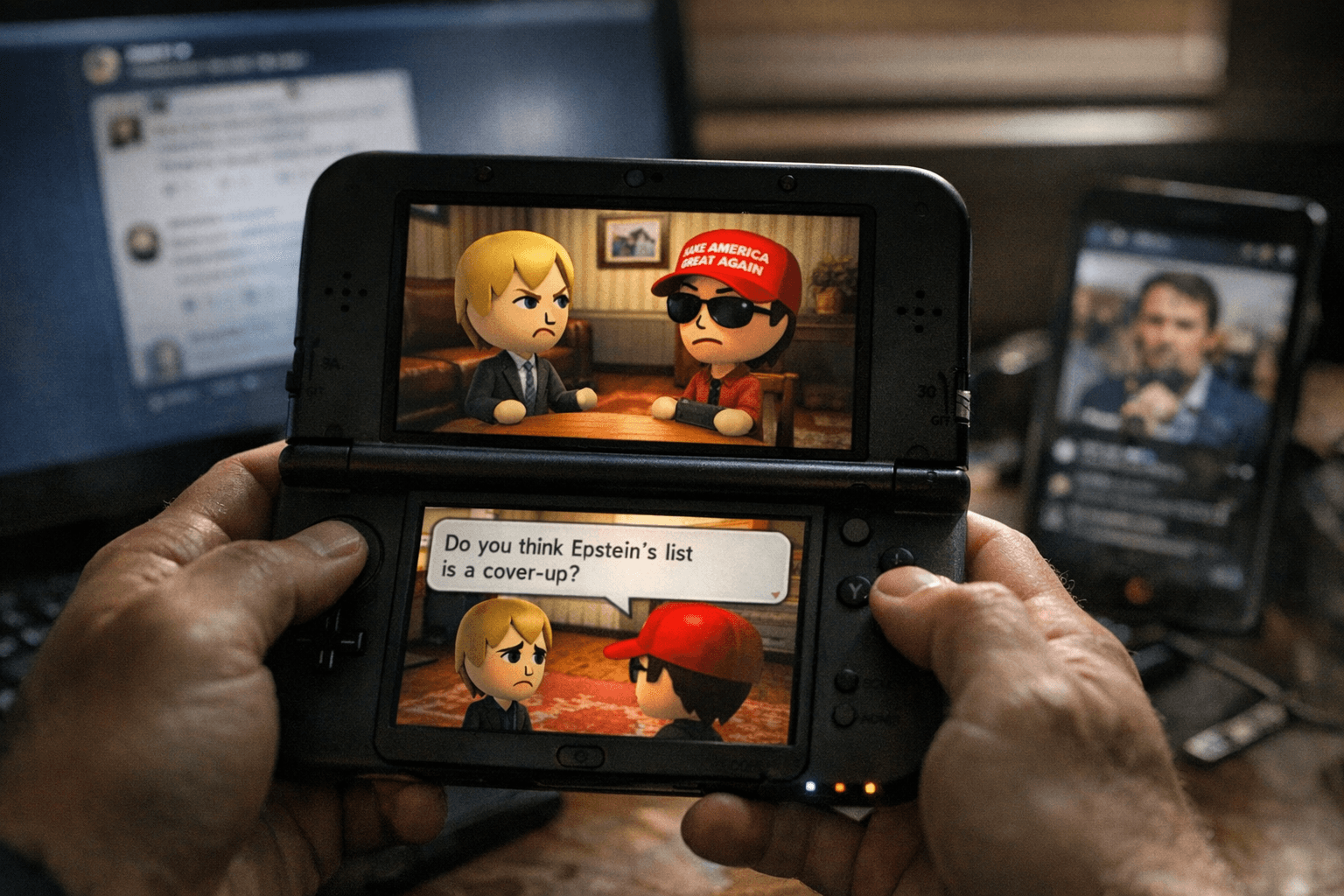
Nintendo's demo for Tomodachi Life: Living the Dream dropped March 25 — and within hours, players flooded social media with Miis discussing the Epstein files and the shooting of Charlie Kirk.

Within hours of the Tomodachi Life: Living the Dream demo landing on the Nintendo eShop on March 25, players had already supplied the most vivid possible argument for why Nintendo locked down the game's sharing features in the first place.
The demo, titled the "Welcome Edition," released on March 25, 2026, on the Nintendo Switch eShop. The free playable demo lets players create up to three Mii characters and includes expanded customization options not present in the 2013 3DS original. That depth of character creation, it turns out, cuts both ways.
IGN's Rebekah Valentine reported that players moved quickly to exploit the robust new toolset. "There are already dozens of uploads across social media of players showing goofy-looking Miis in Tomodachi Life talking about some pretty serious, upsetting, and/or controversial topics, including the Epstein files and the shooting of Charlie Kirk," Valentine wrote, declining to reproduce the images in her piece.
Nintendo had already announced it was implementing restrictions on image sharing for the game, citing its commitment "to creating experiences that are welcoming and enjoyable for everyone." The company's official support statement acknowledged the game's nature directly: "In consideration of the unique gameplay in Tomodachi Life: Living the Dream, we have decided to place restrictions on certain image sharing features. These limits help to make the worlds players create in Tomodachi Life: Living the Dream remain fun and safe, and that the game can be enjoyed comfortably by all players. We understand that some players may find these restrictions limiting."
The practical impact is significant. Nintendo's Japanese website clarifies that "the console's functions for transferring images to smartphones, posting directly to social media, and automatically uploading images (Nintendo Switch 2 only) will not be available." Game Chat sharing on Switch 2 remains permitted. Players who want direct-capture footage have a workaround: they can extract clips and images directly from the device using a USB-C wire connected to a computer. For those without that option, the fallback is pointing a phone camera at the screen, a method that carries its own kind of irony given the series' history.
Many of the original 3DS game's most viral moments were captured on phones during the Vine era, so the restrictions effectively push the sharing culture back a decade in effort and quality.
The fan reaction has been sharp. The original Tomodachi Life became a viral hit online largely because people posted clips and memes of all the wacky situations Miis could get into. That social loop is central to the franchise's appeal, and players argue Nintendo is severing it. The limitation feels like Nintendo trying to preemptively get around questionable content, but failing to understand that that is the entire appeal of Tomodachi Life, and sharing bizarre situations will now be more inconvenient than it needs to be, as one analysis put it.
The design tension is real and not unique to this game. Any Nintendo title with deep user-generated content tools carries the risk of those tools being turned toward content the company would rather not have associated with its franchises. What's unusual about Tomodachi Life: Living the Dream is that Nintendo moved to restrict sharing before launch rather than after, signaling how clearly it anticipated the problem. The demo launched March 25. The restrictions were announced back in January. The content that followed proved Nintendo read its own audience correctly.
Tomodachi Life: Living the Dream launches on April 16, 2026, and the company's reasoning is straightforward: the game's freedom can generate funny, surprising, and unpredictable scenes, but those same moments can be misunderstood when shared out of context. For a franchise built entirely on emergent chaos, that is a problem Nintendo has decided it cannot moderate after the fact.
Know something we missed? Have a correction or additional information?
Submit a Tip