Nintendo Says It Will Lower Brazil Game Prices When Possible
Nintendo said it will lower Brazil game prices when it can, after sharp hikes, reversals, and fan backlash exposed how exchange rates and logistics shape what players pay.
Nintendo is signaling that Brazil will not stay stuck at the top end of its price ladder if the company can help it. Bill Van Zyll said the company seeks to lower game prices in Brazil when feasible, a message aimed squarely at players who have watched digital and physical costs swing with exchange rates, logistics and the country’s heavier tax burden.
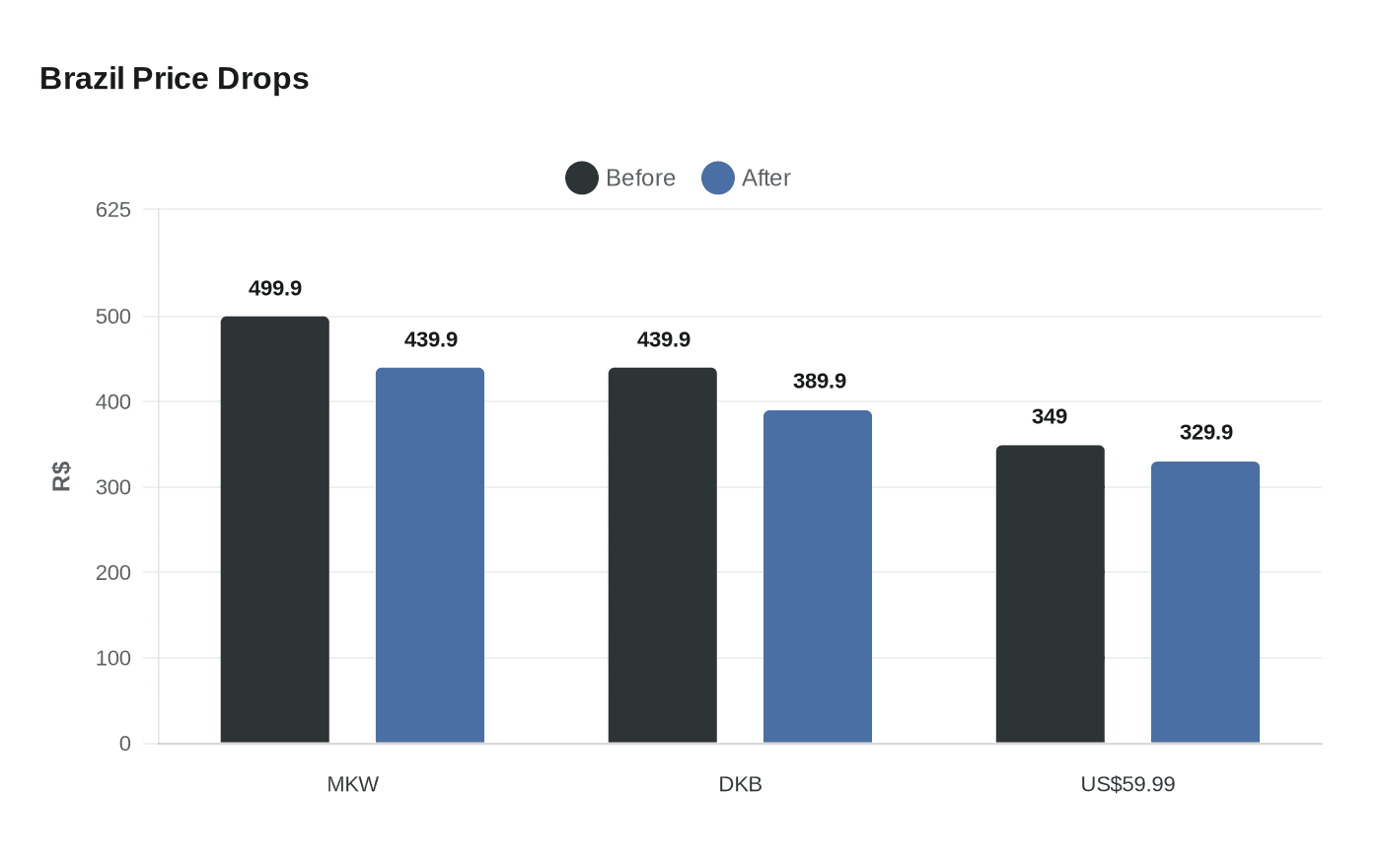
For Brazilian fans, the issue is immediate and visible at checkout. Nintendo updated digital prices across parts of Latin America on March 1, 2025, and many Nintendo Switch games in Brazil jumped from R$299 to R$349, with some titles reaching R$399. Nintendo Switch Online also got more expensive in the region that day. The company later moved in the other direction: by April 2026, reports said Mario Kart World had fallen from R$499,90 to R$439,90, Donkey Kong Bananza dropped from R$439,90 to R$389,90, and standard US$59,99 Nintendo titles were set at R$329,90 instead of R$349,00.
Van Zyll has tried to frame those swings as the product of constraints Nintendo does not fully control. He said the company focuses on the variables it can control to make products affordable in Brazil, and added that taxes and fees are not fully captured when people compare Brazilian software prices with U.S. prices. That line reflects a broader tension for regional teams: they have to protect revenue, but they also have to keep enough goodwill to sustain a market where a single game can feel priced like a luxury item.
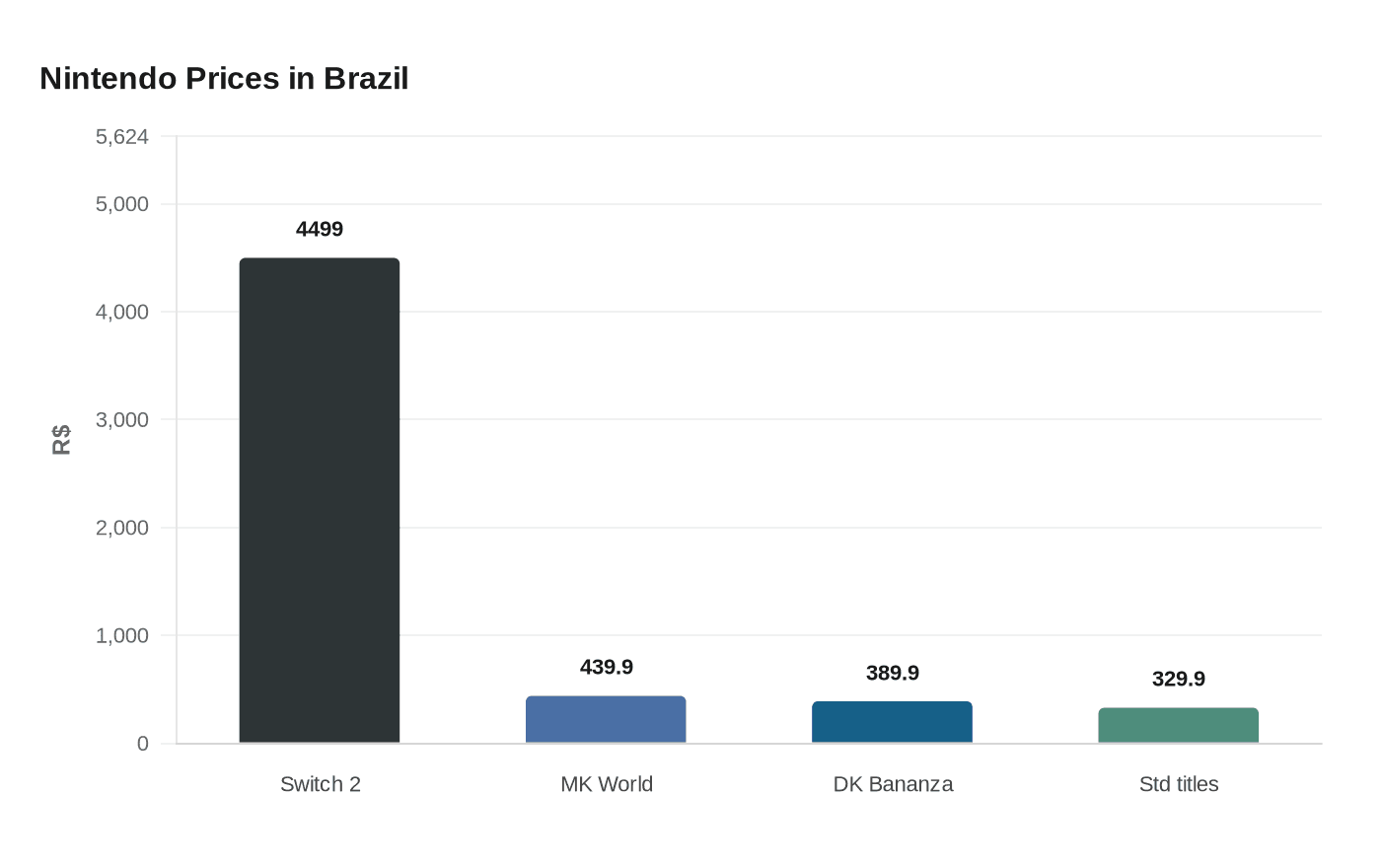
That pressure sharpened when Nintendo Switch 2 reached Brazil on June 5, 2025, the same day as the global launch. The console carried a suggested retail price of R$4,499, while Mario Kart World debuted at R$499,90. The gap drew criticism from fans and media, especially because the Switch 2 launch landed in a market already primed for complaints about how quickly local prices can climb.
Nintendo’s own Brazilian storefront shows the company is still investing in localization, not retreating from it. The Nintendo eShop has been available in Brazil since December 7, 2020, and the Brazilian store supports digital gift cards with PIX and boleto, two payment methods that matter in everyday commerce. Even so, affordability remains the central test. Brazilian reporting has pointed out that Nintendo has been here before: Gradiente sold the Nintendo 64 in 1996 for R$699, with games at R$129, figures later estimated at roughly R$3,770 and R$696 in today’s money. That history cuts both ways. It shows Brazil has long been an expensive market for Nintendo; it also shows why every pricing move still lands as a decision about access, brand trust and how much local teams can bend the business before the market pushes back.
Know something we missed? Have a correction or additional information?
Submit a Tip