Reggie Fils-Aimé says Nintendo ships complete games, trusts developers slowly
Reggie Fils-Aimé said Nintendo’s edge is trust: 10 core franchises, complete launches, and IP handed out only after years of relationship-building.
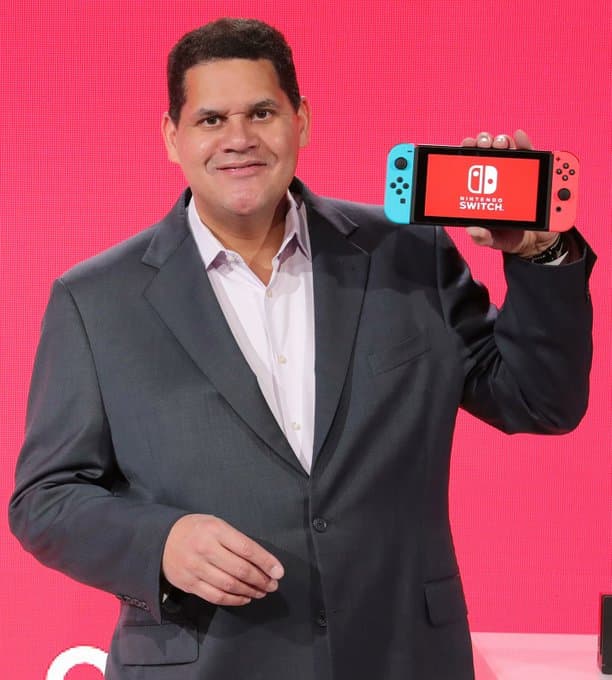
Reggie Fils-Aimé made Nintendo’s old-school discipline sound less like nostalgia than management strategy. In a discussion tied to New York University, the former Nintendo of America president said the company has 10 core IP and usually launches each one only once or twice per console generation, with outside developers brought in only after years of relationship-building and earned trust. He pointed to Mario & Luigi collaborations with Vancouver-based Next Level Games as the kind of partnership Nintendo will extend only after that long runway.
That approach helps explain why Nintendo still behaves differently from much of the games business. Fils-Aimé framed the company as one that ships complete games, leans away from day-one patches, and resists the fast-discount, live-service logic that has reshaped the industry. For developers, QA staff and producers, that means the standard is not simply getting a game out the door. It is getting it out clean enough that the launch itself carries the brand. The company’s official store still lists The Legend of Zelda: Breath of the Wild as an active product and says it is compatible with Nintendo Switch 2, while its DLC page shows the Expansion Pass arriving on March 2, 2017, followed by add-ons on June 30 and December 7 of that year.
The philosophy reaches back to Kyoto. Nintendo began in 1889 in Shimogyo-ku, Kyoto, making and selling hanafuda playing cards, and moved its headquarters to Kamitoba, Minami-ku, Kyoto, in 2000. Hiroshi Yamauchi, who led Nintendo from 1949 to 2002, helped turn that card company into a global entertainment business that still prizes steadiness over speed. When Fils-Aimé invokes “Kyoto craftsmanship,” he is describing a workplace culture that rewards long planning horizons, careful production timelines and quality gates that are hard to relax once a franchise carries worldwide trust.
That culture has real workplace consequences. It favors hiring and vendor relationships built for patience, not turnover; it gives QA and localization teams more leverage when they flag problems early; and it asks production teams to protect franchise legacies instead of chasing short-term optimization. Fils-Aimé, who retired as Nintendo of America president in April 2019 after nearly 15 years in the role, has kept returning to that idea in public: Nintendo’s strength is not that it moves fast, but that it has spent decades teaching employees and partners to move carefully enough that customers keep believing the box is enough.
This article was produced by Prism’s automated news system from verified source data, official records, and press releases, then run through automated quality and moderation checks before publishing. The system is built and supervised by the people who set the standards it runs under. Read our full AI policy.
Did this article answer your question?
