Nintendo says Switch 2 was designed with hardware, software, and online services together
Switch 2 was shaped as a single product stack, with Nintendo tying hardware decisions, system software, and online services into one design process.
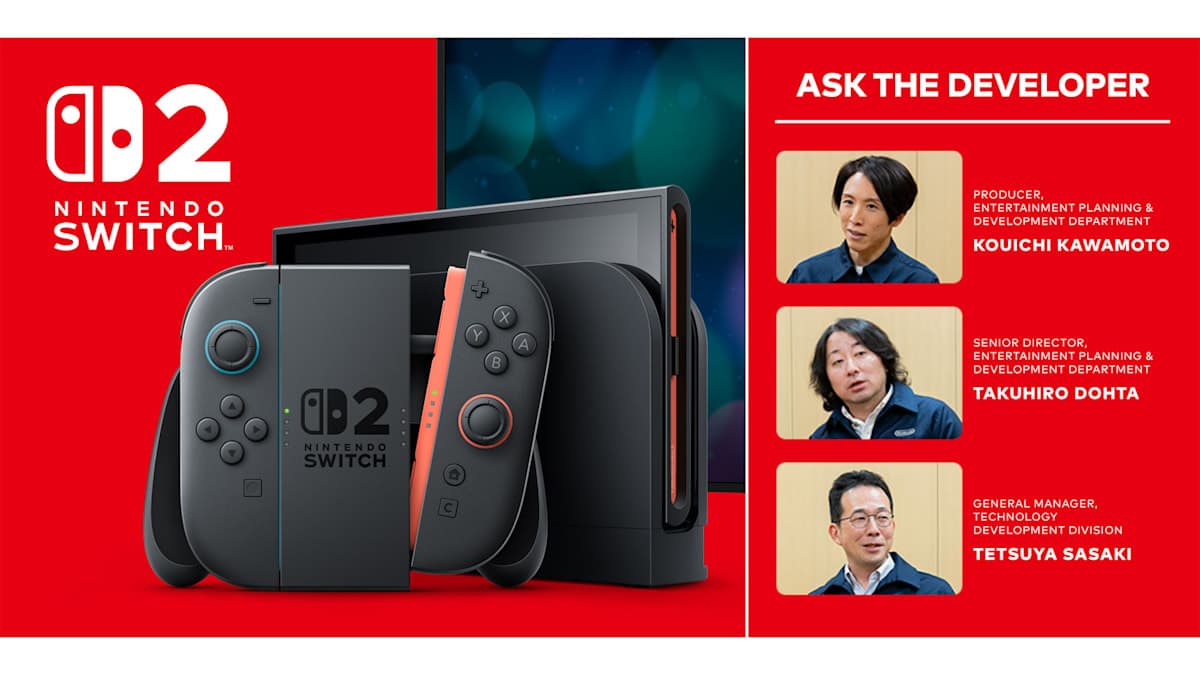
A console built as one system, not three separate projects
Nintendo’s Switch 2 story is really a story about coordination. In its Ask the Developer series, the company shows a machine shaped by hardware teams, system software teams, and online services teams working as one product pipeline, not as isolated specialists chasing separate goals. That matters inside Nintendo because it says platform identity is being formed long before players see the box, with developer experience treated as a core design input rather than an afterthought.
Kouichi Kawamoto described his role as setting the direction of the system, while Takuhiro Dohta said he brought a software-developer perspective to the console’s design. That is a useful signal for anyone working in development, QA, localization, or production: Nintendo still wants the people who build software to have a real say in the hardware they will eventually support. It is also a reminder that the company’s quality-first reputation is not built only in game teams, but in the way the hardware itself is framed for the rest of the organization.
Why Nintendo is presenting Switch 2 as an integrated platform
The product details reinforce that message. Nintendo launched Switch 2 in the United States on June 5, 2025, at a suggested retail price of $449.99, after first revealing it on January 16, 2025 and opening U.S. retail pre-orders on April 24, 2025. The system includes a 7.9-inch 1080p LCD screen with HDR support and up to 120 fps, a dock that can output 4K when connected to a compatible TV, 256GB of internal storage, Wi-Fi 6, and Joy-Con 2 controllers with mouse controls.
Those are not just spec-sheet talking points. They point to a device designed to support different kinds of play and different kinds of software expectations, from portable sessions to higher-end TV output to faster network features. For teams building games and services around the machine, the hardware is already making decisions about speed, image quality, storage, connectivity, and input, which means the product has to be understood as a platform with multiple dependencies, not as a single industrial design win.
The clearest example is GameChat
Nintendo’s handling of GameChat shows how deeply the company is thinking about the relationship between hardware limits, software architecture, and service policy. In Part 3 of Ask the Developer, Nintendo says it originally wanted voice chat as a built-in system feature, but the original Switch’s processing constraints made that hard, so the company routed voice chat through a smartphone app instead. With Switch 2, Nintendo says it could finally make GameChat a standard device feature.
The feature fits the hardware story because it is activated with the C button and supports voice chat, screen sharing, and video chat, with sessions for up to 12 friends. Nintendo also says a compatible USB-C camera is required for video features, and that a Nintendo Account and Nintendo Switch Online membership are required for online features, including GameChat. Nintendo said the feature was free for a limited time, and after March 31, 2026, Switch 2 users would need a Nintendo Switch Online membership to use GameChat.
That makes GameChat more than a social feature. It is a clear example of how Nintendo connects product design to subscriptions, accessories, and online infrastructure. For employees, the lesson is straightforward: a feature like this is never just UI or just backend or just hardware. It is a negotiated outcome across teams, with each dependency shaping the final experience players get.
How remote work fed into the design
Nintendo says the idea was also influenced by software development during COVID, when screen sharing in video conferences reminded the team of friends gathering together with their own consoles. That detail matters because it shows how a development environment can shape product philosophy. The emotional goal was not simply to add a chat tool, but to make the system feel like a place where people could be together.
For a company known for careful, sometimes conservative product choices, that is an important shift in emphasis. The team was not only solving a technical problem left behind by the original Switch. It was translating a lived work experience into a player-facing feature, which is a very Nintendo way of turning internal constraints into a more polished user experience.
Nintendo’s hardware and services are being sold as one promise
Technical director Tetsuya Sasaki framed the scope even more broadly when he said he oversaw hardware technology, the system software that forms the basis for running games, and the network services that support them. In Part 4, Nintendo said the Technology Development team packed its devotion into the hardware, system software, and network services so players would enjoy new ways of playing together.
That language is revealing because it puts the three layers on the same level. Hardware is not the hero, software is not a supporting cast, and services are not an add-on. They are all part of the same promise to players, which is exactly the kind of internal alignment that matters in a company where quality standards, legacy franchises, and platform trust are tightly linked. When those teams line up early, the result is usually a more coherent launch.
Compatibility shows where Nintendo is drawing the line
The backward-compatibility story also fits this framework. Nintendo says Switch 2 can play compatible physical and digital Nintendo Switch games, but some titles may not be fully supported. Some games may receive free updates or paid upgrade packs to improve their experience on the new system.
That is a practical reminder that Switch 2 is not being presented as a simple one-to-one replacement. The company is balancing continuity with a different hardware approach, which creates work for engineering, testing, localization, customer support, and publishing teams that have to explain what carries over cleanly and what does not. For a workforce used to protecting franchise legacy, that kind of transition is as much an operational challenge as it is a consumer one.
Switch 2 makes Nintendo’s internal priorities unusually visible. The machine is being sold not just as more powerful hardware, but as a platform whose identity was built through cross-functional alignment, with developer experience, online services, and social play treated as parts of the same design brief.
This article was produced by Prism’s automated news system from verified source data, official records, and press releases, then run through automated quality and moderation checks before publishing. The system is built and supervised by the people who set the standards it runs under. Read our full AI policy.
Did this article answer your question?
