Nintendo sets 219 yen annual dividend alongside March 2026 earnings update
Nintendo raised its annual dividend to 219 yen, a sharp signal that the Switch 2 era is being funded with more than launch hype; management is also signaling cash discipline.
Nintendo’s jump to a 219 yen annual dividend is more than a payout update. For people inside the company, it reads as a message that Kyoto management believes the business is generating enough cash to support shareholder returns while still backing a new hardware cycle, pricing moves, and the next round of investment decisions.
Nintendo Co., Ltd. said the year-end dividend for the fiscal year ended March 31, 2026 was resolved at a Board of Directors meeting on May 8, with the payout set at 177 yen per share. That brings FY2026’s full-year dividend to 219 yen, made up of 42 yen interim and 177 yen year-end. The record date is March 31, 2026, the distribution effective date is June 29, 2026, and the dividend will be presented in the proposals for the 86th Annual General Meeting of Shareholders on June 26, 2026. The payment will come from retained earnings.

The size of the increase matters. FY2025’s annual dividend was 120 yen per share, so the new figure is up 99 yen year over year. Nintendo’s own dividend policy says the annual dividend is set at the higher of 40% of consolidated operating profit per share or the amount calculated using a 60% consolidated payout ratio, and the revised policy took effect from the year-end dividend for the fiscal year ended March 31, 2026. In other words, this was the first year-end payout to reflect the new framework, not a routine top-up.
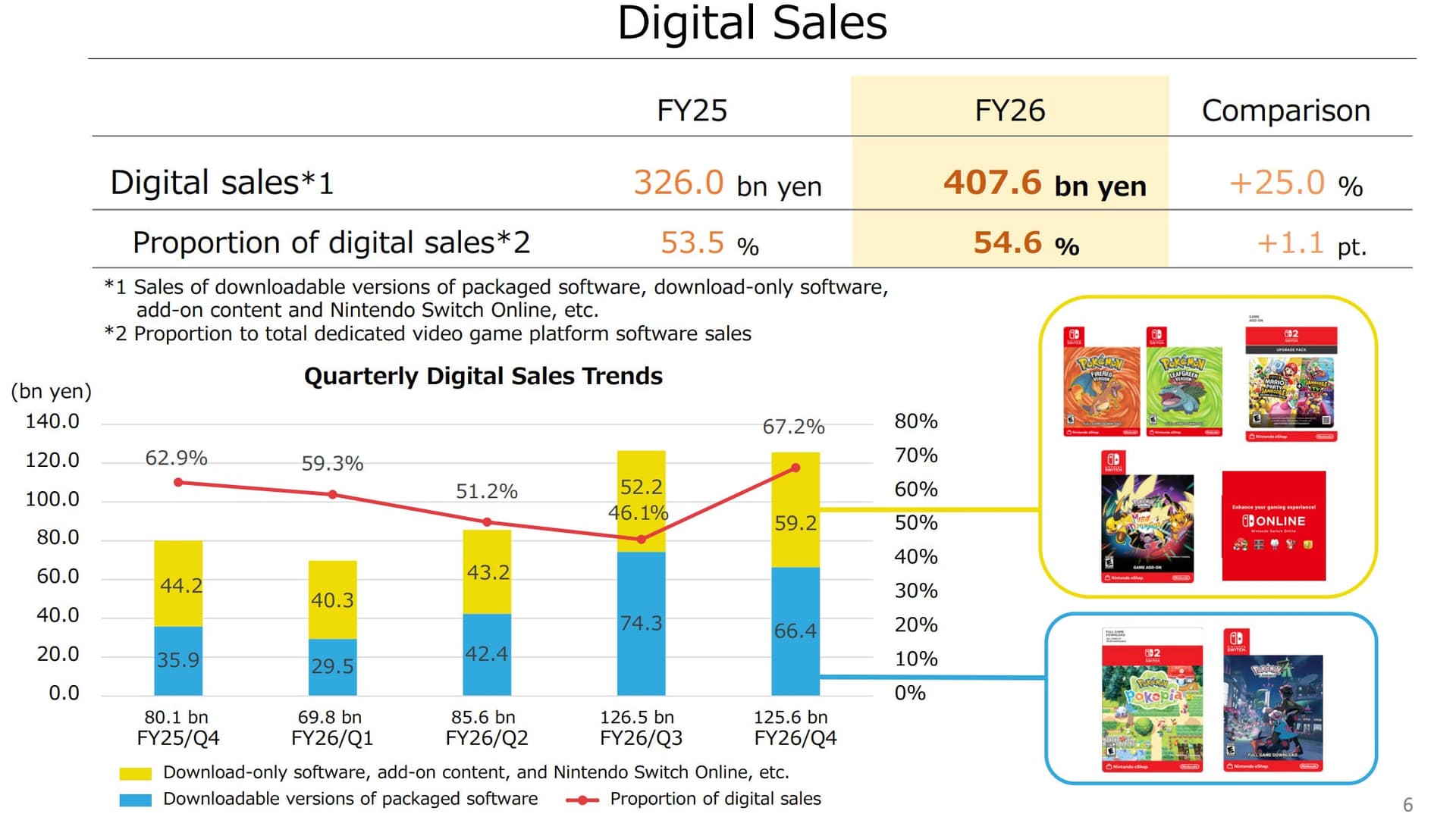
That makes the May 8 package more revealing than a single dividend notice. Nintendo’s investor-relations page listed the fiscal year earnings release, the price-revision notice, the dividend notice, and personnel changes to company officers on the same day. Its FY2026 explanatory material showed consolidated net sales of 2,313.0 billion yen, up 98.6% from 1,164.9 billion yen in FY2025. For developers, QA testers, localization staff, and business teams, the signal is that management is trying to convert a big year of sales growth into durable operating discipline, not just celebrate momentum.
Inside a quality-first company like Nintendo, that matters because capital allocation shapes everyday choices. A higher dividend does not automatically mean more headcount or bigger budgets, but it does suggest the company feels comfortable enough to balance shareholder returns with hiring pace, compensation plans, outsourcing, procurement, and long-cycle project support. For employees watching the Switch 2 era take shape, the clearest read is that Nintendo is trying to show strength without loosening the discipline that has long defined its development culture.
This article was produced by Prism’s automated news system from verified source data, official records, and press releases, then run through automated quality and moderation checks before publishing. The system is built and supervised by the people who set the standards it runs under. Read our full AI policy.
Did this article answer your question?
