Nintendo sets new parental leave goals to boost retention
Nintendo set a new FY2027 target to keep childcare leave at 100% for women and at least 80% for men, after hitting its earlier male goal. The company is tying leave to return-to-work career talks and retention.

Nintendo Co., Ltd. has set new five-year parental leave goals beginning in FY2027, aiming to keep childcare leave use at 100 percent for women and at least 80 percent for men after meeting its earlier target to lift men’s cumulative utilization to 50 percent over five years starting in FY2022. The company is pairing those targets with a more specific support structure in Japan: annual roundtables for employees raising children that cover childbirth, returning after childcare leave, and the point when children begin elementary school.
That design matters because Nintendo is not treating leave as a disconnected benefit. Supervisors also hold career discussions with employees returning after a certain period of childcare leave, and Nintendo describes the return to work after leave as an important career milestone. For a company known for long development cycles and a quality-first culture, that kind of reintegration work can be as important as the leave itself. It keeps staffing, knowledge transfer, and promotion planning tied to family leave instead of forcing employees to choose between the two.

The numbers in Nintendo’s FY2026 sustainability data sheet show why the company is leaning so hard into retention. In Japan, Nintendo reported 14.6 average years of continuous employment and a 2.3 percent turnover rate. It also reported 78 employees taking childcare leave in Japan, a 100.0 percent reinstatement rate after childcare leave, and a 99.1 percent retention rate after childcare leave. Overall childcare-leave take-up in Japan was 86.7 percent, including 82.6 percent for men and 100.0 percent for women.
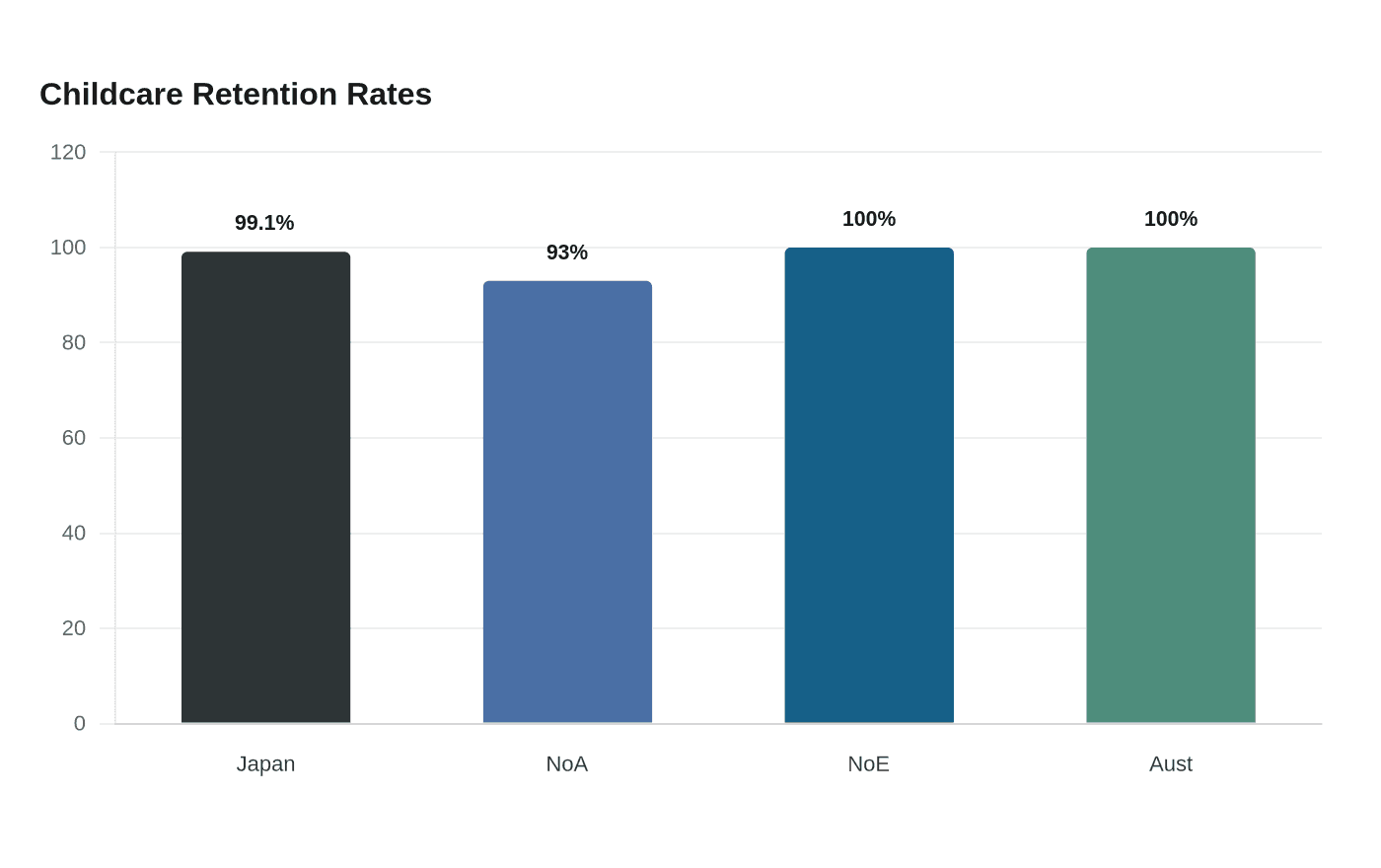
The regional picture suggests the policy is being managed differently across Nintendo’s global footprint. Nintendo of America reported a 97.0 percent reinstatement rate after childcare leave and a 93.0 percent retention rate. Nintendo of Europe and Nintendo Australia both reported 100.0 percent reinstatement and retention rates in the same reporting period. Those figures put the parental leave program in the context of a company that already keeps people for a long time, then uses family-support policies to preserve that institutional memory.
The timing also lines up with a changing legal backdrop in Japan. Amendments to the Childcare and Family Care Leave Act and the Development of the Next-Generation Children Act were enacted on May 24, 2024, with many changes taking effect on April 1, 2025, including broader support for flexible working and stronger disclosure requirements around childcare leave usage. Nintendo’s public targets and roundtables fit that direction, but they also go beyond compliance by making childbirth, school entry, and the return from leave part of the company’s career planning.
This article was produced by Prism’s automated news system from verified source data, official records, and press releases, then run through automated quality and moderation checks before publishing. The system is built and supervised by the people who set the standards it runs under. Read our full AI policy.
Did this article answer your question?