Nintendo software and QA careers, pay and outlook compared
Want closer access to Mario or Zelda? Developer roles build the systems, QA roles protect them, and Nintendo's pay data shows both paths can pay well.
Which route gets you closer to the next Mario or Zelda?
If you want to build the thing players actually touch, software development is the more direct route. If you want to be the person who catches the flaw before millions of players do, QA is the closer fit. At Nintendo, those paths are not rivals so much as adjacent gates into the same machine, and the company’s own hiring materials show how tightly game building, testing, certification, and platform support sit together.
What the BLS baseline says these jobs really are
The Bureau of Labor Statistics draws a clean line between the two roles. Software developers design computer applications or programs, while software quality assurance analysts and testers identify problems with applications or programs and report defects. That difference sounds simple, but it changes the day-to-day work in a major way: developers spend their time shaping features, tools, and systems, while QA staff spend their time proving where the software breaks and explaining it clearly enough for engineers to act.
The BLS also notes that these workers often operate in offices and on teams with other developers or QA staff. That matters because neither job is a solo grind, especially in game development. In practice, good development depends on communication with test teams, and good QA depends on enough technical fluency to reproduce bugs, isolate patterns, and hand engineers a report they can use.
Why the pay data matters
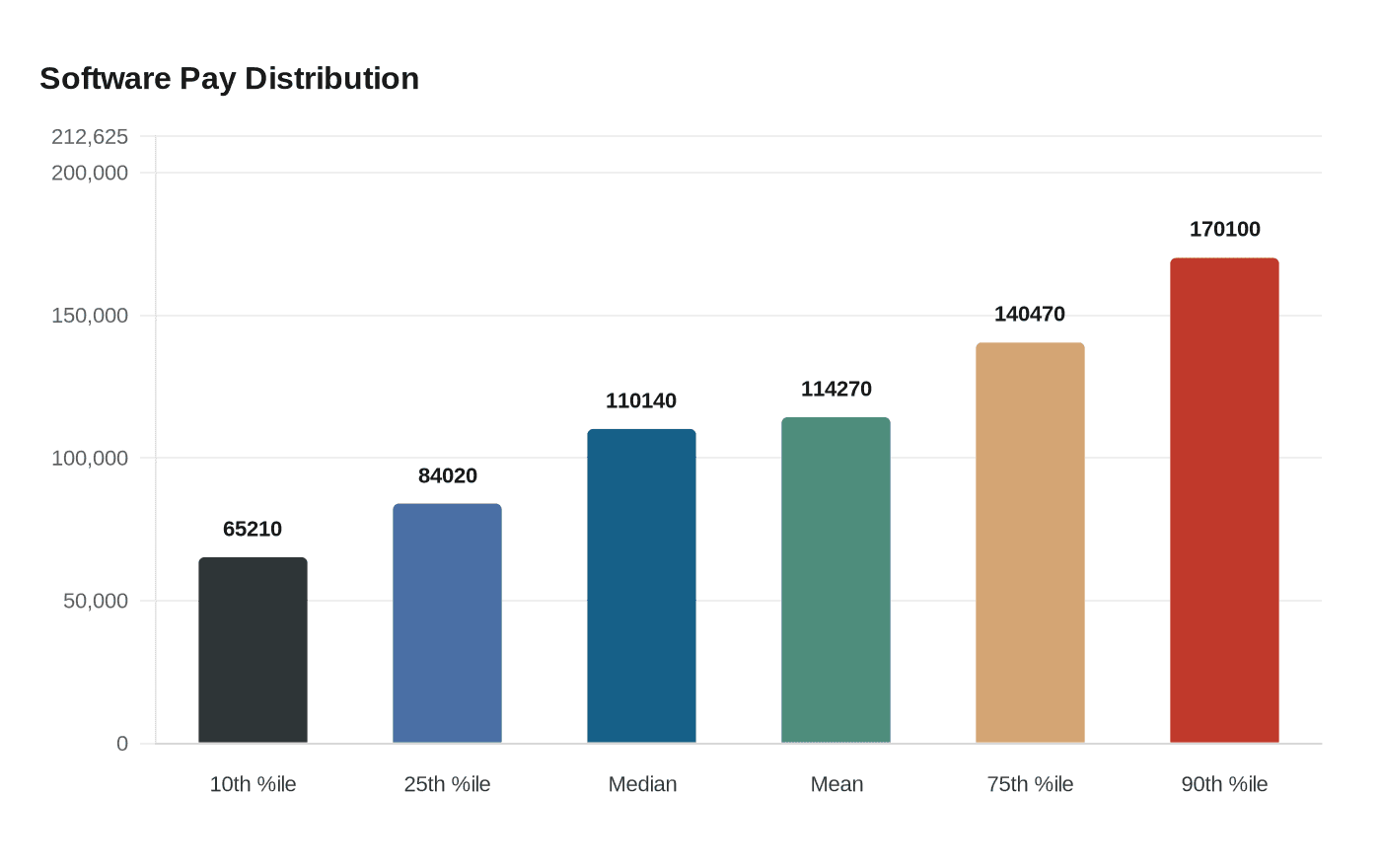
BLS counted 1,476,800 jobs in the combined software developer and software QA occupation group in May 2023, with a mean annual wage of $114,270 and a median of $110,140. The percentile range shows how wide the field can be: $65,210 at the 10th percentile, $84,020 at the 25th, $140,470 at the 75th, and $170,100 at the 90th. That spread is a reminder that the title alone does not determine the paycheck. Scope, specialization, employer, and seniority all matter.
The broader computer and information technology occupations group adds more context. BLS projects about 317,700 openings each year, on average, from 2024 to 2034, and reports a May 2024 median annual wage of $105,990 for that group. For Nintendo applicants, that makes both development and QA part of a large labor market, not a niche backwater. The competition for a particular seat at a particular game company may still be intense, but the pipeline itself is broad enough to support multiple career entries and pivots.
How Nintendo organizes the work
Nintendo of America says it works closely with Nintendo Co., Ltd. to bring major franchises including Mario, Donkey Kong, The Legend of Zelda, Metroid, Animal Crossing, Pikmin, and Splatoon across the Americas. That detail matters because it shows how a global company separates responsibilities without separating the mission. Kyoto remains the historic center, but the Americas business depends on local teams that help move games, services, and support systems from idea to player.
Nintendo Technology Development adds another layer. It says it researches and develops software and hardware technologies that power Nintendo platforms and games, and that it contributes to systems like Nintendo Switch 2. That is the kind of environment where software talent is not just writing isolated features. It is helping shape the infrastructure underneath the games, the platform behavior above them, and the technical choices that make a release possible in the first place.
Nintendo Software Technology in Redmond, Washington, shows the same point from a studio angle. It is a game development studio, not just a support office, which gives U.S.-based applicants a concrete example of where game creation happens inside Nintendo’s broader network. For people who want to stay close to production rather than only to publishing or operations, that is one of the clearest doors into the company.
Where software and QA overlap at Nintendo
Nintendo’s developer portal says its resources support multiple development environments, including Unity and native C++ software development. That tells you something important about the kind of technical fluency the company expects: the work spans game engines, platform code, and the tooling that makes both manageable. A current senior software engineer role goes even further, explicitly saying it supports both application and test development.
Another software engineering listing says the team builds and maintains systems used to get games into players’ hands, including web portals, certification tracking, and cartridge ordering and printing. That is the clearest sign that QA at Nintendo is not treated as a lonely final checkpoint. Test work is embedded in engineering, and the people who understand both the product and the process have room to move between them.
How to choose your lane
If you want to build systems, features, or tools, target teams like Nintendo Technology Development, Nintendo Software Technology, and roles that mention Unity, native C++, or application work. If you are strongest at defect discovery, reproduction steps, and clear communication, look for QA-heavy roles and test-development roles, especially where testing feeds directly into engineering. The overlap is real, but the emphasis is different: developers are judged on what they create, while QA is judged on what they catch and how precisely they describe it.
The most useful thing for a Nintendo applicant to understand is that test work is not a lesser version of engineering, and engineering is not just writing code in isolation. The company’s own public materials point to a mixed environment where quality, platform stability, certification, and shipping logistics all matter at once. That is the career lesson hidden inside the pay table: the people who help Nintendo protect its reputation often sit right next to the people who build it.
Nintendo’s own history makes that harder to ignore. The company says it began making hanafuda playing cards in Kyoto in 1889, and its careers site notes that the Nintendo Entertainment System launched more than 30 years ago. From cards to consoles, the thread has always been the same: create carefully, ship deliberately, and keep the standard high enough that the next Mario or Zelda still feels worth trusting.
This article was produced by Prism’s automated news system from verified source data, official records, and press releases, then run through automated quality and moderation checks before publishing. The system is built and supervised by the people who set the standards it runs under. Read our full AI policy.
Did this article answer your question?
