Nintendo workers navigate nonlinear careers in a volatile games industry
Zigzag careers are now the norm in games, and Nintendo workers can turn QA, contract, and side-project detours into stronger promotion stories.
The middle of a games career is less of a ladder than a relay
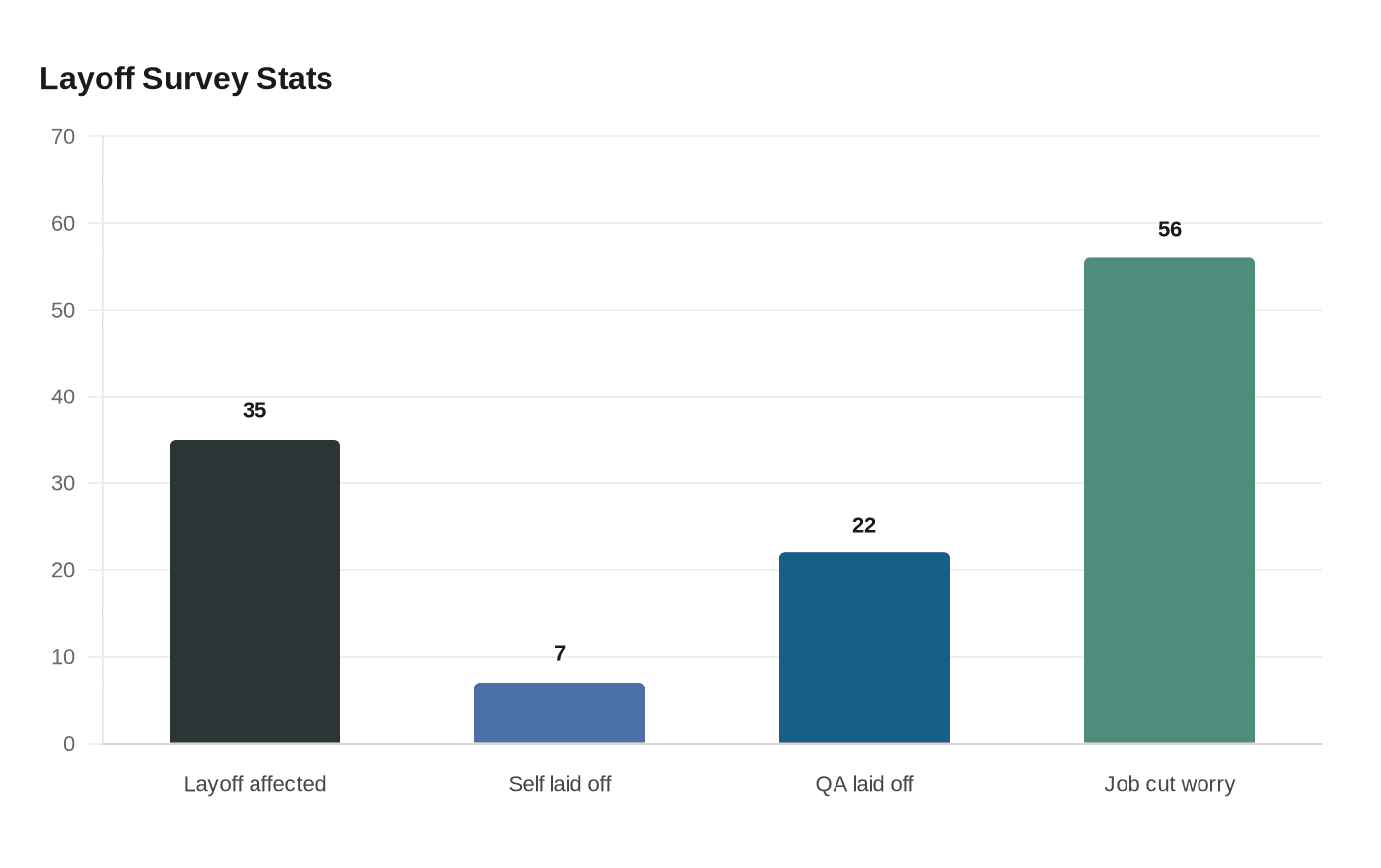
A games career now averages 2.2 employers in five years, and that churn is not just a statistic. In the same GDC survey, 35 percent of respondents said they had been affected by layoffs in the past year, 7 percent said they were laid off themselves, and 22 percent of QA developers reported being laid off. When 56 percent of workers are worried their company may cut staff, the safest career move is not pretending the path will be straight. It is learning how to explain every turn as evidence of growth.
That matters at Nintendo because the company rewards consistency, but it also runs on long cycles of change. A role built around one franchise can still demand fluency in hardware transitions, localization, production discipline, and cross-functional judgment. If your path includes QA, support, contract work, or a side project that never looked glamorous on paper, the real challenge is not hiding it. The challenge is turning that path into a story of increasing responsibility.
Why Nintendo is a particularly useful place to tell that story
Nintendo is still hiring and still framing its culture around “work and play,” which sounds light, but the business underneath it is anything but casual. The company’s Annual Report 2025 says it had 8,205 employees as of March 31, 2025, up from 7,724 a year earlier. Its fiscal 2025 results showed net sales of 1.1649 trillion yen and operating profit of 282.5 billion yen, which means the organization has the scale to create internal movement even in a volatile market.
That scale comes with a very specific culture. Nintendo’s leadership page still places Shuntaro Furukawa at the top, alongside Shigeru Miyamoto, Shinya Takahashi, Satoru Shibata, and Ko Shiota. Furukawa has said he bases decisions on “the development leader’s way of thinking,” a phrase that captures something important for anyone trying to grow there: judgment, not just output, is part of the job. In a company built around long-lived IP and platform cycles, the people who advance are usually the ones who can show they understand quality standards, not just their own specialty.
For workers in Kyoto, Tokyo, and Nintendo’s global offices, that also means learning to move between worlds. A developer who can speak to hardware constraints, a QA tester who can explain player-facing risk, or a localization specialist who can protect brand meaning across markets is doing more than task completion. They are building the cross-functional credibility that promotion committees actually trust.
How to turn a messy path into a credible promotion narrative
The fastest way to weaken a nonlinear résumé is to describe it as a series of accidents. The fastest way to strengthen it is to show a pattern: each move added a skill, widened your judgment, or gave you visibility into a harder part of the business. That is especially true in games, where layoffs, studio closures, and project pivots can blur the line between choice and necessity. At Develop:Brighton, leaders including Hilmar Veigar Pétursson, Caroline Marchal, Ella Romanos, and Iain Angus described a market where survival means pivoting, listening to boards, and, in some cases, seeking outside funding. In that environment, a zigzag is not automatically a flaw. Often, it is a survival strategy.
Use that reality in your own advancement case by translating each stop into business language:
- If you worked QA, say what you prevented, not just what you tested. Mention recurring bug classes, certification risks, regression patterns, or how your notes shortened the path from defect to fix.
- If you came from support, show how you learned player behavior at scale. A manager can understand that as risk sensing, community signal recognition, and the ability to separate noise from urgent issues.
- If you spent time on contract work, frame it as evidence that you can ramp quickly, protect standards, and deliver without long runway. That matters at Nintendo, where quality expectations are unforgiving.
- If a side project taught you a new engine, toolset, or communication habit, connect it to one thing a team can use now. Side projects help most when they become proof of initiative and range, not just passion.
The story you want is simple: I did not just move around, I accumulated leverage. Maybe that leverage came from learning how a bug becomes a player complaint. Maybe it came from seeing how a feature changes when it passes through localization. Maybe it came from understanding how a hardware cycle changes marketing, production, and launch planning at the same time. Whatever the route, the point is to show that the next role will benefit from the breadth you already earned.
What mid-career and senior workers should do differently
If you are mid-career, sideways moves can be smarter than trying to climb by title alone. A transition from QA into production, from support into localization management, or from content operations into regional coordination can expand your influence faster than waiting for a narrow opening in your current lane. The key is to choose adjacent work that increases your view of the machine, not just another title that sounds bigger.
If you are senior, your task changes again. In a company with a long leadership bench and a development-first culture, mentorship is not a side duty. It is part of preserving institutional memory across platform transitions. People around you need to know how to explain tradeoffs, how to protect quality without slowing teams to a halt, and how to build trust across Japan HQ and global offices. That is especially true as the next hardware cycle creates fresh work across development, production, marketing, and localization.
Nintendo’s own numbers suggest why this matters. A company with more than 8,200 employees and more than 1.16 trillion yen in annual net sales is not operating on a small-studio time horizon. It has the capacity to reward depth, but only if employees can show that their depth travels. That is the real lesson for workers trying to move up in a volatile games market: your résumé does not need to be tidy to be powerful. It needs to show that every detour made you more useful, more reliable, and more ready for the next platform shift.
This article was produced by Prism’s automated news system from verified source data, official records, and press releases, then run through automated quality and moderation checks before publishing. The system is built and supervised by the people who set the standards it runs under. Read our full AI policy.
Did this article answer your question?
