Nintendo’s Kirby Air Riders, inside Sakurai’s design process
Sakurai’s Kirby Air Riders notes show how Nintendo turns limits into identity: first by narrowing 20 motifs, then by building courses, art, and play around them.
A sequel built from constraints, not clutter
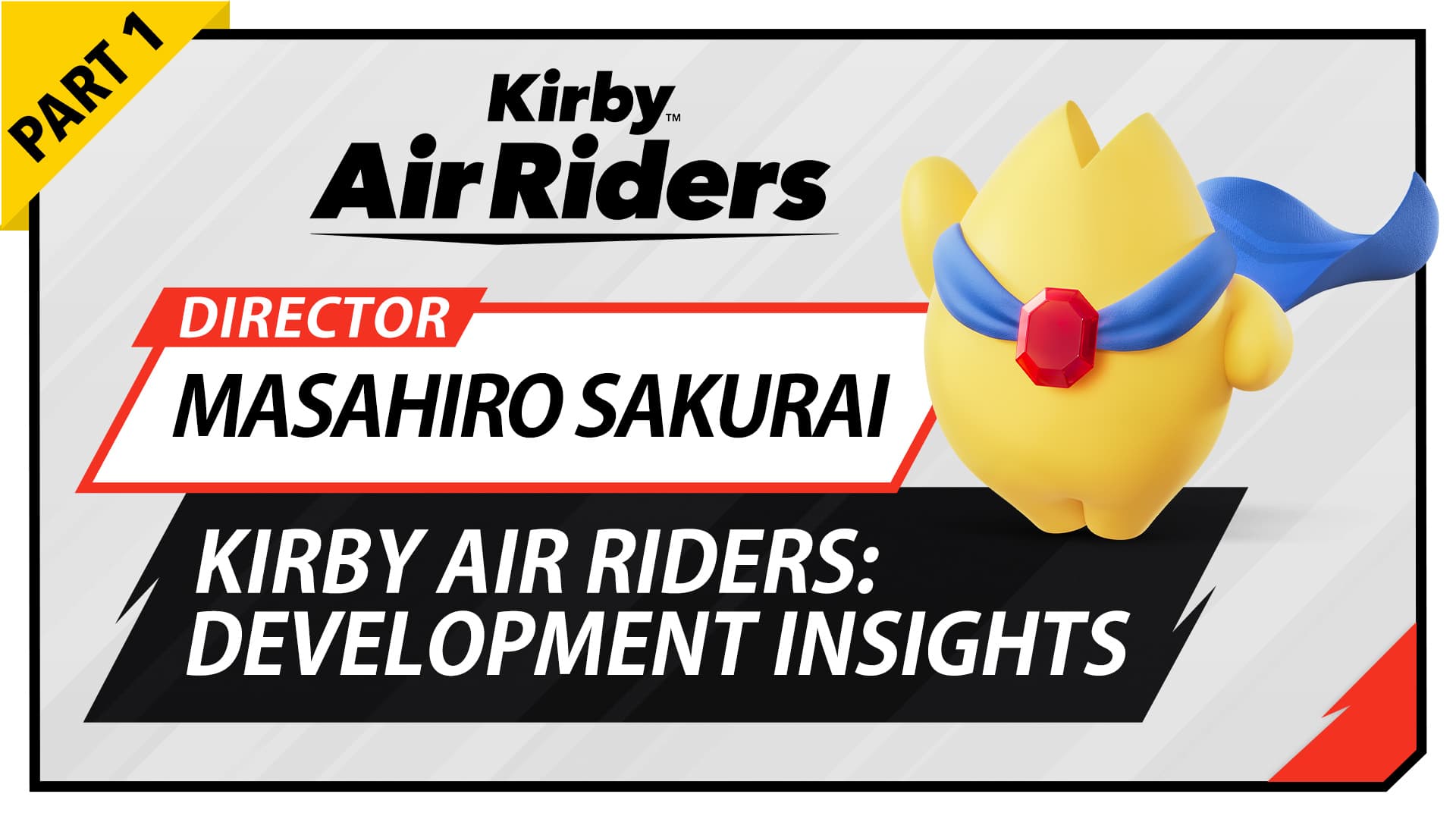
Kirby Air Riders is a useful Nintendo case study because it shows how a strange idea becomes legible through discipline. Masahiro Sakurai’s development notes do not frame the game as a burst of inspiration; they show a team sorting through roughly 20 motifs, then choosing the ideas that best made each course feel different. That matters inside Nintendo because it reflects a culture where personality is not decoration, it is the product.
For designers, the lesson is straightforward: the goal is not to add more until the game feels full, but to narrow the concept until every part serves a clear identity. For QA, that kind of clarity also helps readability, because a fast-moving game only works when players can tell what each track is trying to be. For production teams, it is a reminder that unusual projects still need structure, review points, and alignment across disciplines.
How Sakurai’s process shaped the game’s feel
The biggest signal in Nintendo’s April 13, 2026 development feature is that the team did not treat layout and artwork as separate lanes. Sakurai says the group split into two teams so course design and visuals could evolve together, which is a more demanding way to build than handing off one finished layer to another. It makes the final game more coherent, because the look of a course is not merely painted over a finished route. The route and the art are being adjusted in conversation with each other.
That approach helps explain why Kirby Air Riders feels so intentionally specific. A course in this kind of game is not just a race path, it is a readability problem, a pacing problem, and a visual identity problem all at once. Nintendo’s internal logic here is less about maximizing volume than about making sure each decision reinforces the others, which is exactly the kind of development mindset that tends to survive franchise pressure.
Why the launch context matters
The process notes land differently because Nintendo did not reveal Kirby Air Riders in a vacuum. It first showed the game in a dedicated Direct on August 19, 2025, then said it would launch on November 20, 2025. That timing placed the project squarely in the early life of Nintendo Switch 2, which launched in the United States on June 5, 2025, at a suggested retail price of $449.99.
That matters for workers across Nintendo because the game was not just another sequel announcement. It was part of a broader test of what Switch 2 could support: a stranger, more specialized follow-up to a GameCube-era cult favorite that still needed to read as a modern showcase. In that sense, Kirby Air Riders is both product and signal. It tells the market that Nintendo is willing to use new hardware for experiments that do not look like obvious sequels in the usual sense.
What the game is trying to be
Nintendo describes Kirby Air Riders as a follow-up to Kirby Air Ride, which originally released on the Nintendo GameCube in 2003. The newer game keeps the original’s unusual split between riders and machines, while adding distinct rider characteristics and abilities, new Air Ride machines, returning modes, and new special moves. That structure gives Nintendo room to expand the experience without flattening what made the original memorable.
The game’s mode mix reinforces that strategy. Nintendo’s October 23, 2025 Direct introduced Road Trip as a story-driven mode that combines challenges from Air Ride, City Trial, and Top Ride. Top Ride itself supports up to eight players online, or four players offline on one system plus CPUs, which shows how the game is built to scale from local chaos to networked competition without losing its odd personality.
Scale does not erase the weirdness
IGN’s review description is useful because it captures the tension at the heart of the project. The outlet described Kirby Air Riders as bizarre but impressive, with more than 20 machines and a similar number of playable riders, while also noting that the game is constrained by its unconventional control scheme. That is not a contradiction so much as the point: Nintendo appears to have accepted that the game’s identity would come from specificity, even when that specificity narrows the audience.
For developers, that makes the game a reminder that polish is not the same as broad accessibility. A strong internal concept can survive if the team is willing to protect it, even when the result feels idiosyncratic. For business teams, the lesson is equally clear: Nintendo can sell distinctiveness when it is backed by enough structure to keep the experience coherent and enough content to make the world feel complete.
What this says about Nintendo’s design culture
Kirby Air Riders fits a familiar Nintendo pattern, but the Sakurai notes make that pattern easier to see. The company often talks about games as experiences with personality rather than feature lists, and this project shows how that personality gets built: through motifs, through deliberate splits in the workflow, and through decisions that force art and mechanics to evolve together. It is a reminder that creativity at Nintendo is often less about freedom in the abstract and more about choosing the right constraints.
That has implications beyond one racing game. Localization teams need to preserve not just text but tone, because a game like this sells a feeling as much as a rule set. QA needs to test whether the unusual controls still communicate the intended identity. Production and leadership need to understand that a project can be commercially viable precisely because it refuses to be generic.
The larger takeaway for future releases
Kirby Air Riders is not just a sequel or a nostalgia play. It is a compact example of how Nintendo turns internal discipline into external personality, and how Sakurai’s process gives that personality shape. By narrowing ideas, synchronizing layout with artwork, and building modes that stretch from eight-player online Top Ride to story-driven Road Trip, Nintendo made a game that feels intentionally odd instead of accidentally incomplete.
That is the useful lesson for anyone watching Nintendo’s next wave of releases. The company’s strongest projects rarely look like compromises that survived development. They look like hard constraints that were protected long enough to become the design itself.
This article was produced by Prism’s automated news system from verified source data, official records, and press releases, then run through automated quality and moderation checks before publishing. The system is built and supervised by the people who set the standards it runs under. Read our full AI policy.
Know something we missed? Have a correction or additional information?
Submit a Tip