Nintendo's Packed March 26 Release Week Strains Certification, QA, and Localization Teams
Nine Switch 2 titles dropped in a single North American eShop window, stacking certification, QA, and localization pressure across two hardware generations simultaneously.
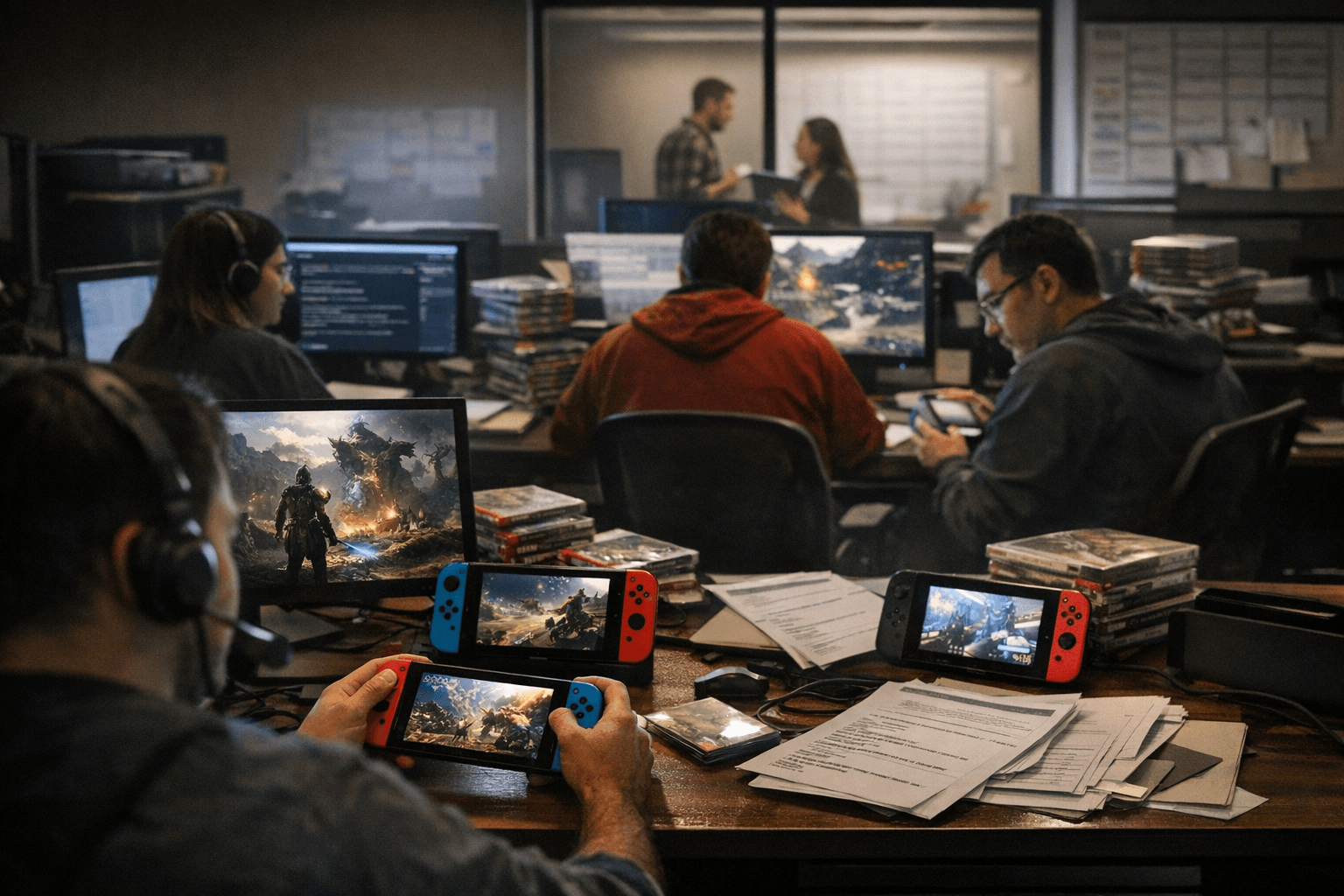
Nine Nintendo Switch 2 titles landed in North America during the week of March 26, stacking an unusually compressed certification and localization load across teams managing two active hardware generations at once. The lineup stretched from Disney Dreamlight Valley and Human Fall Flat in their Switch 2 Enhanced editions to Kena: Bridge of Spirits, The Midnight Walk, South of Midnight Weaver's Edition, Tales of the Shire, and Virtua Fighter 5 R.E.V.O. World Stage, with Super Mario Bros. Wonder's Switch 2 Edition anchoring the slate. Goat Simulator 3 rolled in as an April 1 stagger, adding a second certification pulse inside the same weekly window. Japan's eShop ran a parallel track, highlighted by Mega Man Star Force Legacy Collection and Sonic Racing: CrossWorlds.
For QA leads and build engineers, the volume created overlapping certification windows on Nintendo's submission pipeline. Each Switch 2 Enhanced title carries its own platform compliance requirements: cloud save migration validation, achievement entitlement checks, and DLC compatibility verification across both the new hardware and the legacy Switch. Multiple submissions in the same window compress the feedback loop between developer and Nintendo's platform relations team, leaving little room for resubmits if a build fails late.
The Switch 2 Enhanced positioning also generated a second wave of localization work that is easy to underestimate from the outside. Updated in-game text, revised store listings, new regional content, and ratings re-submissions for markets with independent classification bodies each require review cycles with in-country specialists. A string freeze that holds cleanly in a single-title week becomes a coordination problem when five or more Switch 2 Enhanced ports are moving through the pipeline simultaneously. Compressing that to a single weekly drop means localization sprints run concurrently rather than sequentially, increasing the risk of inconsistency across launch languages.
Live-ops and DevOps teams faced a different pressure point: pre-provisioning server capacity and monitoring thresholds for any online-enabled title in the slate while covering day-one patch deployment for the rest. The standard practice of rehearsing deployment plans with a dry-run becomes harder to schedule when launch days cluster, and on-call rotations need to extend 48 to 72 hours past each individual release rather than treating the week as a single event.
Weeks like this one have historically served as stress tests for the cross-disciplinary coordination that Nintendo's eShop cadence demands. With the Switch 2 now running alongside the legacy platform, every enhanced port effectively doubles the QA surface for teams managing backward-compatibility chains. For HR partners and product managers inside Nintendo's internal studios and first-party partner network, the March 26 window was a measurable argument for contractor pipeline agreements that can absorb QA and localization spikes, rather than absorbing them through overtime on permanent staff. The Switch 2's expanding catalog makes that planning conversation more urgent, not less.
This article was produced by Prism’s automated news system from verified source data, official records, and press releases, then run through automated quality and moderation checks before publishing. The system is built and supervised by the people who set the standards it runs under. Read our full AI policy.
Did this article answer your question?
