Nintendo's release schedule reveals the realities of game publishing
Nintendo’s release schedule is a work-in-progress map, not a marketing calendar. Its caveats expose how localization, QA, and regional publishing have to stay synchronized.
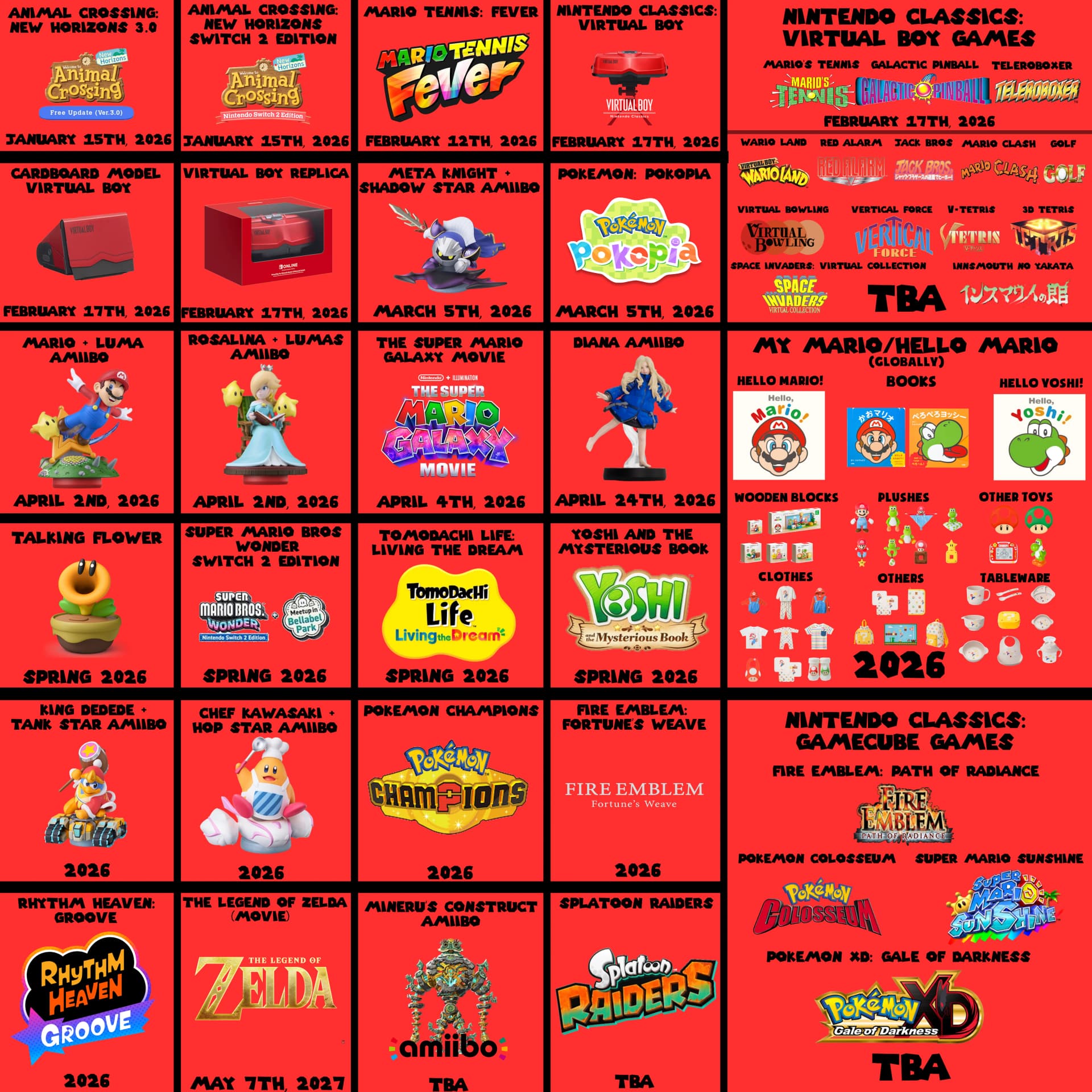
Nintendo’s release schedule page looks simple until you read the warning language at the top.
The caveats are the message
The strongest clue on Nintendo’s regional schedule pages is the language itself. The same warnings appear on the Philippines and Malaysia pages: “Please note that release dates may change at any time without notice. Some titles above appear with provisional names. Some titles have not been displayed by publisher request.”
The schedule is built to absorb uncertainty. A game can move for certification, content review, localization delay, platform timing, or a regional publishing decision, and the public list has to remain usable even while all of that is still in motion.
Localization is a scheduling problem, not just translation
For localization staff, the release schedule works like a live dependency map. It tells teams when language assets need to be ready, when store metadata has to be locked, and when marketing copy and regional approvals have to land in time for launch. If a title slips, every connected task can slip with it, from text implementation to final terminology checks.
That is why the broader localization field treats timing as core work. The IGDA resource “How Long Will It Take to Localize My Game? - Localization Scheduling” frames the question as not simply what gets translated, but when the work can safely fit into production. Lokalise’s game-localization guidance treats localization as broader than translation and as work that requires market adaptation and planning, which means timing, context, and release coordination sit inside the job from the start.
At Nintendo, that has practical consequences for teams working across Japan headquarters and regional offices. A release date in one market is not just a date on a page; it is the point at which translated assets, legal checks, and promotional materials all have to line up. When a title appears under a provisional name, localization and publishing teams are already signaling that the final market-facing identity is still being shaped.
QA lives inside the release calendar
For QA testers, the schedule page is a reminder that launch work rarely happens one title at a time. Multiple systems, regions, and product versions can be moving in parallel, and that means testing plans have to be organized around changing milestones rather than a single clean deadline. A date shift can mean a retest, a new certification window, or a change in which build becomes the release candidate.
A delay can affect whether localization is finished before submission, whether store pages are updated in time, and whether pre-load timing still matches the final launch plan. The schedule page’s warning that dates may change without notice is a blunt reminder that QA is part of a much wider release-management chain.
Nintendo’s own support and store pages show how tightly that chain connects to digital release operations. The company’s support page titled “When Are New Games Added to the Nintendo eShop?” gives formal guidance on the exact release timing for new games across Nintendo Switch 2, Nintendo Switch, Nintendo Switch Lite, and Nintendo Switch - OLED Model. Launch timing determines when a build becomes visible, downloadable, and playable on the storefront.
On Nintendo’s “Coming soon” page, pre-ordering the digital version of a game lets players pre-load it to their system and play when it is released. Its “New releases” page groups newly launched games together for Nintendo Switch 2 and Nintendo Switch systems. In practice, that means release timing affects not only the product launch itself but also merchandising, pre-load readiness, and the way live storefronts present a game to customers.
Public announcements and regional control work together
Nintendo Direct presentations and official news pages sit upstream from the release schedule. Games are announced there first, then later appear on upcoming-release lists and store pages as dates and product details settle. That sequence shows how Nintendo stages information: reveal, regionalize, schedule, then publish.
That approach gives Nintendo room to manage timing across markets without exposing every internal decision. It also explains why some titles are omitted at publisher request. For regional teams, that can mean different launch rhythms in the Philippines, Malaysia, the United States, and Europe even when the same game is in the pipeline.
This article was produced by Prism’s automated news system from verified source data, official records, and press releases, then run through automated quality and moderation checks before publishing. The system is built and supervised by the people who set the standards it runs under. Read our full AI policy.
Did this article answer your question?