Piranha Games Cuts 30% of Staff in Second Major Layoff Round
Piranha Games CEO Russ Bullock confirmed 17 cuts in the studio's second layoff round in 15 months, releasing VFX, level design, and engineering talent into an already tight market.
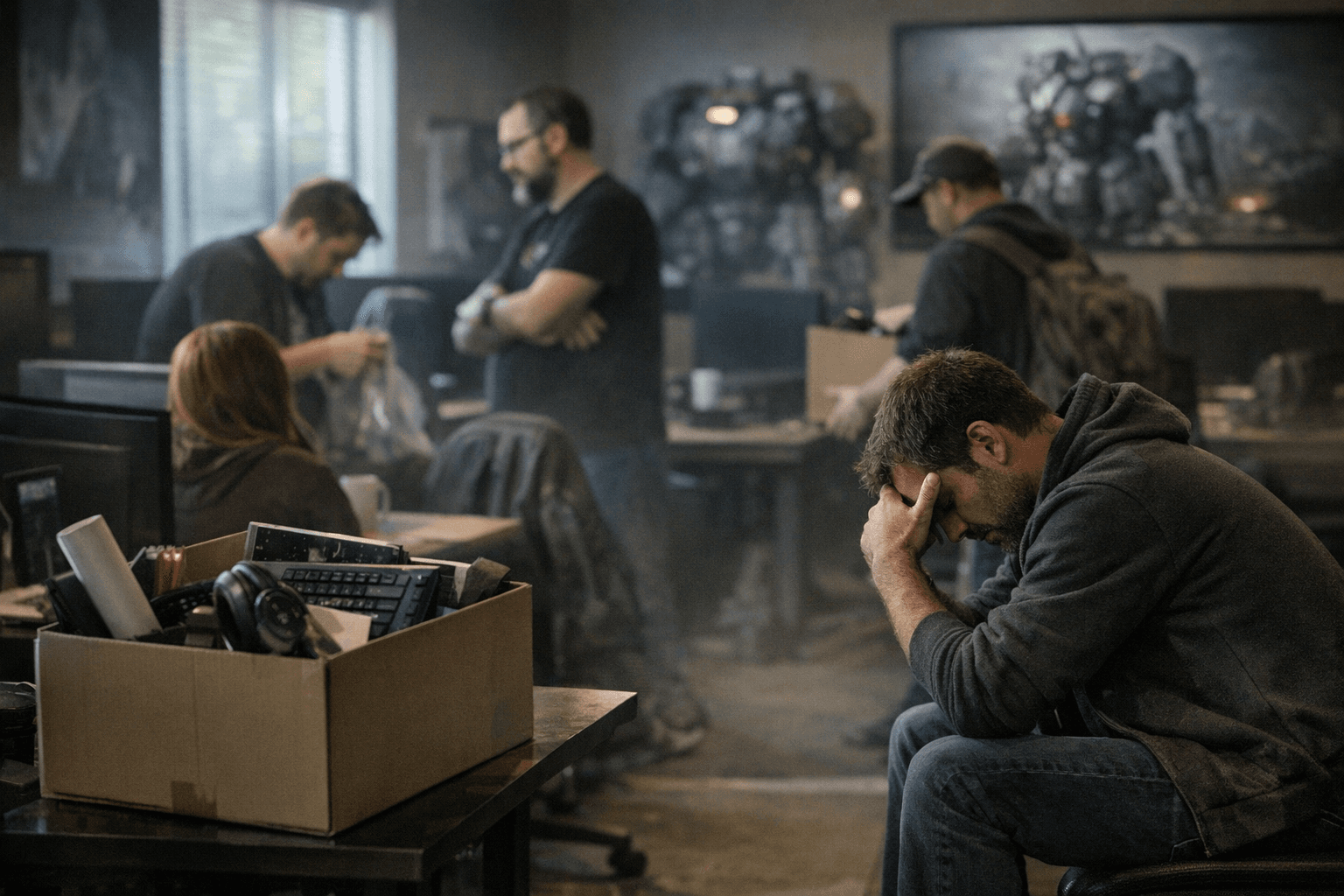
When Arman Nouri, a former Piranha Games developer now working as a senior environment artist at Epic Games, posted that the Vancouver studio had just endured "massive layoffs" affecting 60 percent of staff, CEO Russ Bullock moved quickly to correct the record. On April 3, Bullock confirmed the cuts but put the figure at 30 percent, saying 17 employees had been let go in what he called "a very tough day." The numerical dispute did nothing to soften the reality for the 17 people cleaning out their desks.
The April cuts mark Piranha's second significant restructuring in just over a year. In January 2025, parent company Enad Global 7, the Swedish publisher that acquired Piranha in late 2020, eliminated 38 positions at the studio after MechWarrior 5: Clans sold below the company's expectations. The April 2026 round, attributed by departing staff to "economic restructuring," signals the revenue math still hasn't recovered, even after three post-launch DLC releases in Ghost Bear Flash Storm, Wolves of Tukayyid, and Shadow of Kerensky. MechWarrior 5: Clans narrative director Chris Lowrey, who confirmed the cuts in a separate public thread, offered a stark read from inside the studio: "I honestly don't know how long we will be able to keep the ship sailing."
The roles eliminated span the full production stack: environment art, VFX, level design, technical art, writing, and software engineering. That cross-disciplinary sweep points to something specific about the economics of mid-size studios with live-service obligations. When revenue from a premium release plateaus and content must keep shipping, every department that isn't directly building the next patch becomes a line-item question. Piranha's situation is less an outlier than a case study in how quickly that arithmetic turns against a studio when a title underperforms.
For studios competing in the same specialized talent market that Nintendo draws from, the cuts represent a meaningful window. Technical artists who bridge art and engineering pipelines, VFX artists with real-time experience, and level designers with multiple shipped titles are among the hardest roles to fill on a normal hiring cycle. Seventeen newly available contributors across those disciplines won't go unnoticed for long. Nintendo's hiring teams, and the teams at several co-development and certification partners managing content pipelines ahead of mid-year release windows, will likely be sourcing from exactly this pool over the next two quarters.
Nintendo's structural advantage here is its reputation: long employee tenure, stable project scopes, and a quality-first culture that stands in deliberate contrast to studios that have now restructured twice in 15 months. That advantage is real, but only if it's communicated early to candidates who are approaching the hiring process with understandable skepticism about job security. Candidates from recent layoffs tend to ask harder questions in interviews, and those questions deserve specific answers, not boilerplate.
Bullock confirmed the previously announced MechWarrior DLC would continue moving forward. Whether Piranha avoids a third restructuring cycle will depend largely on what Enad Global 7's next quarterly report shows, a document that the studio's remaining staff will be reading with at least as much attention as any milestone review.
Know something we missed? Have a correction or additional information?
Submit a Tip